
Essential Considerations Before Investing Your First Dirham
Dubai’s real estate landscape is evolving, with an increasing number of international investors shifting their focus towards residency options alongside property purchases. The dynamics of foreign ownership have become a major aspect of this shifting market.
Indian Investors Dominate Dubai’s Property Market
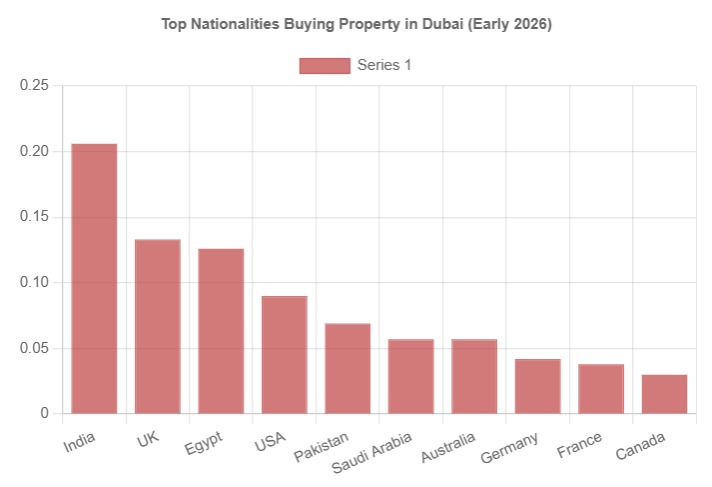
Indians are emerging as one of the largest groups of foreign buyers in Dubai’s residential sector, accounting for an estimated 20.6% of all international property transactions in early 2026. This trend places them ahead of buyers from the UK and Egypt, as highlighted by the analysis from Harbor Real Estate using DXBinteract data reported by Khaleej Times. The appeal is clear: Dubai offers no property tax, no capital gains tax on resale, and many areas yield rental returns higher than various Indian metropolitan markets. However, the simplicity of entering this real estate market comes with its own challenges, as potential investors must conduct thorough due diligence before making a commitment.
Understanding Property Ownership Options
Foreign buyers, including Indians, can acquire full ownership only in designated freehold areas, such as Dubai Marina, Downtown Dubai, and Palm Jumeirah. Understanding the difference between freehold and leasehold properties is crucial. Leasehold ownership often restricts buyers to certain usage rights, reverting the property to the original owner after a specified period, typically up to 99 years. This distinction is often overlooked but has significant implications for resale, financing, and residency applications.
Residency and Investment: What You Need to Know
Purchasing property in Dubai can provide residency options, but these are contingent on your investment. As of 2026, buying any freehold property qualifies you for a two-year UAE residence visa, with no minimum spending requirement. If buying jointly, each individual must invest at least AED 400,000, while individuals aged 55 or above must invest AED 1 million to secure a five-year visa. For those eyeing the 10-year Golden Visa, the threshold is set at AED 2 million, but recent changes allow off-plan properties to count towards this total, making it easier to qualify.
Consider Additional Costs and Verification Steps
Real estate purchases in Dubai come with added expenses. Buyers should budget approximately 7-8% above the listed price to cover the Dubai Land Department’s transfer fees, agency commissions, and registration fees. When financing a property, non-residents can expect stricter mortgage conditions, including higher down payments. Moreover, conducting thorough checks is essential; familiarize yourself with the developer’s track record and verify that paid funds are held in a secure RERA-regulated escrow account. This ensures your investment goes toward project completion rather than the developer’s other obligations.
In summary, purchasing property in Dubai can be significantly advantageous for Indian investors. The process can feel straightforward, but comprehensive research and strategic planning are vital for navigating the complexities of ownership, residency, and the associated costs. While the market is becoming increasingly transparent, ensuring you have the right information before investing can help minimize regret and optimize your investment potential.