
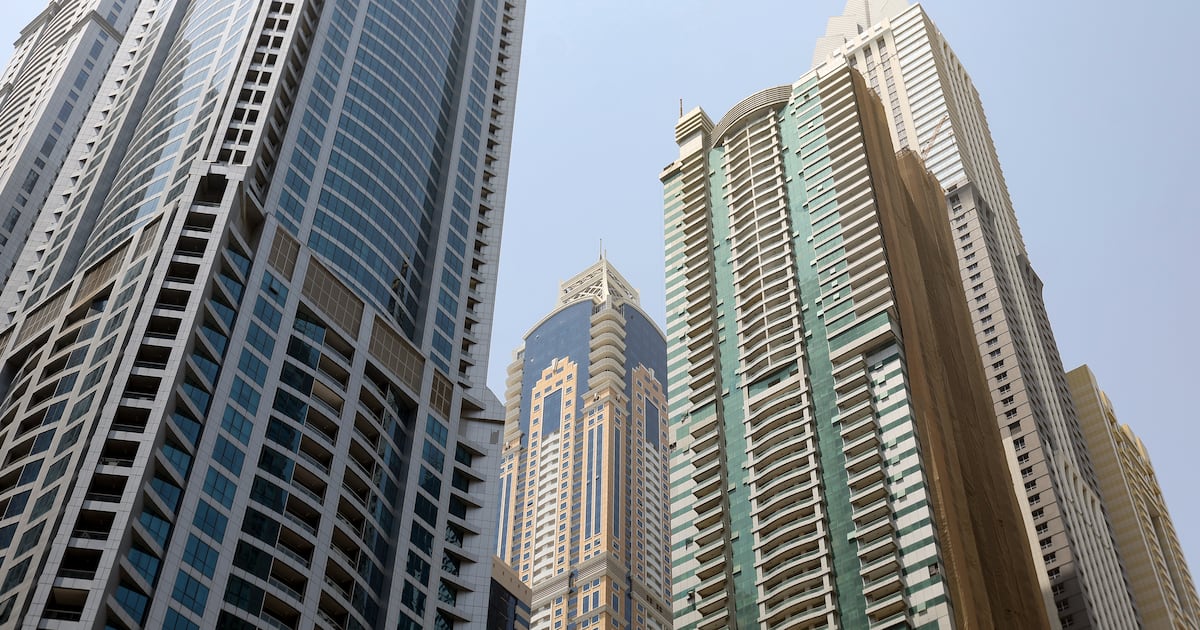
Dubai provides significant value to homebuyers despite lingering bubble risks, according to UBS.
Dubai’s real estate market continues to present an attractive option for homebuyers, despite potential risks associated with property bubbles, as highlighted in a recent UBS report. The city’s rental prices remain high, incentivizing ownership over leasing, making it an appealing choice for many residents looking to secure their future in the real estate sector.
Rental Prices Boosting Homeownership Appeal
High rental rates in Dubai are driving interest in homeownership, even as the UBS Global Real Estate Bubble Index indicates a rise in the city’s bubble risk, moving from 1.09 to 1.16 this year. This places Dubai in the elevated-risk category alongside other global cities such as Miami, Seoul, and Geneva. While it ranks fourth among the 23 cities surveyed, only Zurich and Tokyo are classified as being at high risk, reflecting a growing concern regarding property valuations.
Despite these risks, UBS observes that the real estate boom in Dubai is losing steam, especially following the onset of the Iran conflict. Surprisingly, inflation-adjusted home prices experienced only a modest increase of 0.4% year-over-year in the second quarter, whereas rents saw a decline of 4%. This situation has prompted many tenants to consider purchasing a home as a savvy investment in their financial future, especially given the stagnation in rising property prices.
Affordability Compared to Other Global Markets
Dubai stands out as one of the more affordable housing markets in UBS’s global assessment. A skilled service worker can acquire a 60 square meter apartment near the city center with just five years of income, a striking contrast to the 11 years required in London and even 15 years in Hong Kong. This price-to-income ratio underscores Dubai’s relative affordability, especially when examined against other cities facing homeownership challenges, such as Paris, Seoul, and Singapore, where local wages frequently fall short.
While Dubai’s property prices are still on an upward trajectory, their growth rate has begun to soften in light of regional uncertainties. In the second quarter, residential prices in Dubai increased by approximately 1.9%, with specific gains noted in apartment and villa prices. The market sentiment remains cautiously optimistic as projections suggest a potential balance in property valuation across different segments.
Future Outlook and Market Adjustments
Industry experts, including Emaar Properties founder Mohamed Alabbar, anticipate a “nice balance” in Dubai’s real estate market as it navigates through current challenges. Alabbar is preparing for an influx of supply by 2027 and believes that this will inherently stabilize the market. He expressed concerns about the adverse impacts of the Iran conflict, which could lead to a decline in property prices of 5% to 10%—a minor adjustment in what is generally a resilient market.
The overarching sentiment is that should geopolitical tensions ease, Dubai’s attractiveness as a prime destination for high-income earners will likely spur a resurgence in market activity. Structural advantages, such as Dubai’s strategic location and status as an international business hub, remain robust, suggesting a potential rebound in property values could occur once stability is restored.
In summary, while Dubai’s real estate market is grappling with elevated risks, it still presents a viable option for prospective homeowners. With favorable income-to-price ratios and the prospect of adjusting market conditions, investors and residents alike will be keenly monitoring developments in the coming years.