
UAE Leads Arab Digital Economy Index for 2026
The UAE has emerged as a leader in the Arab Digital Economy Index for 2026, as revealed during the Seamless Middle East 2026 event in Dubai. This notable success showcases the UAE’s commitment to advancing its digital landscape and is underpinned by significant investments in infrastructure and innovation.
Seamless Middle East 2026: A Convergence of Sectors
Taking place from September 22nd to 24th at the Dubai World Trade Centre, Seamless Middle East 2026 unites key players from various sectors, including payments, fintech, banking, digital commerce, retail, identity, and logistics. With over 25,000 participants, 800 speakers, and 750 exhibitors, the event serves as a hub for collaboration and knowledge-sharing among industry leaders. High-profile attendees, ranging from diplomats to representatives from economic organizations, marked the opening session, emphasizing the global significance of this event and its role in shaping the future of digital economies.
Key Insights from the Arab Digital Economy Index
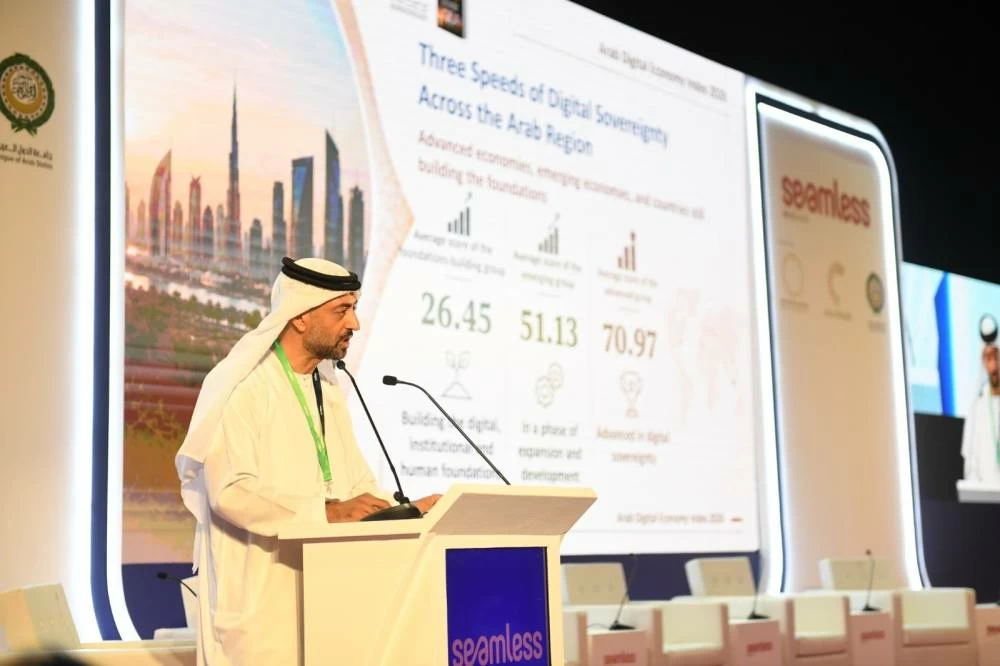
The Arab Digital Economy Index evaluates the performance of digital economies across multiple dimensions, including institutions, infrastructure, workforce, and technological innovation. The UAE topped this index, joined by Saudi Arabia, Bahrain, Qatar, and Oman in the highest-performing group. Meanwhile, a secondary group of countries such as Jordan, Kuwait, and Morocco exhibited moderate performance, whereas Lebanon, Mauritania, and others are still establishing their digital foundations.
Despite the impressive results, there are notable challenges. While the Arab world shows advancements in digital infrastructure and government services, significant gaps remain in areas such as innovation, the data economy, and research and development. Dr. Ali Mohammed Al-Khouri, chairman of the Arab Federation for Digital Economy, highlighted that addressing these disparities is crucial for harnessing the full potential of digital investments and transforming them into economic value.
Emphasis on Digital Sovereignty
In light of these findings, the index underscores the importance of digital sovereignty in the Arab region. Nations are increasingly focusing on data management, artificial intelligence, cloud services, semiconductors, and cybersecurity as integral components of their economic frameworks. Al-Khouri expressed that the UAE’s high ranking stems from its long-term investments in these areas, making it a benchmark for other countries aiming to create innovation-driven economies.
The UAE’s leadership and support in fostering the Arab digital economy have been pivotal. Al-Khouri acknowledged the contributions of President Sheikh Mohamed bin Zayed Al Nahyan and H.H. Lt. General Sheikh Saif bin Zayed Al Nahyan, stating their efforts have been instrumental in translating strategic initiatives into actionable projects that benefit the entire region.
A Vision for the Future
Launched in 2018 and supported by key leaders, the Arab Digital Economy Vision is central to the framework for regional cooperation on technological improvements. Following its endorsement at the Arab leaders’ summit in 2022, this vision serves as a guide for collective action in enhancing the digital economy. The Arab Digital Economy Index acts as a vital tool for measuring progress, identifying gaps, and establishing future priorities essential for sustained growth.
The ongoing discussions at Seamless Middle East 2026 will delve into various critical topics such as fintech, e-commerce, and cybersecurity, bringing together a diverse array of stakeholders. This convergence not only enriches the dialogue but also paves the way for innovative solutions that can propel the Arab digital economy forward.