
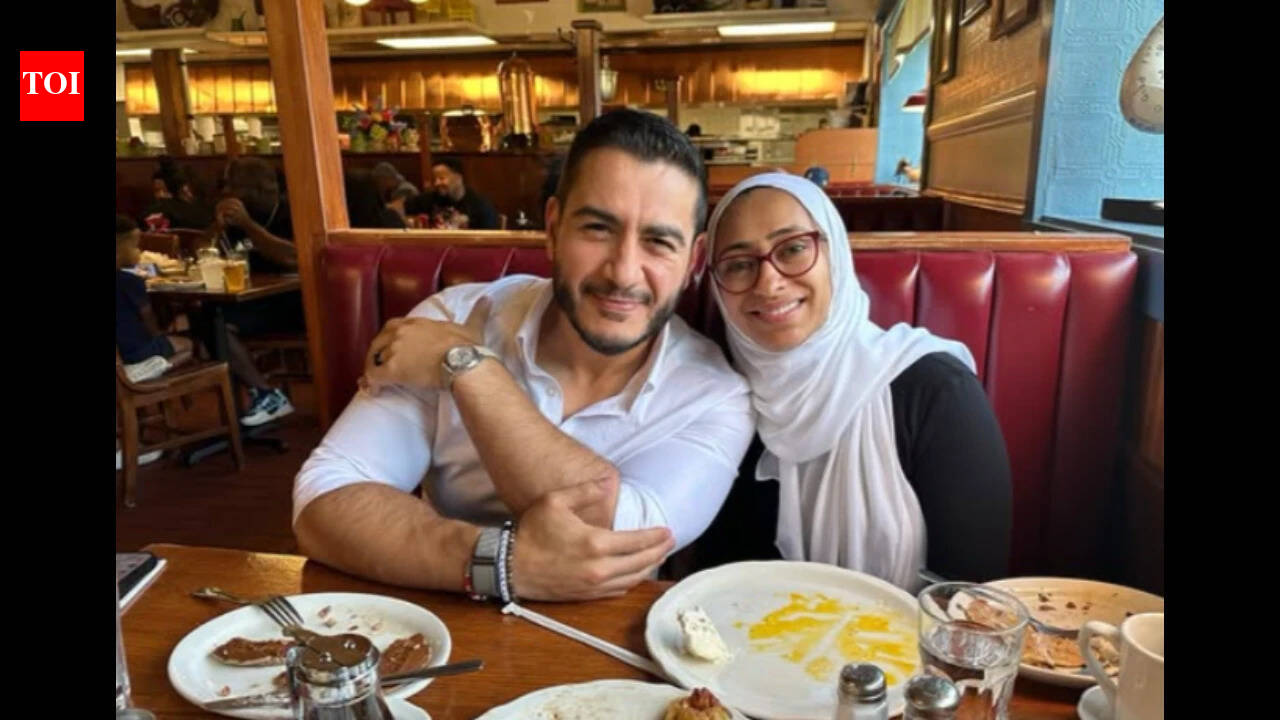
Who is Sarah Jukaku? Michigan Democrat Abdul El-Sayed Owns Rental Properties in India and Dubai Under His Wife’s Name
Abdul El-Sayed has emerged as a significant figure in American politics, potentially paving the way to become the first Muslim senator in U.S. history. His recent victory in the Democratic primary reflects a deep-rooted belief in his socialist platform. As he continues to garner attention, questions have arisen regarding his personal investments, including properties located outside the United States.
Recent Financial Disclosure
In the financial disclosure he filed on July 27, 2026, El-Sayed revealed critical details about his family’s assets. His wife, Sarah Jukaku, a psychiatrist by profession, owns two rental properties abroad—one in Bengaluru, India, and another in Dubai, United Arab Emirates. Previously, his disclosure in June 2025 only mentioned the Bengaluru property as her sole overseas asset, which is valued between $100,001 and $250,000 and generates rental income between $5,001 and $15,000 annually. The recently reported Dubai property matches the same value range and made its first appearance in the latest documentation, submitted just hours before a critical debate.
The combined value of these properties is estimated at between $200,002 and $500,000. El-Sayed clarified that these assets are inherited by his wife. Their joint filings may create an impression of significant wealth, yet he emphasizes that his career pursuits have never revolved around monetary gain.
Who is Sarah Jukaku?
Sarah Jukaku’s background is as compelling as her husband’s political journey. According to El-Sayed’s book, Healing Politics: A Doctor’s Journey into the Heart of Our Political Epidemic, Jukaku’s family immigrated to the United States from a village in India. Their paths crossed at the University of Michigan, where both were students. Their relationship garnered attention when they were featured in a 2006 article by The Michigan Daily, the university’s student publication. Jukaku shared that they became engaged when she was still a freshman, a testament to their commitment shaped by shared values and their Islamic faith.
Abdul El-Sayed, a 41-year-old epidemiologist, represents a beacon of hope for progressive Democrats. His recent primary victory is noteworthy against a backdrop of increasing anti-Muslim sentiment across the nation. Following the footsteps of Mayor Zohran Mamdani, who also marked a historical first as a Muslim elected official in New York City, El-Sayed’s win is significant. He joins the ranks of progressive Muslim politicians such as Rep. Rashida Tlaib and Rep. Ilhan Omar, though the United States has yet to see a Muslim senator.
A New Chapter in History
El-Sayed’s ascent is emblematic of a larger shift in American politics. The increasing visibility and representation of Muslim leaders showcase a growing acceptance and acknowledgment within a landscape that is often fraught with challenges. His journey underscores the importance of diverse voices in shaping policies that reflect a broad spectrum of American experiences.
As El-Sayed campaigns forward, his commitment to social justice, healthcare reform, and inclusive governance will undoubtedly resonate with voters who seek a political representative aligned with their values. Whether or not he eventually secures a seat in the Senate, his efforts are paving the way for future leaders to follow in his footsteps, breaking ground in a historically significant moment for American democracy.