
How Dubai’s $55 Billion Infrastructure Investment Might Transform Real Estate Preferences – Fast Company Middle East
Major infrastructure initiatives in Dubai are poised to significantly elevate property demand and enhance real estate values, potentially increasing them by up to 25% in developing areas, as indicated by a recent report from W Capital Real Estate Brokerage.
Key Infrastructure Projects Shaping the Market
The report has pinpointed four pivotal infrastructure developments that will likely impact Dubai’s property landscape. These include the $34.9 billion expansion of Al Maktoum International Airport, the $5.6 billion Dubai Metro Blue Line, the Fourth Federal Corridor, and Etihad Rail. Collectively, these initiatives represent an impressive investment of around $55 billion, reflecting a commitment to advancing the UAE’s transport infrastructure, which is expected to draw in buyers and tenants alike.
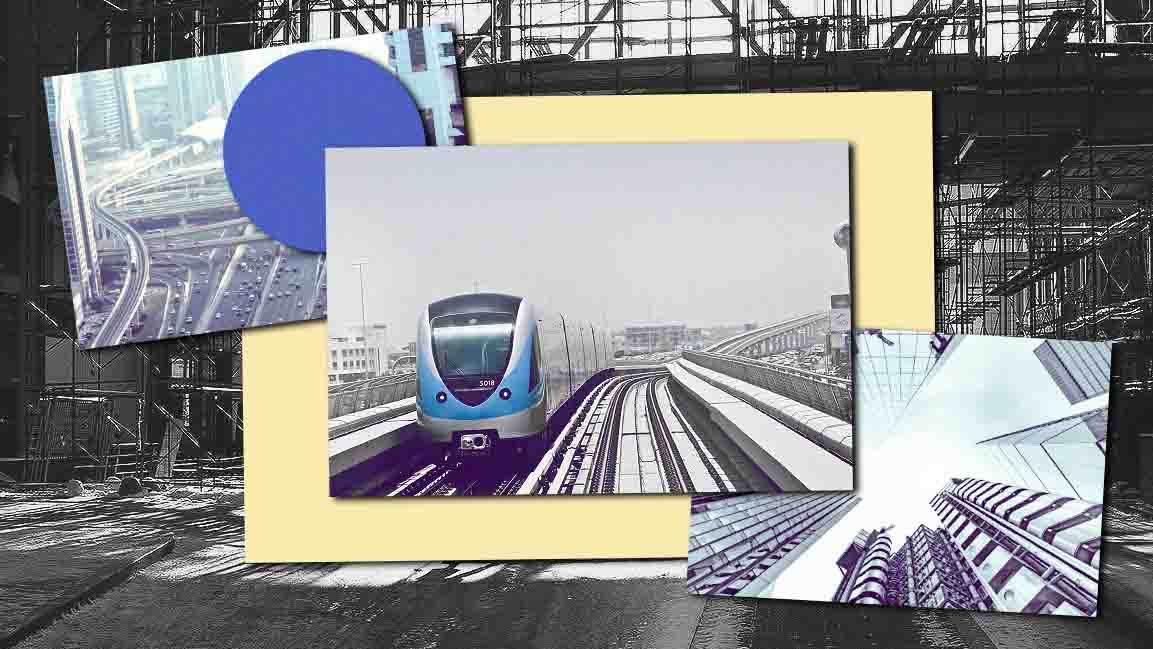
A central highlight of the report is the anticipated increase in property values near the stations of the new Dubai Metro Blue Line. Projections from the Dubai Roads and Transport Authority (RTA) suggest these values could rise by as much as 25%. This rise can be attributed to enhanced accessibility, making surrounding residential and commercial areas more appealing. The forthcoming 30-kilometer Blue Line is set to connect 14 stations across various bustling neighborhoods, including Dubai Creek Harbour, Dubai Silicon Oasis, and more, serving a cumulative community of over one million residents, with substantial ridership expected.
Impact on Residential Property Values
The expected daily ridership on the Blue Line is projected to escalate from 200,000 in 2030 to an impressive 320,000 by 2040. According to estimates from the RTA, the economic, social, and environmental benefits generated by this project could amount to more than $15.4 billion by 2040. Historical data from CBRE supports the notion that proximity to public transport correlates with heightened property values. Properties within a 15-minute walking distance from the Dubai Metro Red Line stations have experienced an average price increase of 26.7% between 2010 and 2022—surpassing the broader market growth of 24.1%.
The study emphasizes that while enhanced public transport access can bolster property values, future appreciation will hinge on multiple factors, including housing supply, demand dynamics, and the caliber of surrounding developments.
Expansion of Al Maktoum International Airport
In addition to the Metro Blue Line, the $34.9 billion expansion of Al Maktoum International Airport is set to invigorate property demand in the Dubai South area and beyond. Designed to accommodate upwards of 260 million passengers annually, this ambitious project will feature five parallel runways and 400 aircraft gates, underlining the emirate’s vision to solidify its aviation and logistics sectors.
The development promises not only to create job opportunities but also to increase demand for various types of properties including residential, commercial, and mixed-use. As businesses and their workforce gravitate towards areas near the airport, the ripple effect will likely make these locales more attractive to developers and investors.
Enhanced Connectivity Across the UAE
Additionally, the Fourth Federal Corridor, aimed at linking Sharjah and Abu Dhabi, as well as the Etihad Rail project, are expected to significantly improve the connectivity landscape across the UAE. This advancement may render districts that were previously considered less accessible far more appealing for development and investment pursuits.
Overall, the study highlights that transport accessibility is becoming an increasingly defining factor in shaping Dubai’s real estate market. As new infrastructure projects pave the way for better connectivity, previously overlooked areas could transition into desirable destinations for property buyers and investors alike.