
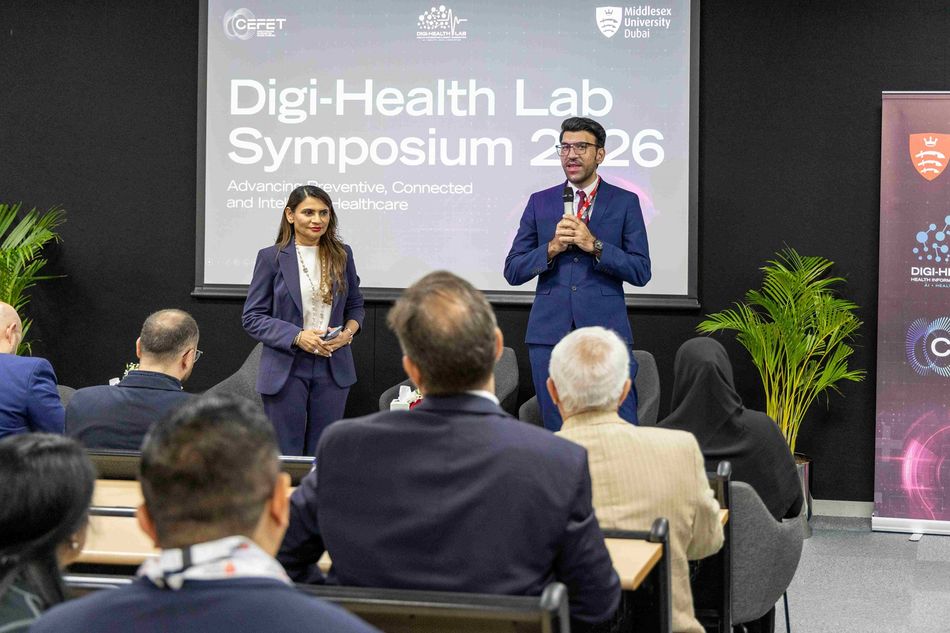
Middlesex University Dubai Hosts First Digi-Health Lab Symposium on Future Tech in Healthcare
Introduction to the Digi-Health Lab Symposium 2026
In a landmark gathering, the Digi-Health Lab Symposium 2026 brought together leaders and experts from various sectors—including healthcare, government, academia, and industry—at Middlesex University (MDX) Dubai. The symposium aimed to explore the intersection of digital health, artificial intelligence, and connected technologies to enhance preventive, personalized, and accessible healthcare services.
Significance of Healthcare Innovation in the UAE
The symposium reflects a national initiative aimed at advancing digital healthcare, notably following the UAE Cabinet’s endorsement of the National Policy for Advancing Digital Healthcare Services and AI. This policy aligns with the overarching vision of We the UAE 2031, which emphasizes the necessity for predictive healthcare and innovative technologies. In an environment where technological advancements are a priority, the event provided a crucial platform for discussing the role of responsible AI in improving workflow for medical professionals, as well as the benefits and drawbacks of wearable technologies in preventive care.
Dr. Ikram Rehman, head of the Digi-Health Lab at MDX Dubai, highlighted the importance of deriving actionable insights from emerging technologies. “For decades, we’ve acknowledged that prevention is better than cure. Our current capabilities allow us to operationalize this principle,” he explained, emphasizing the promise of AI, health data, and remote monitoring in early intervention.
Key Insights from Expert Panels
During the symposium, a panel titled “From Reactive Care to Prevention, Early Intervention & Personalized Healthcare” provided significant insights. Dr. Rashid from King’s College Hospital discussed the evolution of health data collection, moving from traditional methods to continuous monitoring through wearables. The focus, she noted, is not just on data collection but on translating that data into actionable healthcare decisions to minimize ICU admissions.
Dr. Narges Sheikhansari reiterated the importance of three critical aspects for the digital healthcare ecosystem: prioritizing prevention as a high-return investment policy, ensuring robust infrastructure for technology, and fostering adaptability to keep up with future developments. “Whatever solutions we implement today should remain relevant for the next 10 to 20 years,” she emphasized, underlining the need for sustained innovation in the healthcare landscape.
Emerging Technologies and Student Innovations
The event culminated in a thrilling showcase of student research projects dedicated to digital health and artificial intelligence. From AI-enabled wearable devices for the visually impaired to innovative solutions for real-time health monitoring, the presentations reflected the forward-thinking ethos of the Digi-Health Lab. One standout project, SignBridge, uses AI to convert American Sign Language finger-spellings into text, aimed at facilitating communication for deaf patients seeking emergency care.
Maleesha Chamodi Kottage Rajapaksha, a fresh graduate who presented her project, praised the opportunity for exposure to industry experts. “It’s a challenge for newcomers to network in a competitive job market, especially in technology. Presenting at the Digi-Health Lab Symposium was an incredible experience,” she shared, highlighting the symposium’s role in fostering talent and innovation.
Conclusion: The Path Ahead
The Digi-Health Lab Symposium 2026 successfully bridged the gap between technology and healthcare, setting a precedent for future collaborations. With the adoption of advanced digital solutions, the UAE is paving the way for a healthcare system that is not just reactive but also proactive. As the digital health landscape evolves, ongoing dialogue among clinicians, researchers, industry leaders, and students will be vital in translating these advancements into practical, impactful solutions for improving health outcomes.