
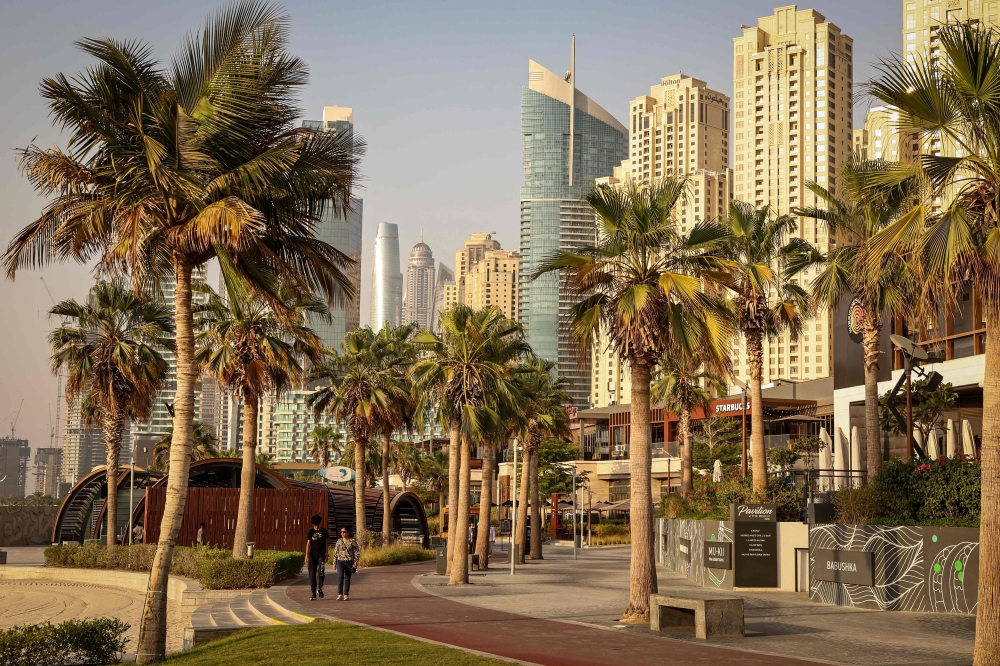
Residents capitalize on Dubai’s real estate slowdown during regional unrest.
In recent times, Dubai’s real estate landscape has experienced notable shifts, prompting both challenges and opportunities for residents and investors. As geopolitical tensions rise, particularly due to conflicts in the Middle East, the property market has displayed signs of cooling, making it a compelling time to evaluate the dynamics affecting renters and buyers alike.
Shifts in the Rental Market
After relocating to Dubai a year ago, Steve, a pseudonymous media professional, found himself unexpectedly ascending the property ladder amidst a cooling rental market. His new apartment is not only more spacious but is also conveniently located near his workplace. Remarkably, he noted that his rent is now 15% less than what he was paying previously. Reflecting on his initial struggles to secure housing in this increasingly competitive region in 2025, Steve remarked on how rental prices had peaked, making it a challenging environment for newcomers.
The rise of Dubai’s property values can be traced back to an influx of international high-net-worth individuals attracted by the emirate’s luxurious lifestyle. This trend had contributed to a booming real estate sector that forms a vital part of Dubai’s economy. However, the recent outbreak of conflict in the Middle East has introduced a new layer of uncertainty, causing potential renters and buyers to reassess their options.
Economic Impacts and Buyer Sentiment
The ongoing hostilities in the region have dampened the once-unstoppable growth of Dubai’s property market. In the initial days of the conflict, several prominent locations, including the iconic Burj Al-Arab and Palm Jumeirah, were impacted, provoking a sense of instability in a city heavily dependent on its foreign population—over 90% of its residents. An anonymous real estate agent noted that while clients continue to show interest, the market has flipped from being a seller’s market to one that favors buyers.
As observed by British real estate consultancy Knight Frank, property prices across Dubai’s mainstream sector have fallen between 5% and 20%, reflecting a cooling off after a dramatic increase averaging 82.9% since 2021. The real estate sector has weathered storms in the past, whether from the 2008 economic crisis or the Covid-19 pandemic. The current situation may be reminiscent of those difficult times, but there are also indicators of resilience.
Opportunities Amidst Challenges
Even in this complex environment, major developers remain optimistic about the future. Emaar Properties recently announced a substantial $55 billion development project aimed at housing around 150,000 residents, signaling confidence in long-term recovery. Similarly, Binghatti, another prominent developer, successfully closed deals on two luxury apartments worth $54 million and $19 million, illustrating that high-end real estate still holds appeal.
Despite the challenges, Richard Waind, CEO of Betterhomes, indicated that demand had started to pick up again as summer approached its end. He noted that while the second quarter of 2026 saw a 45% decrease in sales transaction values year-over-year—particularly severe in the luxury sector—there are signs of renewed activity among local buyers.
As the market continues to adapt to changing conditions, many anticipate a rebound in investment. While foreign investors may take a step back, local demand appears to be energizing the market, offering promising opportunities for those willing to navigate this evolving landscape. As Dubai adjusts to its new reality, both renters and investors are increasingly poised to make informed decisions amidst the shifting tides of the property market.