
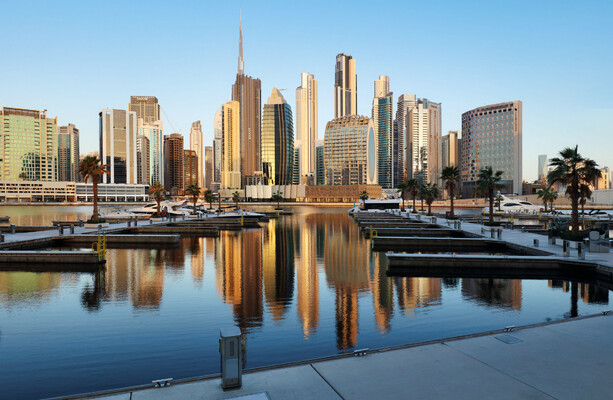
Residents profit from Dubai’s real estate amid rising property demand due to Middle East conflict.
In the wake of recent geopolitical tensions, Dubai’s real estate market is undergoing significant changes. Many expatriates, including Steve, are seizing the opportunity to upgrade their living situations in a market that is shifting from a seller’s edge to a buyer-friendly landscape.
Market Shifts: From Seller’s to Buyer’s Paradise
After relocating to Dubai in 2025, Steve noticed that the initial property hunt was competitive, with skyrocketing rents making it challenging to find suitable accommodations. However, a year later, he found himself moving to a larger apartment closer to his workplace at a 15% reduced rent. This shift exemplifies how the current cooling of the real estate sector, driven by recent conflicts in the Middle East, has altered the dynamics of the Dubai property market.
Historically, Dubai’s real estate sector has been a backbone of its economy, fueled by a surge in high-net-worth individuals drawn to its lavish lifestyle. However, the recent outbreak of hostilities in February prompted a swift decline in demand. As international tensions escalated, even iconic landmarks like the Burj Al-Arab became subject to fears of instability, negatively impacting the city, which largely comprises foreign residents.
Market Analysis and Future Prospects
Even though the situation remains precarious, Dubai has managed to avoid direct conflict, but the damage to its reputation as a “safe haven” lingers. A local real estate agent noted that opinions among clients are divided; some perceive that chronic instability will be a lingering issue, while others see it as an opportune moment for investments at lower prices.
In terms of numbers, the once-flourishing market has seen prices adjust by approximately 5% to 20%, according to British consultancy Knight Frank, following an 82.9% surge since 2021. These fluctuations indicate a significant shift in market conditions, transitioning from a sellers’ advantage to a more favorable environment for buyers. Furthermore, prominent developers like Emaar are still making big moves, recently announcing a $55 billion project aimed at potentially housing 150,000 new residents. This shows some level of confidence in the recovering market.
Emerging Demand Amidst Uncertainty
Despite the challenges posed by the geopolitical backdrop, demand for property hasn’t entirely dissipated. Reports indicate that while sales transactions fell 45% year-on-year in the luxury sector during Q2 of 2026, the market may be experiencing a revival. According to Richard Waind, CEO of Betterhomes, buyer interest has begun to rebound, particularly among local residents, rather than foreign investors.
This uptick typically occurs during the summer lull, and experts suggest that as this period passes, investment activity could see renewed vigor. The broader sentiment among real estate professionals indicates cautious optimism; discussions around how the market might stabilize are increasingly common.
In conclusion, while Dubai’s real estate market navigates through uncertainty, opportunities abound for those willing to adapt to the shifting landscape. Individuals like Steve are already benefiting from favorable conditions, setting a precedent for potential investors seeking to capitalize on this evolving scenario. With a mix of localized demand and significant projects in the pipeline, Dubai continues to position itself as an intriguing option for both residents and investors alike.