
US Economic Pressure Poses New Challenges for Dubai-Iran Trade
Dubai’s long-standing trade relations with Iran are facing unprecedented challenges due to the ongoing six-month conflict in the Middle East, the closure of the Strait of Hormuz, and a new wave of U.S. economic sanctions aimed at Iran. These factors have significantly hindered commercial activities within the emirate, raising concerns about the future of an economic bond that has thrived for decades.
Impact on Dubai’s Trade Routes
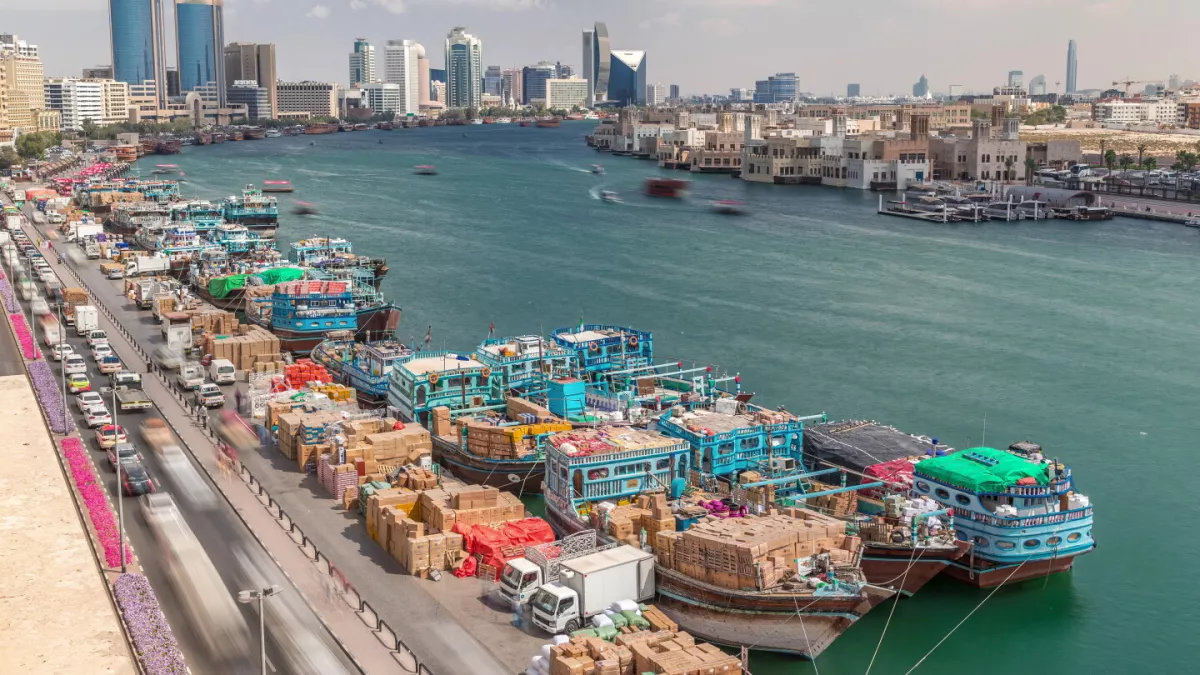
Historically, Dubai Creek served as a bustling marketplace where wooden dhows transported goods to and from Iranian ports. Today, however, this crucial trade route is witnessing a stark decline in activity. Large sections of the quay now stand largely unoccupied, particularly noticeable at the dhow terminal where cranes and forklifts are now primarily loading cargo destined for Oman and India. According to one security guard, “No more Iran since last week,” reflecting the abrupt shift in trade dynamics.
Local merchants recount the changes. Amal, a fisherman, lamented the absence of Iranian cargo ships, stating, “Before the war, many Iranian cargo ships came here; now it’s finished.” This narrated sentiment encapsulates the deep-seated impact of current geopolitical tensions.
Economic Consequences for Local Businesses
The once-flourishing trade relationship between the UAE and Iran was valued at nearly $30 billion annually before the escalating conflict. Dubai has historically been home to thousands of Iranian residents and businesspeople, who heavily contributed to the local economy. However, recent developments, such as the UAE’s decision to halt trade and financial transactions with Iran, have shaken this foundation. These changes followed allegations that Iran was targeting maritime activities within Emirati waters. Simultaneously, the U.S. announced an “economic warfare” campaign against Iran, increasing secondary sanctions impacting businesses engaged with Iranian trade.
The ramifications for Dubai’s Iranian merchant community are already evident. Danial, an Iranian shopkeeper, reported a decrease in saffron supplies, which has forced traders to resort to smuggling smaller quantities while prices have surged over 20%. Alarmingly, at least six local businesses have shuttered their doors as financial pressures mount with rising operational costs.
Perseverance Amidst Challenges
While the tightening of regulations has left many Iranian traders struggling, analysts like Justin Alexander from Khalij Economics suggest that the longstanding commercial ties between Dubai and Iran are not easily severed. “Iranian traders have been a foundational component of Dubai’s economy since long before the oil era,” he stated, illustrating the depth of this economic relationship.
In response to the sanctions, some Iranian traders are seeking alternative routes and methods to continue their business operations. A businessman from Tehran mentioned that goods are now being stored in Turkey, with shipments rerouted through Oman. Interestingly, cargo may still be loaded in Dubai for Bandar Abbas using altered shipping documentation, allowing traders to navigate around the imposed restrictions. “We are bypassing the blockade in the same way we have been bypassing sanctions,” he claimed.
Despite the current challenges, remnants of Iranian commerce still persist in Dubai. Iranian products are still visible in local markets, airlines continue to maintain flights to the emirate, and certain banks continue operations, serving customers despite the penalties imposed by the U.S. A staff member at Bank Melli asserted, “Business is down, but the whole world is affected. We’re used to this.” This resilience speaks volumes about the adaptability of traders and the enduring nature of trade ties between Dubai and Iran.