
Chinese Companies Leverage Local Expertise to Drive Dubai’s Growth
Chinese companies are currently making significant strides in Dubai, United Arab Emirates, leveraging their expertise to enhance local business practices. This expansion not only showcases the versatility of Chinese enterprises but also highlights their commitment to fostering economic growth within the region.
The Growing Economic Relationship Between China and the UAE
Trade and investment links between China and the UAE continue to strengthen, with Dubai evolving into a focal point for Chinese businesses aiming for international growth. In 2025, bilateral trade figures soared to a remarkable $108 billion, affirming the UAE’s position as China’s largest export destination and the second-largest trading partner in the Middle East. This strong exchange includes $72.88 billion in Chinese exports and $35.12 billion in imports from the UAE. Furthermore, Chinese investments in the UAE amounted to $2.6 billion last year, reflecting the increasing business collaboration between the two nations.
The Chinese business presence in Dubai is now unmistakable. According to statistics from Dubai Chambers, the number of registered Chinese companies has more than doubled since 2016, reaching 6,650 as of September. This growth signals a robust interest from Chinese firms, eager to tap into the lucrative opportunities that Dubai offers.
Transforming Local Services With Innovative Solutions
The impact of Chinese enterprises extends beyond mere business expansion; it has transformed local service offerings as well. A notable example is Keeta, a food delivery service from Meituan, which entered the Dubai market in September 2025. By introducing its efficient delivery model, Keeta has revolutionized meal services, ensuring faster delivery times and more competitive pricing for consumers. Their commitment to an “on-time promise” substantially improves customer satisfaction while benefiting local drivers through increased orders.
The effects of Keeta’s entry have positively influenced the local job market. Job seekers are now investing in obtaining licenses to work as delivery riders, spurred on by heightened competition leading to improved pay and structured benefits. This ripple effect extends to driving schools and training programs, underscoring the interconnected nature of this evolving marketplace.
Integrating Advanced Technology Into Urban Mobility
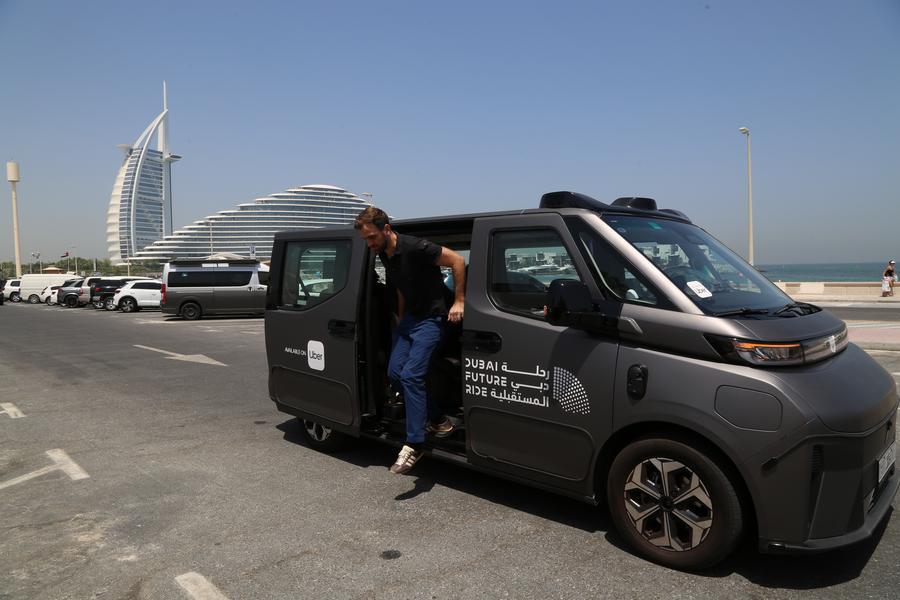
The arrival of autonomous taxis is a standout feature of China’s contribution to Dubai’s development. In April 2026, Baidu, collaborating with Dubai Taxi Company, launched Apollo Go, a commercial driverless ride-hailing service. This initiative represents a significant leap toward integrating AI technology into everyday urban transportation. Local regulatory frameworks have also evolved to support such advancements, with key agreements and safety regulations established to facilitate the rollout of autonomous vehicles.
The introduction of driverless taxis is expected to create a significant impact not only within the transportation sector but also across various regulatory and technological frameworks in Dubai. In September, the UAE implemented new federal regulations addressing the inspection and licensing of self-driving vehicles. Additionally, Dubai Insurance debuted specialized insurance products tailored for autonomous fleets, promoting further innovation in financial services.
To build a truly innovation-driven economy, it is crucial to ensure a steady influx of skilled local talent. Companies like Huawei are taking initiatives to integrate advanced technology learning into local educational systems. Their ICT Academy has made significant strides in collaborating with Zayed University’s curriculum, offering programs in cutting-edge fields like artificial intelligence and cloud computing.
As viewed by Sultan bin Saeed Al Mansoori, chairman of Dubai Chambers, the evolving partnership between China and Dubai is entering a new chapter. The focus is shifting toward co-creating industries, fostering capital inflow, and establishing platforms for innovation, ensuring mutual benefits as both regions continue to thrive in an interconnected global landscape.