
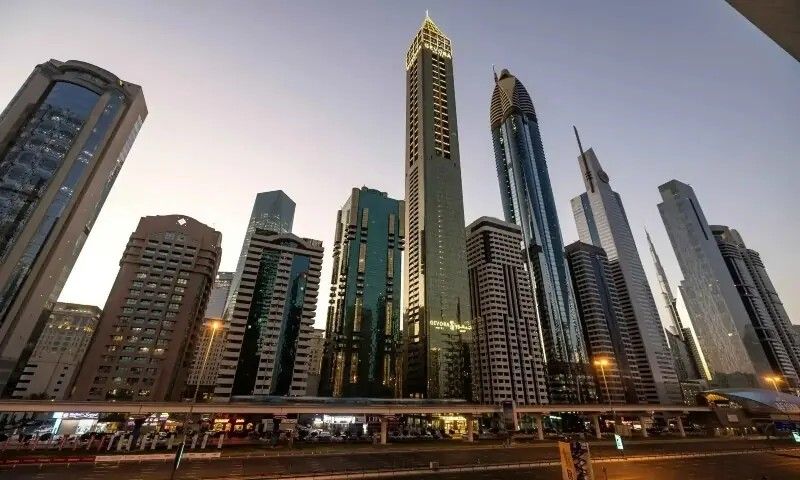
Pakistani Investors Shift Focus from Dubai Real Estate Due to Gulf Conflict
The ongoing Gulf war has significantly impacted the flow of black money from Pakistan to Dubai, leading to a reversal in investment trends. Sources from both the property and currency sectors indicate that instead of continuing to funnel illegal funds into Dubai real estate, Pakistani investors are now bringing money back home, particularly into the local property market.
Shift in Investment Trends
Dubai has long been a favored destination for Pakistani investors, particularly in real estate. Reports highlighted that Pakistan was once the second-largest foreign investor in Dubai’s property sector. Illegal funds generated within Pakistan were largely believed to have been funneled into Dubai, further inflating property prices in the emirate. However, this trend appears to have come to a halt due to ongoing turmoil in the region.
Hassan Bakhshi, Chairman of the All Pakistan Builders Association, noted that approximately $60 million in illicit funds had been previously invested in Dubai each month. With the onset of the Gulf war, this outflow has ceased, leading to a situation where previously hidden funds are now returning to Pakistan. This shift has prompted a reevaluation of the appeal of Dubai for Pakistani investors.
The Impact on Property Prices
As Pakistani investors attempt to recover their investments from Dubai, which has become increasingly difficult due to the war, there has been notable activity in the local property market. Currency dealers report an uptick in remittances flowing back to Pakistan, suggesting that many Pakistanis are liquidating their assets in Dubai to invest domestically. This recent change has fueled a significant property price surge in regions like Defence, with increases between 50 to 60 percent reported since the conflict escalated.
The allure of investing in areas with secure property titles, as well as the increase in disposable income due to returning remittances, have led many investors to shift their focus back to Pakistan. According to property dealers, overall trading activity in Karachi has also risen, as buyers and sellers increasingly participate in the evolving market landscape.
Broader Economic Implications
Before the war, many tech firms and businesses were relocating to Dubai to take advantage of a more favorable business climate. However, now they face significant challenges, including limited access to capital and difficulties in conducting transactions with international partners—a stark contrast to the seamless operations they once enjoyed. For instance, many Pakistani entrepreneurs used Dubai as a base for dealings with countries like India and Bangladesh, a strategy that has now been thwarted by the ongoing conflict.
Currency dealers are optimistic that once the situation stabilizes, a considerable amount of money—potentially hundreds of millions of dollars—will make its way back to Pakistan. This anticipated influx follows a growing sentiment that Dubai has lost its charm as a secure investment hub.
Government Measures and Future Prospects
The Pakistani government is actively implementing measures to invigorate the construction sector, aiming to stimulate economic growth and attract investments. Reports reveal a bounce back in property prices across various regions of Karachi, with some areas seeing increases of 20 to 25 percent. This rise in property values can largely be attributed to improved liquidity in the market and ongoing confidence from returning investors.
In summary, while the Gulf war has posed significant challenges for Pakistani investors in Dubai, it has also presented an opportunity for growth in the local property market. As the situation evolves, stakeholders remain hopeful that the recovery of investments will manifest soon, providing a boost to overall economic stability in Pakistan.