
Investigation Uncovers £17.7 Million Property Holdings in Dubai by Sudan’s Paramilitary Leaders | Global Development
A recent investigation has unveiled a troubling connection between a militia’s leadership and a significant property portfolio in Dubai. This militia, one known for its alleged involvement in genocide, has established a considerable “paramilitary-industrial complex” spanning Africa and the Middle East. The findings indicate that individuals linked to Sudan’s Rapid Support Forces (RSF) and its commander, Mohamed Hamdan Dagalo (commonly known as Hemedti), have engaged in substantial property acquisitions in the United Arab Emirates (UAE).
Militia Wealth Accumulation in Dubai
Reports from The Sentry, a U.S.-based investigative organization, reveal that members of Hemedti’s family and individuals under international sanctions have collectively secured more than 20 luxury properties in Dubai, valued at approximately £17.7 million. This activity raises serious concerns, especially as Sudan grapples with a devastating war between the RSF and the Sudanese armed forces, resulting in the world’s largest humanitarian crisis. With around 33 million of Sudan’s 50 million citizens requiring assistance, and at least 19 million facing severe hunger, the accumulation of wealth by militia leadership in a foreign country appears deeply troubling.
The investigation suggests that the UAE serves as a “safe haven” for the RSF leadership, enabling them to protect their wealth, much of which likely derives from gold smuggled out of Sudan. Hemedti’s control over Darfur’s largest goldmine since 2017 has significantly contributed to his family’s asset accumulation, with Dubai emerging as a crucial hub for gold trading, particularly as prices near record levels.
Connections and Implications
Nick Donovan, a senior investigator at The Sentry, underscored the UAE’s role in facilitating the RSF’s operations by providing a base for its paramilitary activities. The Gulf state is also accused of supplying weapons and mercenaries to the RSF, although officials from the UAE strongly deny such claims. An analysis of leaked real estate records highlights that several luxury properties owned by a company connected to the RSF and Hemedti’s family are valued at around £7.4 million, with additional properties tied to sanctioned individuals worth another £10.3 million.
In Dubai, relatives of Hemedti have acquired high-end six-bedroom villas in an exclusive community near the Meydan racecourse. These properties were purchased through Prodigious Real Estate Management Supervision Services, a firm whose owner has been linked to the gold trade in Dubai and has faced U.S. sanctions for his role in supplying funding and military resources to the RSF.
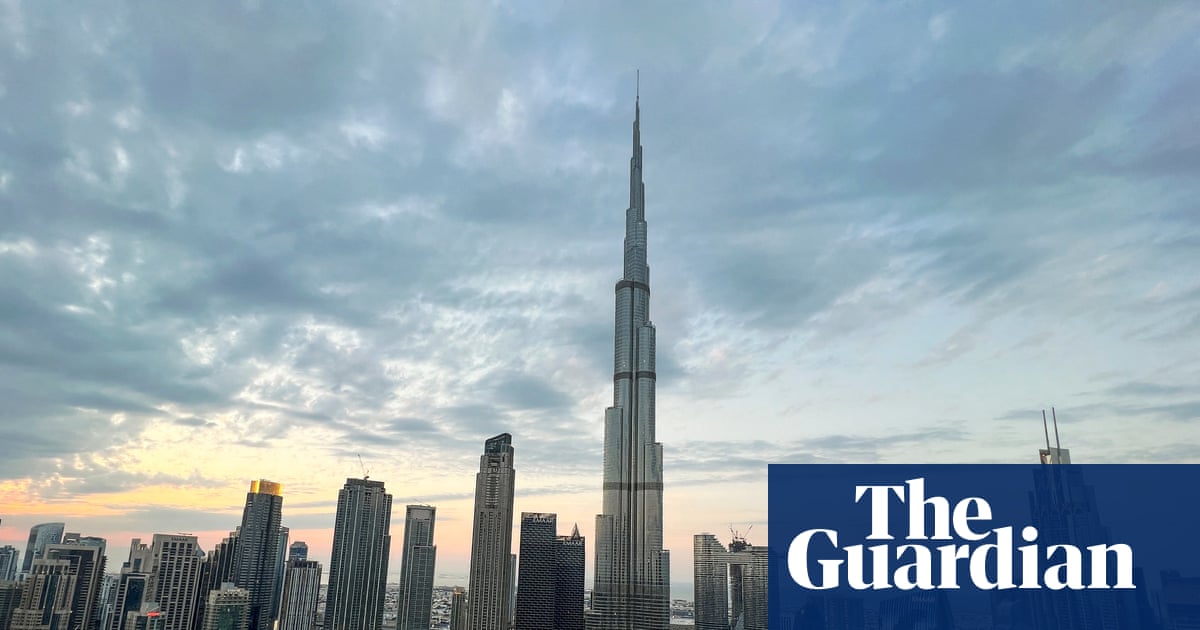
Moreover, other investigations reveal that Hemedti’s wife recently acquired land in a luxury development near Dubai’s Trump International Golf Club, six months into Sudan’s ongoing conflict. Additionally, individuals with ties to the RSF, such as sanctioned financial advisor Mustafa Ibrahim Abdel Nabi Mohamed, are reported to own apartments in some of Dubai’s most prominent locations, including the Burj Khalifa.
Legal and Ethical Considerations
While the Dagalo family has refrained from commenting on specific property ownership, they maintain that any assets they possess were acquired legally, emphasizing their longstanding involvement in legitimate businesses like livestock trading. The investigative report from The Sentry highlights a significant contradiction in the family’s narrative, as their wealth derives from a context of ongoing conflict and humanitarian disaster in Sudan.
The UAE has denied any involvement in providing arms or support to the RSF, attempting to distance itself from accusations that link it to the militia’s violent actions. Recently, the United Nations echoed concerns regarding the RSF’s actions in Sudan, categorizing them as potentially genocidal.
As the situation evolves, ongoing scrutiny will be required to assess the implications of foreign investments linked to conflict-prone regions. The international community must address the complex interactions between illicit financing, humanitarian crises, and the real estate sector to ensure that accountability prevails and that the victims of such conflicts receive the support they desperately need.