
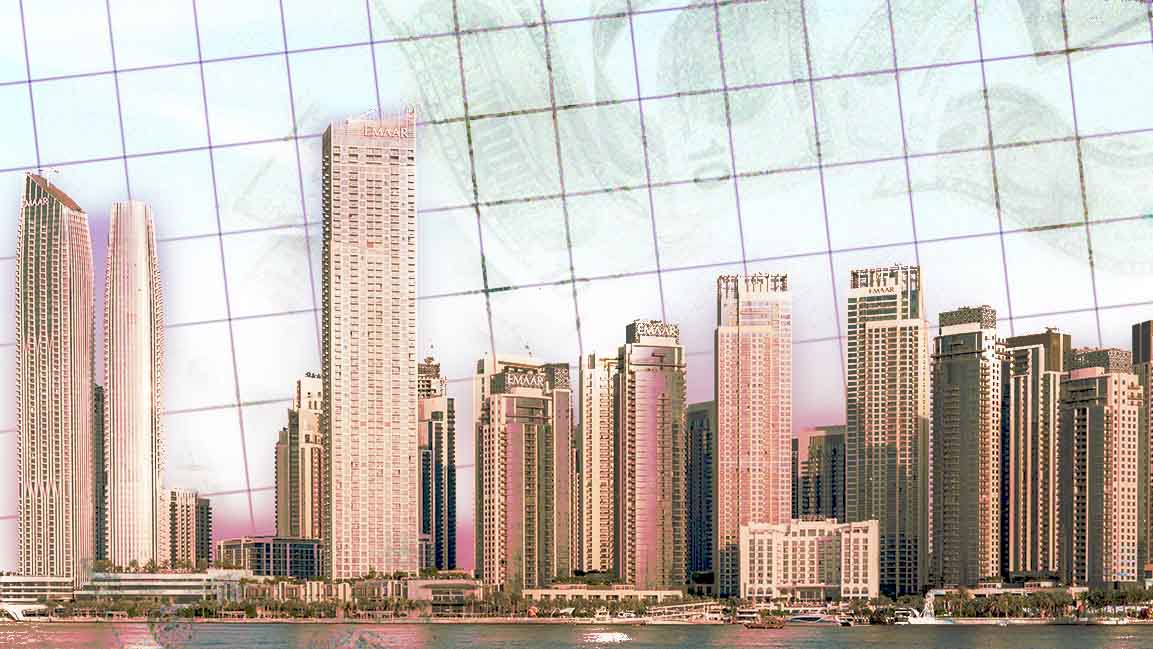
Insights from $40.4 Billion in Foreign Investment into Dubai’s Real Estate Market – Fast Company Middle East
Foreign investment in Dubai’s real estate market is on an impressive upward trajectory, with an influx of international capital signaling strong interest in the emirate. The first quarter of 2026 alone saw foreign investments hit a staggering $40.4 billion, reflecting a 26% increase compared to the previous year. This growth is indicative of a broader trend as investors seek to capitalize on Dubai’s unique market attributes.
Record-Breaking Investor Activity
During this period, Dubai welcomed 48,448 property investors, with 29,312 being new entrants to the market. This surge in investor interest has driven total real estate transactions to an impressive $68.6 billion, a solid 31% increase in monetary value from the prior year. These statistics not only highlight the scale of transactions but also point to an evolving landscape where international capital continues to reshape Dubai’s property sector.
The upward trend in investment is particularly noteworthy, with total real estate investments sitting at $47.1 billion across 57,744 transactions. The investment volume experienced a 22% year-on-year increase, whereas the number of transactions rose by a modest 7%. As noted by Loai Al Fakir, CEO of Provident Estate, the market can no longer be interpreted solely through the lens of recovery. Instead, it showcases the potential for sustained growth, as the market is operated at a new scale characterized by increased foreign capital and the entry of thousands of new investors.
The Attraction of Dubai’s Luxury Segment
The luxury property segment in Dubai also reported significant gains, with investments climbing 26% to reach $23.9 billion in the same quarter. Factors influencing investment decisions include the emirate’s economic growth, the allure of long-term residency options, favorable tax conditions, and robust rental demand. Furthermore, Dubai has established itself as a regional hub for business and wealth, enhancing its attractiveness among global investors.
However, it’s important to note that while capital inflows are substantial, the performance of individual developments varies. As supply increases, investors are becoming more discerning, seeking extensive data before commitment. Mohammad Jaafari, Off-Plan and Operations Director at Provident Estate, pointed out the emerging trend of cautious investment, especially within the off-plan market. Buyers now rigorously assess price per square foot, future supply, developer reliability, payment arrangements, and potential rental returns before making investment decisions. Such a sophisticated approach to purchasing reflects a market that is maturing and adapting to the needs of investors.
Future Outlook and Market Influences
Dubai’s real estate market has shown tremendous resilience and potential in recent years, especially following a period of robust activity that recorded 226,000 transactions valued at $207.2 billion in 2024. The period demonstrated a 36% increase in transaction volume and a 20% rise in monetary value, indicating further market penetration. Additionally, the rental market demonstrated strong demand, with 1.38 million tenancy contracts worth $34.4 billion registered in 2025.
Looking ahead, current indicators suggest continued growth in foreign investments, new participation from investors, and consistent demand for rentals and resales. Al Fakir emphasizes that market momentum is a crucial indicator of longevity, asserting that the future of Dubai’s property segment will rely on the diversification and quality of incoming capital alongside rising transaction values.
In summary, Dubai’s real estate market is not only bouncing back but potentially entering a phase of sustained structural growth, shaped by evolving investor behavior and an increasingly competitive landscape.