
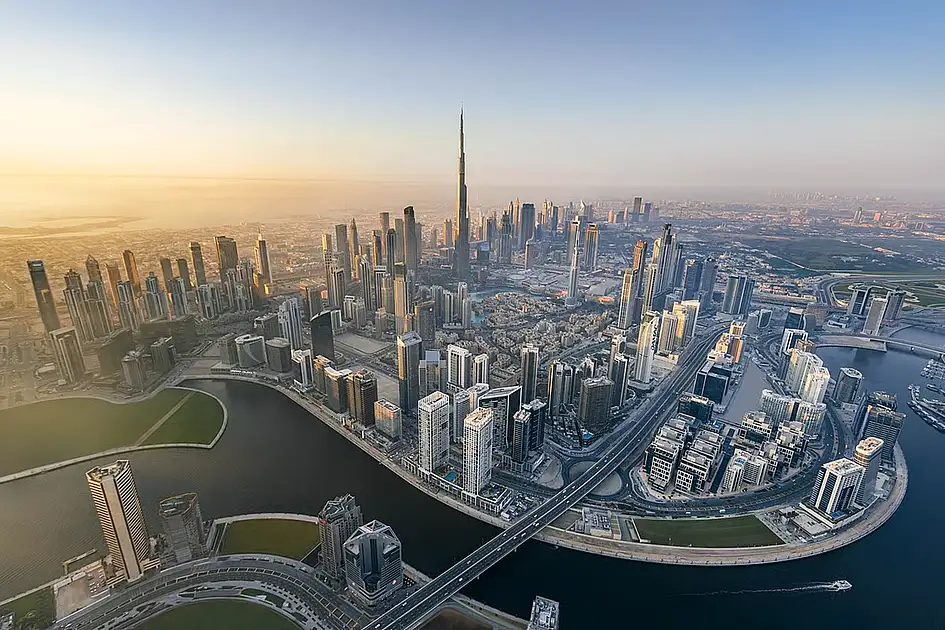
Dubai revises residency visa regulations for property investors, extending the duration to two years.
Residency visa regulations for property investors in Dubai have recently undergone significant changes, enhancing the attractiveness of real estate investments in the region. The updates primarily focus on the eligibility criteria for a two-year property-linked residency permit, making it easier for investors to establish a foothold in this vibrant market.
Key Changes in Eligibility Criteria
The most crucial modification in the new regulations is the removal of the previous minimum property value requirement of Dh750,000 for individual investors. Instead, applicants are only required to be the sole owner of the property to qualify for the residency visa. However, if multiple parties own the property, each investor must possess a share valued at a minimum of Dh400,000 to be eligible. This adjustment signifies a shift toward inclusivity, allowing more individuals the chance to secure residency through property investment.
Required Documentation for Residency Visa
To obtain a residency visa through property investment, several documents are necessary. Applicants must provide:
– The title deed of the Dubai property (properties outside Dubai or DIFC are not eligible).
– A clear copy of a valid passport (with more than six months of validity).
– Emirates ID.
– A high-quality digital photo conforming to ICP specifications.
– Health insurance coverage from a UAE provider.
– A certificate of good conduct from Dubai Police, directed to the Dubai Land Department.
– For applicants from certain countries (such as Iran, Pakistan, Iraq, Libya, and Afghanistan), a National ID is also required.
– The name on the property title must match that of the passport.
Medical insurance is mandatory for all residency applications, and qualified investors can also extend sponsorship to family members. If the property is mortgaged or acquired through an installment payment plan, a No-Objection Certificate (NOC) from the bank or developer is needed. This NOC should validate the total amount paid and the outstanding balance on the property.
Dubai’s Two-Year Property Visa Overview
The introduction of the two-year investor visa in 2019 marked a pivotal moment in Dubai’s effort to attract foreign investments. Originally, the visa required a minimum real estate investment of Dh750,000 and was processed through the Dubai Land Department (DLD) and issued by the General Directorate of Residency and Foreigners Affairs (GDRFA). The revisions to the eligibility criteria are expected to make this residency option more appealing to a broader range of investors.
Despite geopolitical uncertainties in the region, the Dubai real estate market has demonstrated resilience. In the first quarter of 2026 alone, property transactions reached an impressive Dh138.7 billion, showcasing a healthy investor sentiment and consistent end-user demand.
Recent market analyses reveal that transaction values have surged by 21.2% compared to the previous year, with the number of deals increasing by 4.35%. This uptick indicates a trend where buyers are gravitating toward higher-priced and premium residential properties, signifying a shift in market dynamics.
Experts suggest that the current growth trajectory of Dubai’s real estate market is predominantly driven by long-term investment strategies rather than short-term trades. January witnessed property sales hitting approximately Dh53.6 billion across more than 16,000 transactions, with the average deal size escalating to around Dh3.3 million. This reflects a growing interest from institutional investors and affluent individuals, reinforcing Dubai’s status as a premier investment hub.