
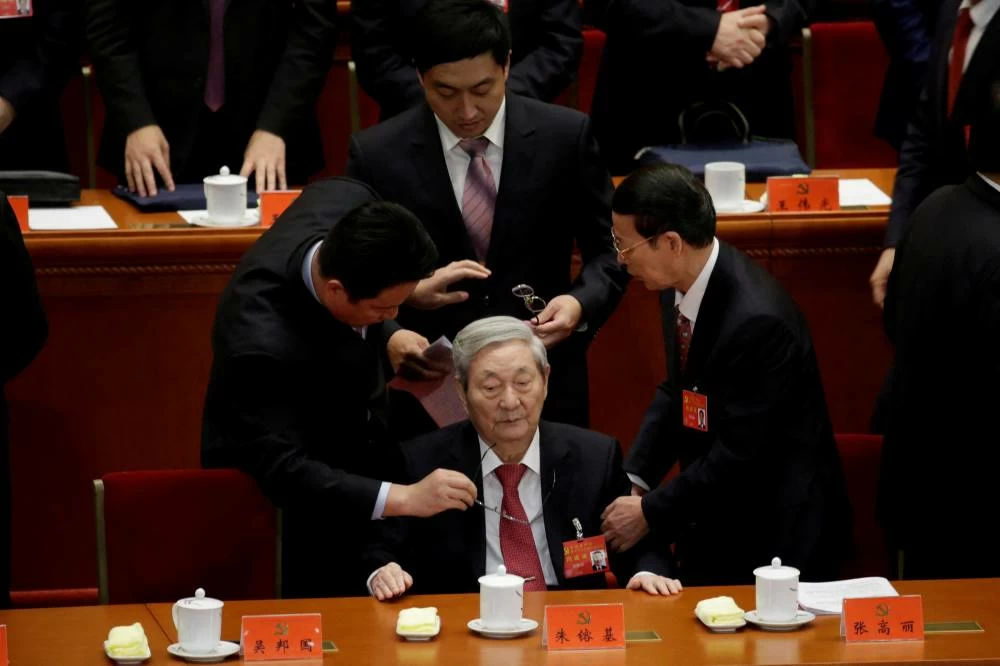
Zhu Rongji, 97, passes: Former Premier reformed China’s economy
Former Chinese Premier Zhu Rongji Passes Away at 97
Former Chinese Premier Zhu Rongji, a significant figure in the modernization of China’s economy, passed away at the impressive age of 97. Known for his straightforward approach, Zhu’s tenure was marked by extensive reforms aimed at resolving corruption and revitalizing state-owned enterprises. His legacy reflects both the challenges faced during a pivotal moment in China’s history and the bold steps taken to navigate those issues.
A Blunt Voice in Chinese Politics
Zhu’s directorial style was notable during a time when political leaders often chose caution over candor. His speeches, compiled into a four-volume set released in 2011, showcased his forthrightness, featuring colorful language that described poorly constructed flood defenses as “tofu dregs” and questioned the intellect of erring bankers with terms like “half-wits.” This refreshing candor resonated deeply with the public, who were accustomed to more guarded statements from their leaders. His boldness highlighted a yearning for transparency in governance, especially as China began to grapple with issues like inequality and rampant corruption.
Reflecting on the potential crises facing China during his premiership, Zhu stated in 1998 that the discontent among ordinary citizens stemmed from corruption within official ranks and the increasingly noticeable gap between the wealthy and the impoverished. His insights spoke to the heart of growing frustrations within the populace at a time of significant transformation and advised caution moving forward.
Path to Leadership and Reforms
Zhu’s educational journey began at Tsinghua University, one of China’s most prestigious institutions. He joined the Communist Party in 1949, the same year that the People’s Republic of China was founded. After enduring the tumult of the Cultural Revolution, Zhu eventually climbed the ranks to become the mayor of Shanghai in 1987. Under his stewardship, Shanghai began its evolution into a major global financial hub.
In 1991, Zhu moved to Beijing to influence national policy. His efforts were crucial in steering China away from the brink of economic collapse during the tumultuous early 1990s. As Premier from 1998 to 2003, he pushed through a series of transformative reforms: many state-owned enterprises either closed or were privatized, and tax authority shifted from local governments to the central administration. Moreover, Zhu initiated housing reforms that ignited a robust real estate boom, fundamentally altering the economic landscape of China.
Paving the Way for International Integration
Among Zhu’s most notable accomplishments was his relentless pursuit of China’s entry into the World Trade Organization (WTO) in 2002. This move was seen as a double-edged sword; many officials feared that the compromises made during negotiations could inhibit China’s economic growth potential. However, Zhu believed that integration into the global market would afford China the opportunities needed for sustained development.
While Zhu’s tenure was celebrated for its bold reforms, it was not without criticism. Questions regarding the handling of agricultural policies, tax distribution, and the ramifications of shuttering state factories lingered. Some observers noted that these decisions created challenges that future leaders would have to address delicately. Zhou Ruijin, a former senior editor of the People’s Daily, remarked in 2011 that Zhu’s era was characterized by large-scale reforms and a group of innovators willing to embrace the market economy.
Zhu Rongji’s passing marks the end of an era in Chinese politics. His no-nonsense approach and commitment to economic reform inspired many and left an indelible mark on the country’s development trajectory. His legacy serves as an important reminder of the potential for reformative leadership in China’s ever-evolving political landscape.