
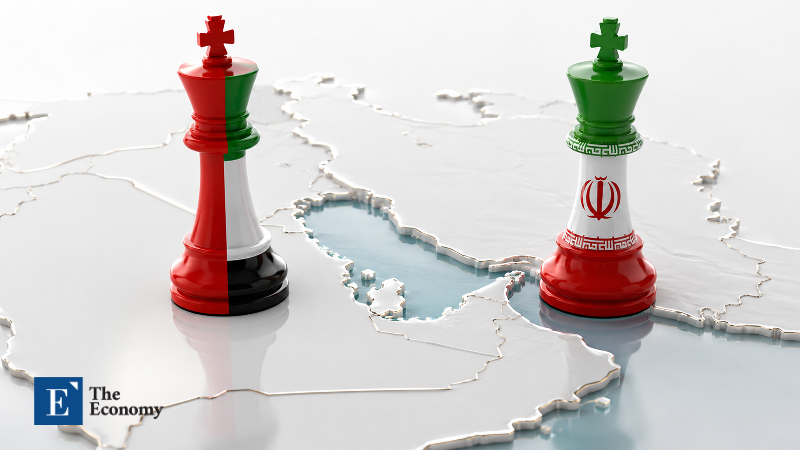
US Urges UAE to Cut Iran Funds, Risks Dubai’s Economy
The ongoing geopolitical tensions involving Iran and its economic ties with the United Arab Emirates (UAE) are reshaping the region’s trade landscape. As the US intensifies its pressure on Iran, the UAE finds itself at a crossroads, balancing economic interests with political demands. This situation has significant implications not only for UAE-Iran relations but also for Dubai’s crucial tourism sector.
US Pressure on UAE-Iran Trade Relations
The Trump administration has been actively encouraging the UAE to align its trade policies with US efforts against Iran. The US aims to disrupt Iran’s financial operations within the UAE, which has historically served as a vital conduit for Iranian trade. Recent reports indicate that the UAE supplied over $21 billion worth of goods to Iran, making it the latter’s largest import partner. This deep economic connection complicates the UAE’s willingness to fully cut ties with Iran, as such a move could destabilize Dubai’s non-oil economy.
The UAE has become a hub for various Iranian businesses that often engage in money laundering activities. A significant portion of funds linked to Iran has passed through UAE-based companies, particularly in Dubai. These include transactions that facilitate Iran’s oil exports, which rely on a clandestine network of aging tankers controlled by UAE firms. This financial interdependence poses challenges for the UAE, even as it aligns with US sanctions.
The UAE’s Strategic Maneuvering
In response to US demands, the UAE recently announced a suspension of all trade and financial transactions with Iran. This decision, rooted in direct Iranian threats against UAE maritime interests, signifies a notable shift in UAE’s economic policy. However, the move is not an outright severance of relations but rather a calculated strategy aimed at applying pressure without completely disrupting trade. Authorities suggest that the UAE will act incrementally, restricting cargo inflows to Iran while maintaining flexibility to adapt based on Iranian military actions.
Despite the UAE’s apparent commitment to the US strategy, experts caution that completely isolating Iran may not be feasible long-term. If tensions escalate, hard-liners in Iran may interpret a decrease in economic ties as a direct threat, potentially provoking military retaliation. Historically, the IRGC has shown a willingness to respond aggressively when confronted with economic sanctions, raising the stakes for the UAE as it navigates this precarious situation.
Impacts on Dubai’s Tourism and Economy
The potential for renewed military conflicts presents immediate risks to Dubai’s economy. The city, once hailed as a stable global hub, has begun to feel the repercussions of geopolitical tensions. Following series of Iranian missile strikes, key tourism infrastructures like Dubai International Airport and renowned venues including the Burj Al Arab experienced damage, which has significantly hindered the tourism sector. In 2022, Dubai welcomed a record number of visitors, but the climate has changed dramatically, with occupancy rates plummeting.
Tourism data reveals a worrying trend: hotel occupancy dropped to a mere 20% in March 2023. This decline forced hotels to offer discounts and engage local residents to stimulate demand. Although there was a temporary increase during the Eid al-Adha holiday, occupancy rates quickly fell back, further highlighting the fragility of the tourism industry amidst geopolitical instability.
Government Initiatives to Revitalize Tourism
In light of the mounting challenges faced by the tourism sector, UAE authorities have introduced a substantial support package aimed at revitalizing the industry. The “A Dubai Invite” initiative encourages residents to act as ambassadors, offering incentives for visitors brought in from abroad. Interest has surged, with over 10,000 applications within 48 hours of its launch, prompting an expansion of the program’s scale.
As the situation unfolds, the UAE must navigate its economic considerations while cooperating with international demands, particularly from the US. With potential military threats lingering, the vulnerability of Dubai’s tourism sector underscores the urgent need for a balanced approach that preserves both economic stability and geopolitical alliances.