
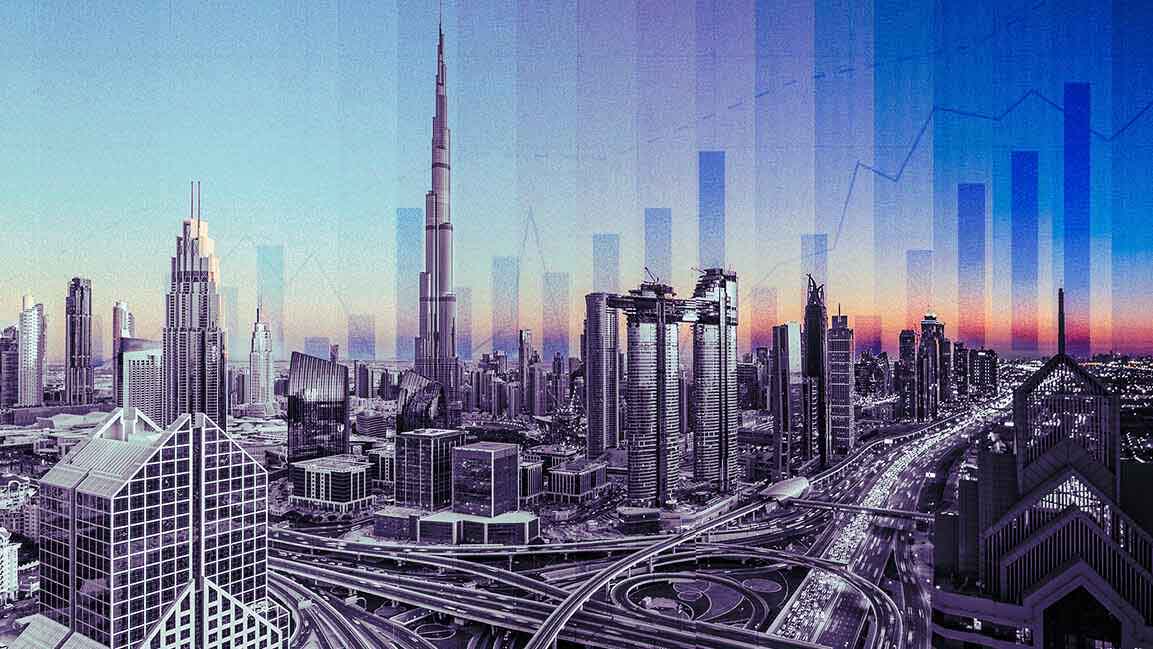
Dubai Officials Examine AI and Global Trade for Economic Growth
Dubai is poised to enhance its role in the global economic landscape as ongoing transformations in trade, technology, and investment continue to redefine international markets. This focus was evident at the Future Economy Majlis, part of the Mohammed bin Rashid Leadership Forum, where industry and government leaders convened to discuss strategies that will bolster Dubai’s competitiveness and ensure sustainable growth in an unpredictable global environment.
Embracing Economic Shifts
The Future Economy Majlis provided a platform for leaders to delve into the evolving dynamics shaping global supply chains, the energy transition, and the increasing significance of artificial intelligence (AI) in economic development. According to statements from the Emirates News Agency (WAM), participants emphasized the need for proactive measures to address future challenges. This foresight is essential for cultivating resilience and adaptability in an ever-changing global economy.
Hesham Abdulla Al Qassim, Vice Chairman and Managing Director of Emirates NBD, underscored the imperative for businesses to anticipate and strategize around economic changes. He highlighted Dubai’s critical geographical position as a trade nexus connecting Asia, Africa, and Europe. Al Qassim noted that the city’s future economic viability will hinge on harmonizing traditional trade practices with innovative digital technologies. He also emphasized the transformative potential of AI, data analytics, and fintech in enhancing productivity and supporting business escalation.
The Role of AI in Future Economies
Renowned economist Nouriel Roubini, from New York University, also contributed to the discussions by shedding light on the complex geopolitical and economic factors influencing global growth trajectories. He dissected how shifting relationships between major economies like the U.S., China, and Europe could reshape trade dynamics and investment flows. Roubini cautioned that while AI offers unprecedented opportunities to optimize productivity and revolutionize business models, it also necessitates a focus on the changing demands of the workforce in terms of skills and adaptability.
Beyond AI’s influence, the conversations also addressed its synergistic relationship with energy requirements. With the increasing deployment of AI technologies, a robust infrastructure is essential to cater to its expansive needs. Roubini stressed the need for adaptive economic strategies that can differentiate between temporary disruptions caused by technological advancements and long-standing structural changes.
Strategic Leadership for Economic Resilience
In a separate segment, the discussions turned toward leadership strategies essential for adapting to these economic shifts. Roubini advocated for enhanced flexibility in decision-making processes, suggesting that the capacity for institutions to respond to rapid changes is critical for future economic growth. He emphasized that preparing for these changes involves not only improving workforce skills but also fostering an environment where talent can thrive.
The Future Economy Majlis was one of several strategic initiatives at the Mohammed bin Rashid Leadership Forum, which gathered 1,000 leaders from governmental and private sectors, alongside experts and scholars. Together, they explored avenues to fortify Dubai’s standing as a hub for business and innovation on a global scale.
By engaging in these strategic conversations, Dubai sets the stage for a resilient and adaptable economy that leverages advanced technologies, strategic geographies, and a commitment to continuous learning. As the world continues to face uncertainty, proactive leadership in Dubai might just be the key to thriving amidst this complexity.