
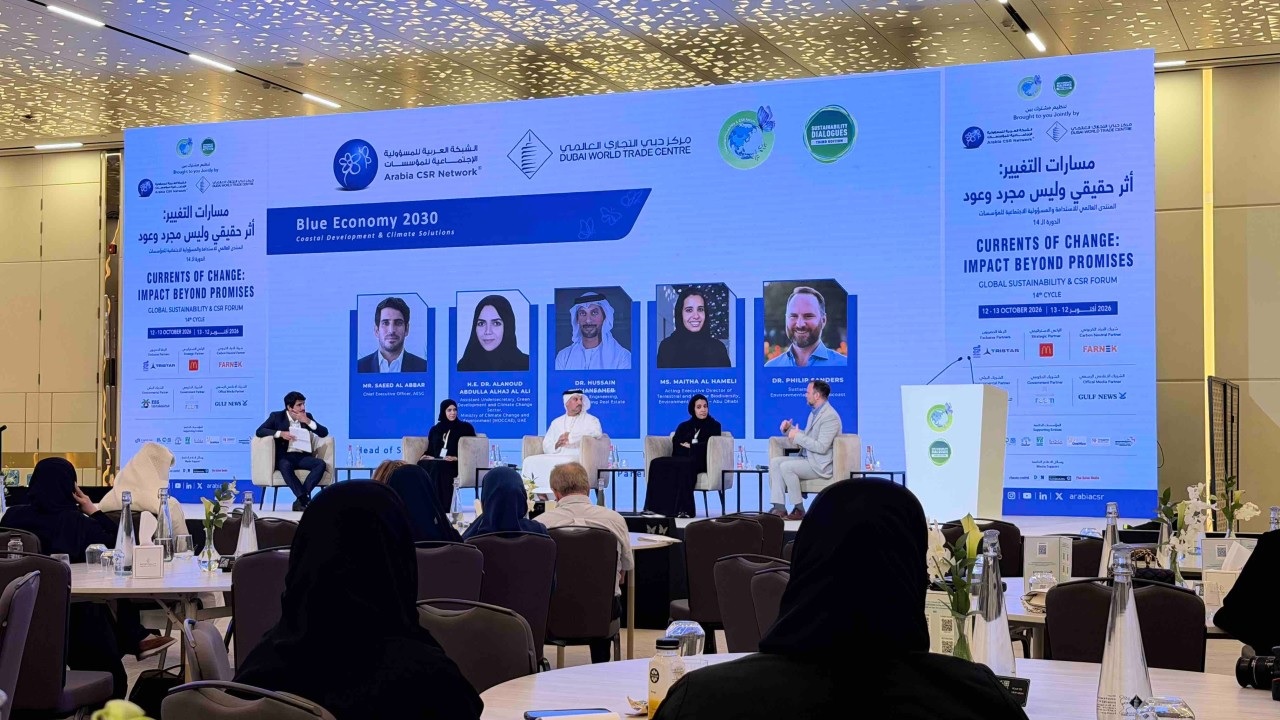
Blue Economy 2030: Coastal Growth and Climate Solutions
This week, the Arabia CSR Network hosted the Global Sustainability & CSR Forum at the Dubai World Trade Centre, where key themes surrounding coastal development and environmental sustainability were explored. One of the standout discussions was the panel focused on the Blue Economy 2030, featuring distinguished experts from various sectors. The central question posed was how to effectively stimulate coastal economic growth while ensuring the protection of coastal ecosystems.
Power of Policy in Coastal Development
H.E. Dr. Alanoud Abdulla Alhaj Al Ali, Assistant Undersecretary at the Ministry of Climate Change and Environment, emphasized that environmental assessments should be a collaborative effort. Developers are responsible for conducting their own assessments prior to project initiation, and regulators are there to help align these projects with environmental considerations. Dr. Al Ali stressed the importance of empowering the private sector and communities through supportive policies. The focus on coherence, collaboration, and open communication emerged as vital to achieving balanced coastal development.
Dynamic Adaptation to Climate Risk
The UAE’s innovative approach to managing climate risk was another key topic. Dr. Al Ali articulated that adaptation is not a one-time planning effort but a dynamic process. A national team integrates data from various stakeholders—federal bodies, local governments, and private entities—into a comprehensive model that examines different scenarios for coastline resilience and biodiversity health. This model actively tracks key risks, such as rising temperatures and sea-level increases, and provides developers with crucial insights into the resilience their infrastructure must possess.
Transforming Coastal Assets into Economic Drivers
Dr. Hussain Khansaheb from Dubai Holding illustrated how coastal development can harmonize with marine biodiversity. He highlighted the upcoming Dubai Reef project, set to launch in November 2024, which aims to enhance local fish populations while introducing a tourism aspect linked to turtle rehabilitation efforts in Jumeirah. The project adheres to regulatory standards concerning sea level rise over the next century. Teams are diligently assessing coastal dynamics, sediment transport, and potential storm events, while also testing innovative nature-based solutions, such as underwater reef structures, as a form of protection for existing coastlines.
Leading by Example
Having recently returned from Pre-COP in Fiji and Tuvalu, H.E. Dr. Alhaj Al Ali shared insights from an adaptation initiative aimed at fortifying coastline resilience, ensuring families can remain on their land and safeguard it for future generations. She underscored the importance of leadership that combines vision with tangible implementation. Whether locally or globally, the message is clear: leading by example involves putting strategies into practice and fostering collaboration among different stakeholders.
As the panel discussion concluded, Saeed Al Abbar, CEO of AESG, noted a crucial takeaway: the knowledge of what needs to be done is already established. The data, predictive models, and regulatory standards are in place for effectively addressing rising sea levels and other environmental challenges. However, the collective success of these efforts hinges on the cooperation among ministries, regulators, developers, and specialists from initial design stages through to project completion. Al Abbar posed a thought-provoking question: What guiding principles should shape the next generation of coastal infrastructure in both the UAE and the broader region? This query sets the stage for ongoing dialogue as stakeholders continue to work toward sustainable coastal development.