
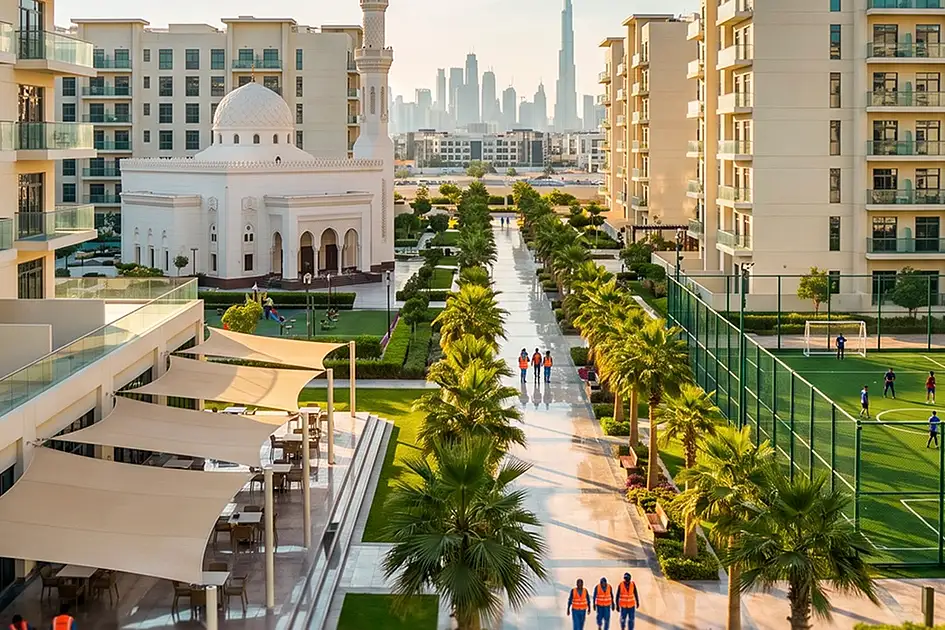
Dubai Municipality establishes minimum sleeping space requirements for worker housing.
In recent developments, the Dubai Municipality has introduced new standards for workers’ accommodation aimed at enhancing living conditions for laborers in the city. These updated guidelines reflect a commitment to improving both the environment and the quality of life for individuals working in Dubai by ensuring adequate living spaces and facilities.
New Standards for Workers’ Accommodation
The newly announced regulations stipulate that workers’ accommodation must provide a minimum sleeping area of 3.7 square meters per person. In addition to this, there is a mandated gross floor area allocation of between 8.9 to 10.3 square meters per individual, which is designated for essential support services within these living areas. Furthermore, the guidelines also emphasize the importance of recreational facilities and outdoor spaces, requiring an allocation of 0.75 to 1.5 square meters per person. This comprehensive approach not only aims to elevate the living conditions but also encourages a healthier lifestyle for workers.
The announcement, made on September 18, was part of a broader initiative to improve the overall quality of life for workers in Dubai. Collaborating with various government partners, the municipality has been diligently working on a set of projects designed to refurbish existing accommodations, revamp infrastructure, and enhance community facilities.
Comprehensive Assessment and Model Initiatives
As part of its commitment to ensuring compliance with public health and safety standards, the Dubai Municipality launched a smart classification system that has already assessed 1,417 accommodation buildings. This initiative focuses on evaluating their structural stability and adherence to regulatory guidelines. Notably, the Model Workers’ Accommodation initiative recognized 19 facilities as exemplary models, with three receiving Platinum status, nine awarded Gold, and seven designated Silver.
To optimize planning and resource allocation, a shared government database has been established. This database collates statistics and performance indicators, allowing for better decision-making and investment in under-resourced areas. By pinpointing the communities that need improvement the most, authorities can channel their efforts efficiently.
Enhancing Infrastructure and Community Spaces
Field surveys conducted in various workers’ districts have identified the need for improved pedestrian infrastructure, including pathways, bridges, and pavements. The municipality has prioritized these needs by developing effective parking solutions along with necessary facilities. Additionally, efforts are underway to introduce retail outlets, community amenities, and sports facilities to promote recreational activities and enhance the everyday lives of workers.
These initiatives align closely with Dubai’s long-term goals, notably the Dubai 2040 Urban Master Plan and the Dubai Quality of Life Strategy 2033. By integrating essential services and recreational opportunities, the municipality aims to create a more inclusive and vibrant environment for all workers in Dubai.
Commitment to Safety and Regulatory Compliance
Dr. Naseem Mohammed Rafie, the acting CEO of the Environment, Health, and Safety Agency at Dubai Municipality, emphasized the importance of regulatory alignment in implementing these standards. This involves revisiting existing laws to ensure they comply with best practices, thereby expediting development projects and enhancing overall safety in workers’ accommodations.
The objective of these initiatives is not just limited to improving infrastructure; it encompasses building upgrades in line with the highest engineering and health safety standards. With a focus on the unique needs of each community, the municipality aims to maximize the benefits of its projects, ensuring their sustainability and effectiveness.
Overall, these advancements underscore Dubai’s commitment to providing a high quality of life for every worker, setting a positive precedent for other regions to follow.