
Dubai: Commerce Thrives Amid the Iran Conflict
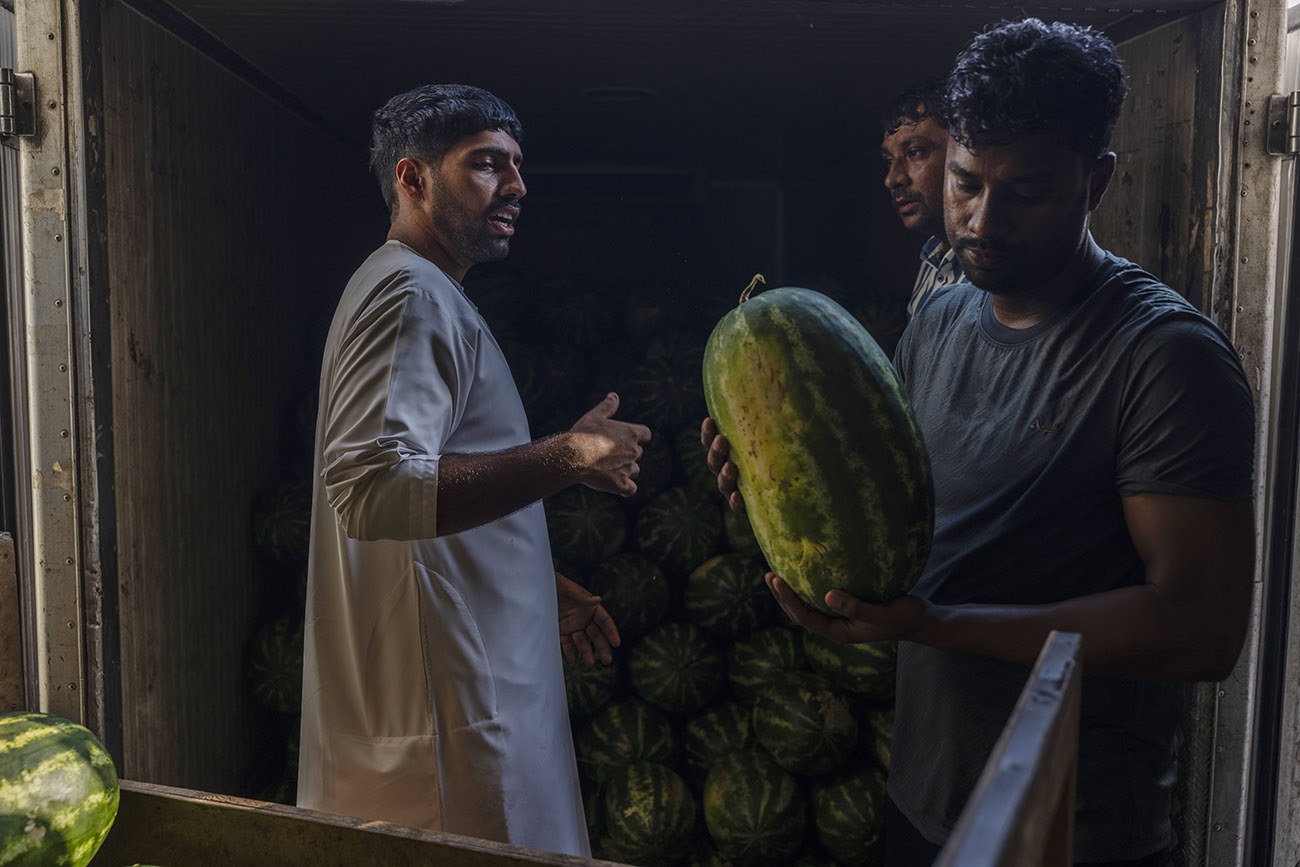
Rashed Aljabri deftly tosses a watermelon from a truck to his colleague at Al Aweer, Dubai’s premier fruit and vegetable market. As the sun rises over the bustling marketplace, he meticulously constructs a pyramid of watermelons before slicing one open, revealing its vibrant red flesh.
### The Source of Dubai’s Produce
“Where do these come from?” someone inquires. “Iran, Iran, Iran,” Aljabri responds enthusiastically. The market buzzes with activity at 6 a.m. as pallet trucks carrying an assortment of vegetables like cauliflowers and eggplants maneuver through the chaos, narrowly avoiding beeping tuk-tuks. According to Aljabri, an estimated 90% of the produce sold here originates from Iran. Trucks labeled with Tehran addresses reverse into bustling docking bays, unloading fresh salad greens and celery.
Despite ongoing tensions fueled by conflict between Iran and the UAE, Iranian fruits and vegetables maintain a vital presence in Dubai’s economy. Recently, the UAE announced a cessation of all trade ties with Iran in response to attacks on their ships, a move aligned with U.S. strategies aimed at economically isolating Iran. However, the influx of Iranian produce continues to supply local restaurants and supermarkets, illustrating the intertwined economic histories of both nations.
### Historical Ties Between Iran and the UAE
The Strait of Hormuz has long been a crucial channel for global trade. Historically, merchants from Iran and the Arabian Peninsula navigated the Gulf on traditional wooden dhows, exchanging goods like saffron and pearls. This rich history is evident even today in Dubai’s old town, where colorful dhows line the port at Marfa Wharf, prepared to embark with their valuable cargo.
The Iranian Revolution in 1979 significantly impacted Dubai’s demographics, with an influx of wealthy Iranian expatriates seeking refuge. Today, approximately 560,000 Iranians call the UAE home, primarily in Dubai, where they own businesses and contribute to the local economy. The trade dynamics during this period were foundational to Dubai’s explosive growth, establishing it as Iran’s trade gateway amid U.S. sanctions.
### The Dependency on Iranian Produce
By 2024, Iran was the leading supplier of fruit and vegetables to the UAE, exporting over one million tons of produce that year alone. This dependency is further emphasized by the UAE’s need to import around 90% of its food supply. The geographical proximity, adaptability to sanctions, and diverse climates in Iran allow for consistent agriculture year-round, prompting experts to view Iranian produce as critical to UAE’s food security. As Omid Zamani, a food policy researcher, notes, Iran’s varied climatic regions enable a continuous flow of exports.
Despite the potential for alternate supply sources, replacing Iranian produce presents challenges. Food logistics companies are beginning to reroute supplies, yet costs are escalating due to increased shipping expenses. While alternatives may exist, they often come at higher prices and potentially lower quality. Traders like Sultan Arefin express the gravity of the situation, noting that without Iranian produce, the market would face severe consequences.
### Current Trade Dynamics and Impacts
Tensions have recently escalated with missile strikes impacting trade routes, yet Al Aweer continues to see Iranian goods flow in, albeit at reduced volumes. Iranian exporters like Hadi Mirzaei acknowledge the ongoing trade, although it has slowed significantly since the uptick in conflict. The UAE remains a vital market for Iranian produce, and both traders and eateries in Dubai feel the strain of rising costs due to disrupted supply chains.
The situation reflects a broader tension between economic necessity and political alignment in the region. While Emirati leadership may favor deeper ties with the U.S., the longstanding economic partnership with Iran complicates this narrative. Dubai’s historical reliance on Iranian trade means that severing ties completely could have immediate and severe ramifications for its economy.
As the sun sets on another day at Al Aweer, vendors like Aljabri remain acutely aware of the tenuous situation. “Every shipment carries the risk of conflict,” he states, highlighting the ongoing uncertainty surrounding produce deliveries.