
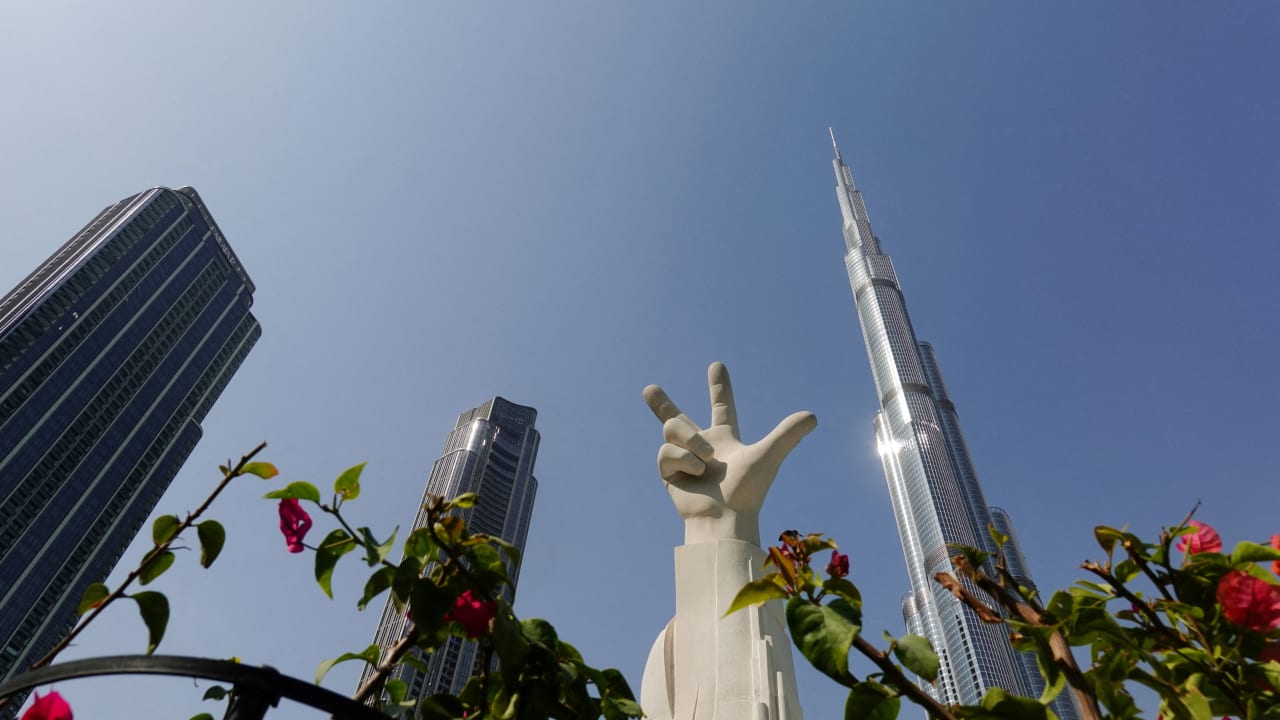
Iran’s resurgence won’t undermine Dubai’s status as a global hub.
The emergence of Dubai and the Gulf states has raised discussions about the potential influence of Iran’s post-1979 economic landscape. Some argue that if Iran had stabilized and opened itself to the world after the Iranian revolution, it could have reclaimed its position as a regional economic powerhouse. This view suggests that Dubai’s rise is a symptom of Iran’s misfortunes rather than a testament to its own strategic development.
### The Complex Relationship Between Iran and Dubai
While one might initially consider Iran’s substantial resources, population, and historical significance as indicators that it could have overshadowed Dubai, this perspective oversimplifies the issue. To assert that Iran’s potential renaissance correlates directly with a decline in Dubai’s success diminishes the remarkable achievements of the United Arab Emirates over the past fifty years. Dubai’s own evolution into an economic hub is owed primarily to its proactive measures rather than simply benefiting from Iran’s missteps.
### Dubai’s Unique Economic Model
Dubai does not owe its success to Iran’s crises but rather to a distinctive model that it has developed independently. This model focuses on attracting capital, businesses, and talent through robust infrastructure, global connectivity, favorable regulatory frameworks, and consistent governance. The city-state has built an environment that caters to both domestic and international markets, setting itself apart from others in the region which have faced issues like bureaucratic roadblocks, sanctions, and political uncertainty.
Dubai’s growth cannot merely be viewed through the lens of Iran’s decline; rather, it comes down to Dubai’s effectiveness in creating a competitive environment. The city’s ability to attract businesses and talent underscores a critical notion: economic power arises not from the absence of competition, but from the capacity of a location to appeal to investors and companies on a global scale.
### A Future of Mutual Opportunity
Should Iran achieve stability and openness, it could indeed represent an economic opportunity for Dubai rather than a direct competitor. With a reintegrated Iranian economy, the demand for services like finance, logistics, and consulting will likely surge, and Dubai, with its established networks, could serve as a crucial gateway to these markets. In this potential scenario, both entities could thrive simultaneously without one cannibalizing the other’s success.
The evolving economic landscape of the Middle East suggests that resolving regional conflicts will likely foster multiple centers of economic activity instead of reverting to a singular, dominant hub. Countries like Saudi Arabia and the UAE are expanding their economic roles, which could result in a balanced economic ecosystem where collaboration rather than competition prevails.
Ultimately, both Dubai and a reimagined Iran may benefit from each other’s strengths if they focus on drawing in investors and businesses through reliability and efficiency, instead of claiming historical dominance or prior inheritance of economic roles.
In conclusion, Dubai’s ascension as a global economic center is not predicated on Iran’s decline; it is a manifestation of foresight and effective governance. A stable Iran, instead of threatening Dubai’s existence, could offer valuable synergies and opportunities for mutual growth, crafting a more interconnected and prosperous Middle Eastern economy.