
Airlines’ Innovations to Enhance Comfort for Budget Travelers
In recent developments, airlines are striving to enhance comfort for economy class passengers through new seat designs and features. As travel resumes post-pandemic, the focus has shifted to making long-haul flights more bearable by incorporating innovative design elements that prioritize passenger comfort.
Innovative Economy Class Seating
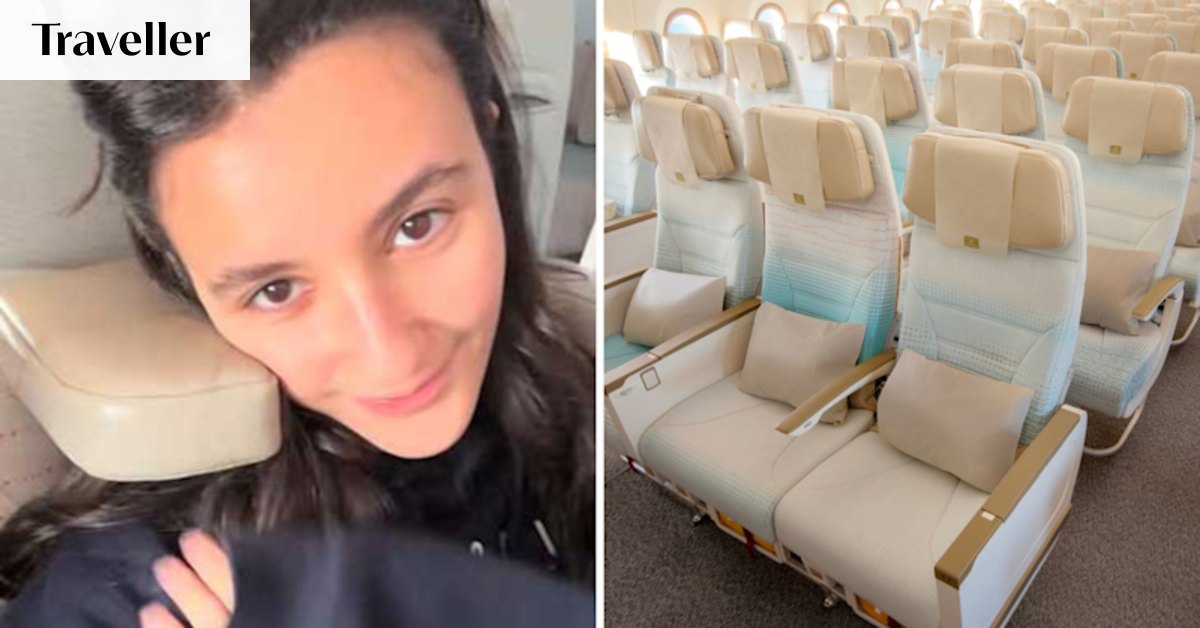
Recent buzz around airline seat enhancements started when frequent flyer Naya Rajji showcased the adjustable headrest on an Emirates flight. While adjustable headrests are not entirely new, Emirates has developed a design that truly sets it apart. The headrest curves down from the seatback into a horseshoe shape, enveloping the neck, offering much-needed support, especially on lengthy journeys. Travelers have noted that it mimics the feeling of traditional neck pillows but with a sturdier framework.
Airlines are actively investing in comfort-oriented innovations that resonate with their passengers. For instance, Air New Zealand has garnered attention with its “Skycouch,” allowing families to book a row of three economy seats with extra padding, enhancing overall comfort during flight. Additionally, Air New Zealand announced the upcoming “Economy Skynest,” which will introduce lie-flat bunk beds on certain long-haul routes—an exciting prospect for budget travelers seeking a more luxurious experience.
Enhanced Legroom and Cabin Features
Various airlines are making strides in providing additional legroom in economy. Options like United Airlines’ Economy Plus and Etihad’s Economy Space offer extra space for a nominal fee, catering to travelers who prioritize comfort. Some airlines are also embracing the trend of quieter cabins by restricting child passengers, ensuring a peaceful flying environment.
Japan Airlines (JAL), All Nippon Airways (ANA), and Korean Air are particularly noteworthy for their generous seat pitches of 84-86 centimeters on certain international routes. Such dimensions make a tangible difference in passenger comfort, particularly during long flights. However, many airlines still maintain traditional seat arrangements, which can make booking the right flight a critical decision for travelers prioritizing extra legroom.
Lessons from Past Innovations
Despite the wave of innovations, the quest for comfort has included some less successful concepts. Proposals like the saddle seat, aimed at maximizing seating capacity, barely made it off the drawing board due to their impractical design. Similarly, ideas such as double-decker seating configurations were scrapped in favor of safety and efficiency.
The introduction of Wi-Fi in economy class is another significant development. What was once a luxury reserved for premium passengers has now become commonplace, with many airlines offering it to all travelers. Furthermore, some airlines are introducing quiet cabins exclusively for adults, though this concept has yet to gain widespread traction.
In a world where comfort can significantly impact travel experiences, airlines are increasingly recognizing the importance of enhancing their economy class offerings. Whether through innovative seating options, increased legroom, or quieter environments, the push for a more pleasant flying experience continues to evolve as airlines seek to balance comfort and profitability. Choosing the right airline and understanding its offerings can make all the difference for budget-conscious travelers navigating the skies.