
Airlines Innovate to Alleviate Budget Travel Discomfort
The aviation industry is continuously evolving, aiming to enhance comfort in economy class. Innovations such as adjustable headrests and extra legroom are some of the modern adaptations being made to improve passengers’ travel experiences without significantly altering revenue models. Airlines are finding creative solutions to make long-haul flights more bearable for economy travelers, and recent upgrades are sparking much interest.
Innovative Seat Designs for Enhanced Comfort
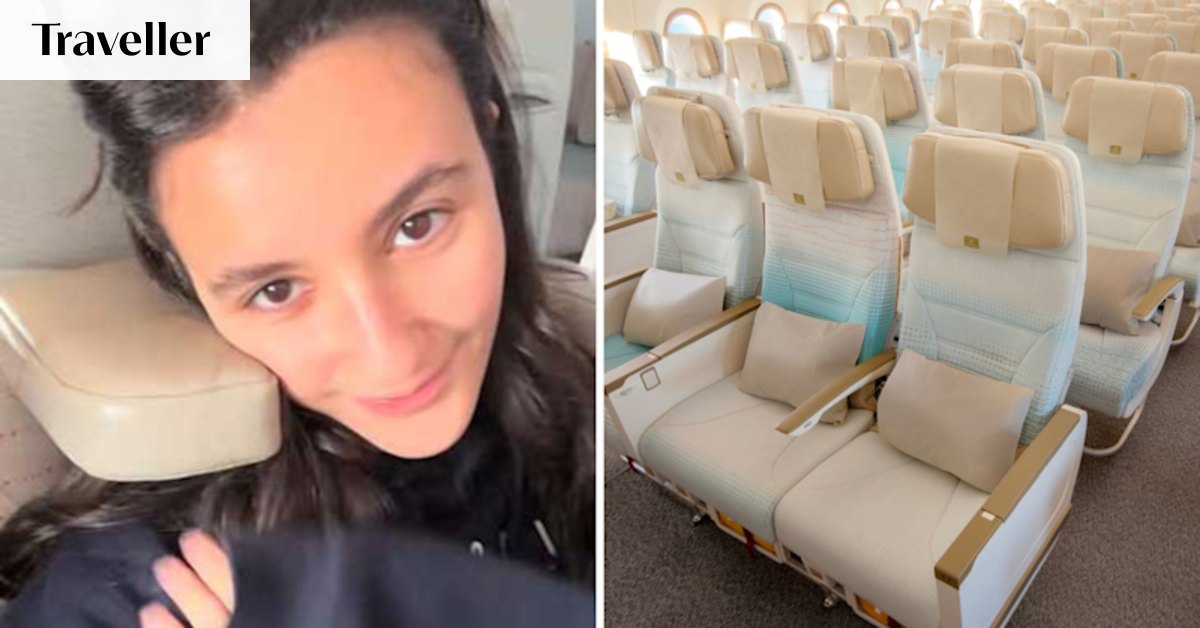
A recent example of this focus on comfort comes from Emirates, which introduced a unique adjustable headrest design on its Airbus A350s. Unlike traditional headrests, which fold in at the sides, Emirates’ headrests feature a horseshoe shape that surrounds the neck and can be adjusted to various heights and angles. This provides users with a neck-supporting experience similar to that of neck pillows, but with more structure. Reviews from passengers, such as frequent flyer Naya Rajji, highlight a noticeable enhancement in comfort during long flights.
Meanwhile, airlines like Air New Zealand have been at the forefront of innovation with concepts like the Skycouch and upcoming Economy Skynest. The Skycouch allows passengers to book a row of three seats, creating a flat surface with a padded mattress for rest. The forthcoming Economy Skynest, slated for launch in December, will feature lie-flat bunks, offering fresh alternatives to the traditional cramped seating arrangement of economy class.
Legroom and Cabin Enhancements
Space remains one of the most critical factors in enhancing economy class comfort. Airlines such as Japan Airlines (JAL), All Nippon Airways (ANA), and Korean Air stand out for their generous seat pitch, offering between 84 to 86 centimeters on many of their routes to Australia. In contrast, other major carriers like Qantas and Singapore Airlines typically provide around 79 to 81 centimeters of seat pitch. This difference can significantly affect passenger comfort, especially on long-haul flights.
Many carriers are also introducing premium economy options with added legroom and slightly better recline angles, allowing passengers to pay a bit more for enhanced comfort. Examples include United Airlines’ Economy Plus and Hawaiian Airlines’ Extra Comfort seats. However, passengers hoping for the most legroom should be wary of airlines that cram ten seats across in a standard Boeing 777; wider aircraft with a 2-4-2 seating configuration tend to offer a more comfortable experience.
Failed Innovations and Lessons Learned
Despite the welcome adaptations in the economy cabin, the quest for comfort hasn’t been entirely successful. Some radical ideas have been proposed but never materialized, such as saddle seating designed to cram more passengers into limited space. Such concepts often focus on profit maximization over passenger experience, leading to a decline in practical viability.
Additionally, while concepts like double-decker seating and passenger sleeping modules in cargo holds have been floated, safety regulations and practicality have prevented them from being implemented. The reality remains that effective, profitable methods for upgrading economy travel are challenging to devise without raising ticket prices, which could deter budget-conscious travelers.
As airlines strive to improve economy class, it’s clear that while some innovations succeed, others fall short. However, the ongoing transformation of in-flight experiences highlights an industry commitment to innovating and enhancing comfort for those flying in economy. Whether through modular designs or more legroom options, the future of economy travel looks brighter as airlines remain focused on passenger preferences.