
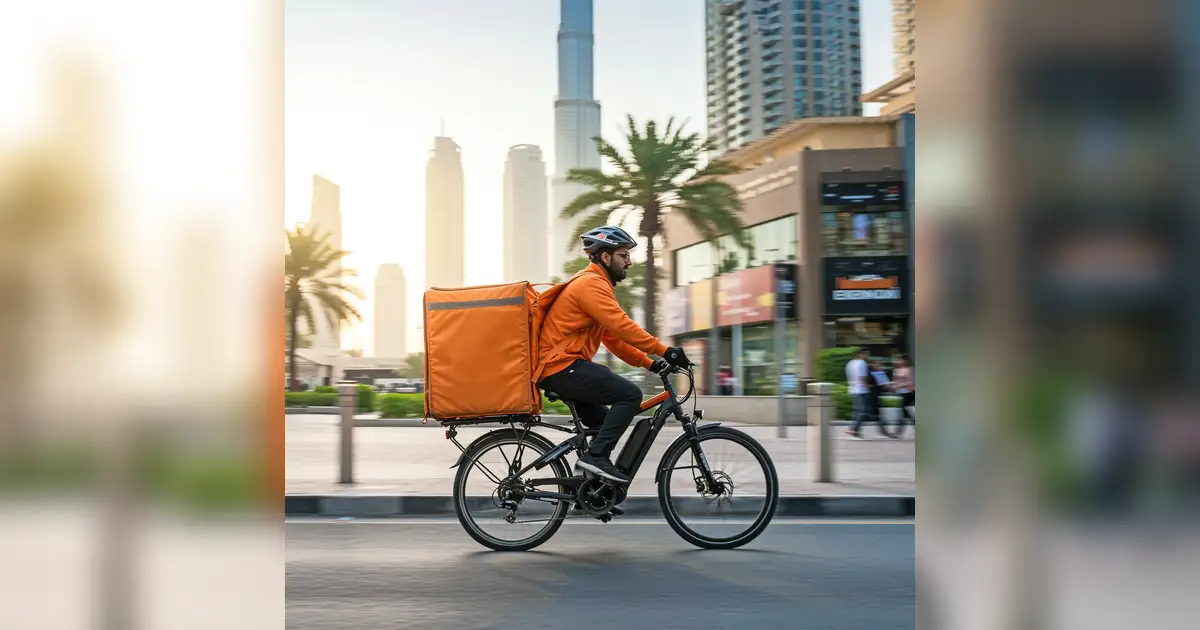
Will Electric Delivery Drive Dubai’s Logistics Expansion Forward?
Dubai’s demand for home delivery services is on the rise, pushing the delivery industry to expand rapidly to meet this expectation. This dynamic growth is shaping the landscape of logistics in the city, focusing increasingly on sustainability and efficiency.
Rapid Growth of Delivery Companies
According to the Roads and Transport Authority (RTA), the number of delivery companies in Dubai has surged to 2,948, marking an 18% increase over the previous year. A staggering 46,600 delivery bikes are now operational throughout the emirate. The focus is shifting toward incorporating electric bikes into the delivery landscape. In February, Dubai initiated e-bike trials in four regions, expanding to 11 areas by July, which includes popular locales like Dubai Marina and Jumeirah Lakes Towers.
This initiative aligns with Dubai’s Commercial and Logistics Land Transport Strategy 2030, emphasizing sustainable delivery methods to reduce costs and enhance operational safety. The expansion considers various factors, such as proximity to eateries and commercial demand, to ensure the service can effectively meet consumer needs.
The Importance of Infrastructure for Electric Fleets
Transitioning to electric delivery fleets presents unique challenges. The RTA is already developing charging and battery-swapping centers to support the e-bike network. These facilities aim to minimize downtime for riders, allowing for an efficient service that can adapt to the city’s demands. As e-bikes become a significant part of delivery operations, it’s critical to ensure the right infrastructure is in place.
Constantin Kodsi, Director of Logistics at talabat, emphasizes that Dubai’s last-mile delivery network needs a variety of vehicle types and supportive infrastructure, including battery-swapping stations. These facilities enable riders to quickly exchange depleted batteries, significantly increasing operational efficiency. The deployment of autonomous delivery options is also in the pipeline, and integrated logistics will play a critical role in ensuring smooth operations.
Challenges and Solutions for Electric Delivery
With increased demand, operators like Eco Way face operational challenges, including traffic congestion and the logistics of battery management for electric fleets. Ivan Kroshnyi notes that high order volumes necessitate more couriers on the road while seeking to reduce delivery times and carbon footprints. Additionally, traditional fuel costs and summer heat stress riders, accentuating the need for adequate micro-logistics hubs and charging networks.
Kroshnyi argues for efficient micro-hubs strategically located near high-density business and residential areas. Such facilities can significantly enhance fleet efficiency by ensuring that delivery personnel have easy access to essential services.
The Future of Electric and Autonomous Delivery in Dubai
As the logistics landscape in Dubai evolves, a more integrated system combining electric and autonomous vehicles is anticipated. This approach aligns with Dubai’s broader aspirations, including the Dubai Green Mobility Strategy 2030, which aims for 20% of journeys to utilize autonomous transport. For sustainable delivery to become a reality across the city, a standardized battery-swapping network is vital, allowing easy access to rapid battery exchanges in key commercial zones.
In conclusion, the shift toward electric and autonomous delivery in Dubai not only reflects a commitment to sustainability but also provides a strategic advantage for businesses. The overall cost-efficiency and potential reduction in operational expenses, estimated at up to 50%, make a compelling case for embracing electric fleets in the long term. Public-private collaboration will be crucial in making these initiatives successful, creating a mutually beneficial environment for consumers, businesses, and the city at large.