
Italy Denies US Military Aircraft Access to Airbase for Iran Conflict
Iran Issues Dire Warning to U.S. Tech Giants Amid Escalating Tensions
The Iranian Revolutionary Guards Corps (IRGC) has issued a stark warning, threatening to target prominent American technology firms if further “targeted assassinations” of Iranian leaders occur. This statement comes amid rising hostilities between the U.S. and Iran, exacerbated by comments from President Trump regarding military action in the region. These developments highlight the fragile state of international relations and the risks of escalation in the Middle East.
Iran’s Growing Distrust of U.S. Diplomacy
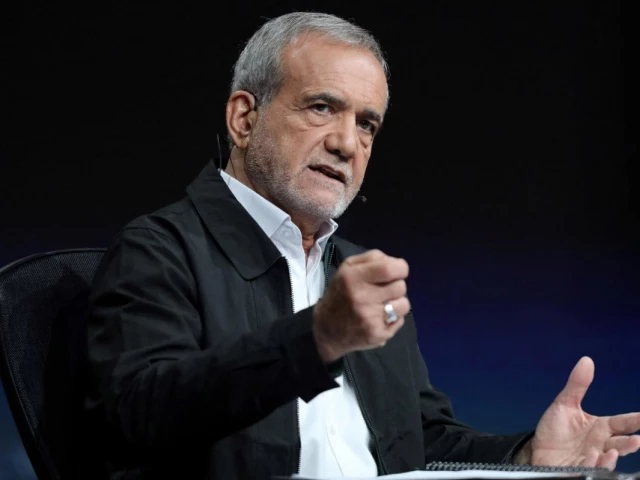
Iranian President Masoud Pezeshkian emphasized that the U.S. has shown a lack of commitment to diplomacy. During recent negotiations, he claimed that Iran had been attacked twice, indicating a deep-seated skepticism about American intentions. He criticized what he characterized as hostile actions by the U.S. in the Strait of Hormuz, linking them to a broader American-Zionist agenda against Iran. In a call with the president of the European Council, Pezeshkian further denounced European nations for their perceived bias against Iran, adding another layer of complexity to an already volatile situation.
In an alarming statement, the IRGC highlighted that if more Iranian leaders were killed, they would retaliate against companies such as Boeing, Microsoft, Apple, and Google. The IRGC’s message stressed that these companies have contributed to targeted attacks through advanced technology, declaring them legitimate targets. The warning underscores a dangerous shift from rhetoric to potential direct action against private sector firms embroiled in geopolitical conflicts.
Trump’s Strategy and IRGC’s Response
While the U.S. administration, led by President Trump, initiates diplomatic overtures, the threat from Iran looms large. Trump has pledged to escalate military operations if Iran doesn’t comply with demands regarding the Strait of Hormuz—a vital trade route for global oil supplies. His statements often oscillate between threats of military action and calls for diplomatic solutions. This duality adds a layer of unpredictability to U.S.-Iran relations, raising concerns over the potential for miscalculations that could lead to widespread conflict.
The IRGC’s threats serve as a reminder of the risks involved in the ongoing conflict. They issued a detailed warning to 18 specific tech firms, advising employees to leave their workplaces for their safety. This escalation may not only impact these firms’ security but also their operational strategies amidst fears of potential repercussions from an increasingly aggressive Iran.
Impact on Global Energy Markets and Regional Stability
The ongoing conflict has already begun to disrupt global energy markets. Recent Iranian strikes on vessels, including a crude oil tanker near Dubai, have heightened fears of an ongoing maritime conflict in the Gulf. This latest attack, which resulted in significant damage to the tanker, coincided with rising crude oil prices, further complicating an already precarious economic landscape for many nations reliant on oil imports.
The turmoil in the Middle East has not only led to humanitarian crises but is also forcing a rethink of energy security strategies among countries that rely heavily on oil transportation through the Strait of Hormuz. The U.S. administration’s warning about obliterating Iranian energy plants underscores the stakes involved and suggests that the situation may deteriorate further if diplomatic channels break down entirely.
As tensions escalate, cooperation from European and Gulf nations becomes increasingly crucial. The European Union has expressed concerns and called for de-escalation, reminding all parties of the need to adhere to international law. The interplay of diplomacy and military threats presents a complex challenge to peace in the region, as both sides navigate a path fraught with the potential for violence and instability.
In conclusion, the IRGC’s warning to American technology firms illustrates the intense atmosphere of mistrust and retaliation that characterizes current U.S.-Iran relations. With both sides making aggressive moves and Trump’s administration under pressure to act decisively, the specter of a wider conflict looms large. The global community must observe these developments closely as the implications extend beyond just regional security, affecting global energy markets and geopolitical alliances.