
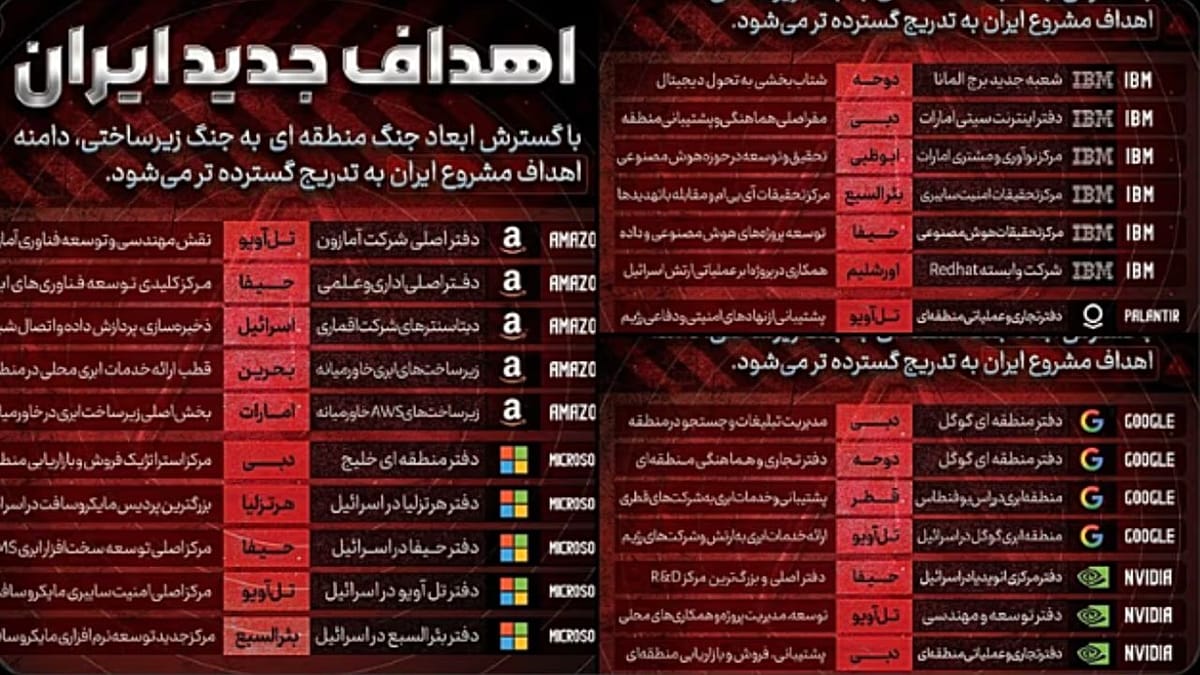
Iran warns Amazon, Google, and Microsoft over Middle East presence
Iranian news agency Tasnim has recently unveiled a troubling list of nearly 30 major technology companies operating in the Middle East, branding them as “enemy technology infrastructure.” This declaration raises concerns regarding potential cyber operations or other aggressive actions targeting these entities, further intensifying the geopolitical landscape in the region.
Understanding the Implications of the List
The designation of Big Tech companies as adversaries has significant ramifications for both the firms in question and the broader business environment in the Middle East. By publicly categorizing these companies as targets, Iran might be signaling its intention to engage in disruptive tactics that could involve cyberattacks, surveillance, or other forms of technological sabotage. This move could deter investments from multinational corporations and influence how regional players approach partnerships with foreign tech firms.
Moreover, the list could lead to a chilling atmosphere where technology firms must strategize their operational frameworks to mitigate risks, protect their infrastructure, and secure sensitive data. This apprehension might stymie technological advancement in the region, as businesses may hesitate to collaborate or harness new innovations out of fear of repercussions from state-sponsored entities.
The Role of Big Tech in the Middle East
Big Tech companies have increasingly established a foothold in the Middle East, playing pivotal roles in driving digital transformation and economic growth. From cloud computing to artificial intelligence, these companies have offered vital resources that can enhance governmental and commercial operations across various sectors. The governmental alliances fostered with tech giants have often been seen as a way to promote modernization, innovation, and improved public service delivery.
However, the potential for targeting by state actors could undermine these advancements. The fear of becoming collateral damage in geopolitical strife may lead companies to reconsider their operations, create new contingencies, or even withdraw from certain markets altogether. As a result, the technological trajectory of the Middle Eastern economy could face considerable setbacks.
Regional Reactions and Future Outlook
Reactions throughout the Middle East following the announcement have been mixed. While some governments may express solidarity with their tech partners, others may respond cautiously, weighing the risks of continued collaboration with companies now deemed as “enemies.” This tension could lead to a fragmenting of technology initiatives, where countries might seek to develop home-grown alternatives to avoid reliance on foreign systems labeled as adversarial.
The outlook for the region’s Big Tech landscape will depend significantly on how these companies respond to the Iranian declaration. Companies may need to bolster their cybersecurity measures and engage in diplomatic dialogues with local governments to ensure a stable operating environment. Future partnerships might also evolve, focusing on sectors deemed less vulnerable to state-sponsored threats, thereby reshaping the collaborative dynamics between technology and governance in the Middle East.
As the situation continues to unfold, it’s crucial for stakeholders—whether they are tech companies, governments, or investors—to remain vigilant and adaptive to the shifting landscape marked by heightened tensions. Engaging in proactive measures can help mitigate risks and safeguard technological progress in the region, ensuring that innovation can thrive despite the challenges presented by geopolitical rivalries.