
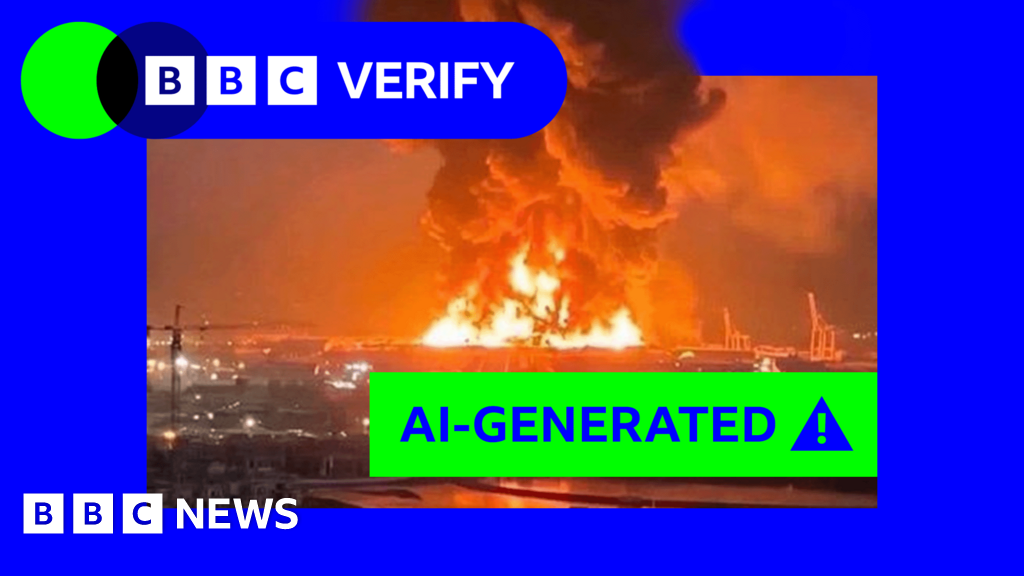
Creators cash in on rising AI-generated Iran war videos
The ongoing conflict involving the US, Israel, and Iran has given rise to a disturbing trend: the monetization of misinformation by online creators. The rapid evolution of artificial intelligence has enabled the creation of misleading content at an unprecedented scale, amplifying false narratives. As digital platforms seek engagement, this content can quickly go viral, influencing public perception and generating revenue for those behind it.
The Rise of Misinformation in Conflict Scenarios
In today’s digital landscape, misinformation thrives in the context of global conflicts. The US-Israel-Iran situation serves as a prime example where various stakeholders exploit tensions to create sensationalized stories. Financial incentives often drive content creation, with sensational headlines drawing clicks and engagement. This trend reveals a troubling reality: rather than facilitating understanding, the online sphere is increasingly filled with fabricated tales that sway public opinion and propagate fear.
AI’s Role in Amplifying False Narratives
Artificial intelligence plays a pivotal role in the dissemination of inaccurate information. Tools powered by AI can generate convincing articles, deepfake videos, and social media posts that are often indistinguishable from authentic content. This capability enables creators to produce a large volume of misleading material quickly, capitalizing on timely events like military escalations or political upheaval. As digital audiences consume this information without critical analysis, the potential for widespread misinformation grows, further complicating the public’s grasp of complex geopolitical dynamics.
The Impact on Public Perception and Trust
The proliferation of AI-generated misinformation significantly impacts how individuals perceive ongoing conflicts. When false narratives are widely circulated, they distort facts, shaping a skewed worldview that may lead to detrimental effects on public discourse. As people encounter conflicting reports, their trust in established media sources erodes, resulting in a climate where skepticism prevails. This shift in perception can hinder constructive dialogue, potentially worsening divisions within societies, and making rational conversations about international relations increasingly challenging.
Combating Misinformation: Strategies for Users and Platforms
To counter the effect of AI-generated misinformation, both users and platforms must engage proactively. For individuals, a critical approach to information consumption is essential. This includes verifying sources, cross-referencing facts, and understanding the motivations behind content creators. Social media platforms also bear responsibility in this fight. Many are implementing measures to identify and flag misleading content, but these systems require continuous improvement and user education to be truly effective.
In conclusion, the monetization of misinformation during conflicts such as the US-Israel-Iran situation highlights an urgent need for vigilance. While the digital space can serve as a powerful tool for awareness and education, the misuse of technology threatens to undermine informed discourse. By fostering critical engagement and embracing collective responsibility, both audiences and platforms can combat the burgeoning tide of misinformation, ultimately promoting a more accurate understanding of global issues.