
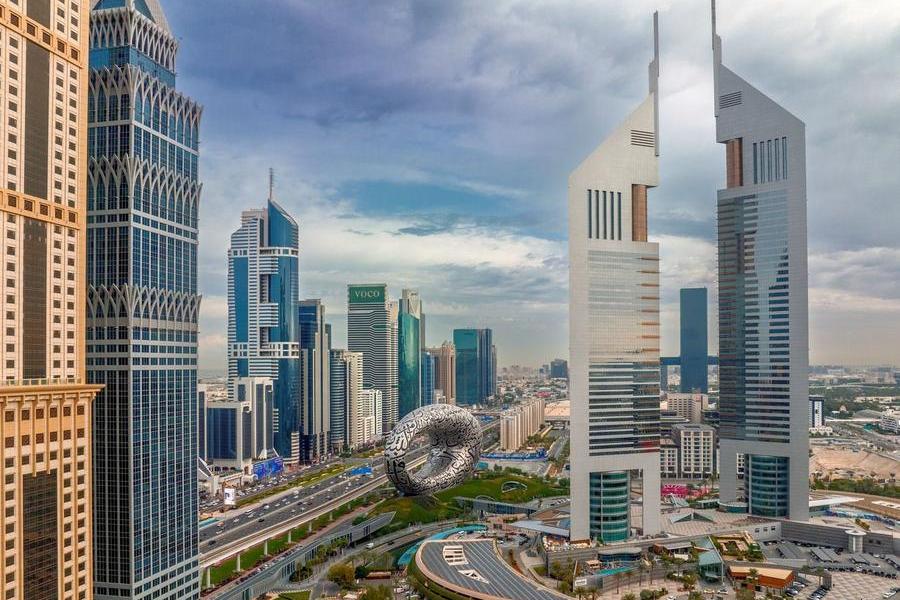
Tokenization to open new avenues for investment in Dubai’s real estate market
Dubai is making strides in democratizing its real estate market by introducing fractional ownership through blockchain technology. This new model allows for properties to be purchased and sold in digital shares, making investment more accessible for smaller global investors.
Understanding Real-Estate Tokenization
Real-estate tokenization is an innovative approach that permits completed properties to be divided into numerous small units, each representing a share of ownership in the overall asset. Investors can enter the market for as little as $545, a stark contrast to the traditional pricing of millions of dirhams for full properties like apartments and villas. This change is particularly appealing for those looking to explore the Dubai market without a significant financial commitment.
The initial trials of this model have already shown promise, with several residential units sold via PRYPCO MINT, a blockchain-based platform launched in collaboration with the Dubai Land Department (DLD). Kashif Ansari, co-founder and group CEO of Juwai IQI, emphasizes that making real estate more accessible will help Dubai maintain its position as a leader in global markets. He argues that the success of tokenization hinges on ramping up the availability of fractionalized assets, inviting more foreign investors, and ensuring a dynamic secondary market where these digital shares can be traded easily.
The Impact on Dubai’s Luxury Market
Despite the push towards fractional ownership, Dubai’s luxury market continues to thrive. Recent data indicates that in 2025, around 500 homes priced over $10 million collectively sold for a staggering $9.05 billion, demonstrating robust demand among high-end buyers. This climate of growth not only supports the need for fractional ownership but also creates opportunities for broader investor engagement.
Experts believe that tokenization could fundamentally alter the landscape of property transactions. Cathal Kenny from CBRE MENA argues that this digital shift can introduce a parallel secondary market, thereby lowering entry barriers, speeding up transaction times, and ensuring greater transparency. Furthermore, Stephen Flanagan of Knight Frank MENA highlights that blockchain platforms can improve liquidity, offering investors clearer exit strategies compared to conventional property dealings that can be encumbered by lengthy processes.
New Valuation Dynamics and Risks
As the real estate market embraces tokenization, it also invites novel valuation dynamics. While increased transaction volumes could enhance efficiency in price discovery, experts warn that the shift from traditional appraisal methods to market-based valuations could lead to heightened price volatility. Kenny notes that while this transformation may foster liquidity, it also brings about risks associated with market speculation and short-term trading behaviors that are generally atypical in long-term real estate investments.
Fadi Moussalli from JLL argues that the ability to trade property interests continuously on digital platforms might significantly improve market efficiency. However, he acknowledges that frequent trading could result in more pronounced price fluctuations, affecting long-term investment strategies. These considerations indicate that while tokenization offers exciting opportunities for innovation, it also necessitates a cautious approach to ensure stability.
Expanding the Investor Pool
One of the standout benefits of real-estate tokenization is its potential to broaden the investor base. According to Ansari, while only a fraction of the population may afford full property ownership, a much larger group can invest in low-value tokenized shares. For example, it is projected that the number of potential Chinese investors in Dubai could rise dramatically to approximately 210 million individuals. This opens the door for incremental foreign demand, especially from emerging markets in China, Russia, Europe, and India.
As the fractional model attracts new investor segments, it is anticipated that traditional buyers will continue to coexist alongside these new digital asset holders. The ability to invest smaller amounts in high-quality Dubai real estate presents an appealing opportunity, particularly for budding wealth in rapidly developing markets.
In summary, while the tokenization of real estate in Dubai presents challenges, its potential to transform the investment landscape and increase accessibility speaks volumes about the future of property transactions in the emirate.