
Tensions in the Gulf Raise Concerns for Dubai’s $250 Billion Real Estate Market
Dubai’s real estate sector, acclaimed for its rapid post-pandemic growth, is now encountering a new wave of geopolitical challenges, particularly arising from tensions with Iran that are affecting the Gulf region. Investors are left to deliberate whether this situation is merely a fleeting sentiment disturbance or poses a more profound risk to Dubai’s status as a premier international property market.
### Recent Performance of Dubai’s Real Estate Market
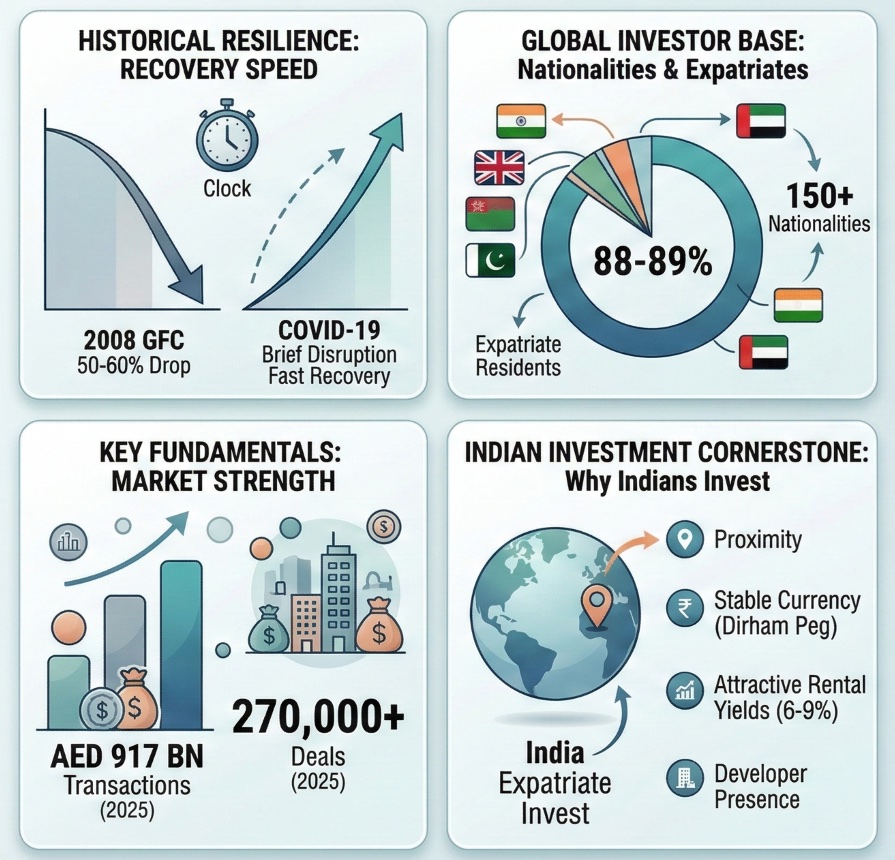
In 2025, Dubai recorded an extraordinary AED 917 billion (approximately $250 billion) in property transactions, highlighting the emirate’s robust market dynamics. With nearly 270,000 transactions, the real estate landscape is thriving, especially in residential sectors where around 200,000 transactions worth AED 538 billion were completed. This remarkable uptick reflects significant demand from foreign investors and expatriate households alike. Since 2021, residential property prices have soared by an impressive 60-75%, solidifying Dubai’s place as one of the most compelling housing markets globally.
While current geopolitical tensions may evoke caution among investors, the overall sentiment remains relatively stable. Analysts suggest that the market’s resilience stems from its strong position prior to these circumstances. As Prashant Thakur, Executive Director at ANAROCK, explains, “Markets that are already thriving generally experience a slowdown in transactions rather than an outright price correction.” Thus, the underlying strength of Dubai’s property market may help it absorb temporary shocks more effectively.
### The Psychological Impact of Geopolitical Risks
Historically, Dubai has been recognized as a safe haven for financial and lifestyle investments, attracting capital from varying corners of the globe. However, recent incidents of localized attacks within the UAE, while limited in physical impact, may alter investor perceptions and psychological comfort. Such shifts can prompt a “wait-and-watch” approach among investors, significantly affecting high-risk segments of the market, particularly off-plan developments reliant on future price aspirations and investor confidence.
Thakur emphasizes, “Any indication of growing geopolitical risk can deter investors, causing a temporary slowdown in certain areas like off-plan projects.” This highlights how investor sentiment can significantly influence real estate dynamics, sometimes even more than actual economic fallout.
### Impact on Dubai’s Off-Plan Market
Dubai’s property ecosystem benefits from an exceptionally diverse investor pool, with participation from more than 150 nationalities. Expatriates constitute about 88-89% of the UAE’s population, providing a foundation for housing demand. However, this global investor base can amplify the effects of sentiment shifts on particular market segments. Off-plan properties, which are sold before construction is finalized, are particularly vulnerable to geopolitical uncertainties, given their dependence on investor confidence.
If apprehension spreads, developers may witness sluggish booking rates or possibly delayed project launches, leading to a cooling effect in this specific market segment.
### Tourism as a Catalyst for Change
Beyond property investments, tourism could further connect geopolitical unrest to real estate fluctuations. The Middle East’s tourism sector is valued at around $367 billion annually, and industry forecasts suggest that prolonged instability could range from a 23 to 38 million reduction in tourist arrivals. This could translate to losses of $34-56 billion in tourism revenue across the region, with the immediate impact echoing through short-term rentals, hospitality properties, and retail spaces in tourist-centric areas.
Despite these challenges, it’s important to note that the demand for Dubai’s residential real estate is not entirely reliant on tourism. The expansive expatriate workforce and Dubai’s role as a global business center are critical factors that ensure long-term housing demand.
### The Role of Indian Investors in Stability
A critical stabilizing force in Dubai’s property market comes from Indian investors, who make up roughly 20-22% of the foreign buyer demographic. Factors such as geographical proximity, currency stability through the UAE dirham’s peg to the US dollar, and attractive rental yields of 6-9% make Dubai appealing for this group. For many Indian nationals, investing in Dubai real estate serves as an effective means to generate income and diversify against currency volatility.
Moreover, Indian developers are increasingly making their mark on the development landscape. They now represent approximately 8-10% of the development pipeline, contributing significant projects that enhance market diversity amid the dominance of local firms.
### Conclusion: Resilience Amidst Uncertainty
Despite facing varied cycles of economic turbulence over the years, including significant drops during the Global Financial Crisis and other downturns, Dubai’s real estate market has shown a remarkable capacity for recovery. Current geopolitical tensions, while impactful, are anticipated to slow transaction volumes rather than trigger drastic price corrections.
As Thakur aptly captures, the pivotal question is not if geopolitical tensions will affect activity — they will — but how swiftly markets will bounce back once stability returns. With an established reputation as a global financial hub and strong investor confidence, Dubai’s property landscape appears poised for recovery, following a familiar trajectory of temporary pauses under stress.