
New report claims ‘RSF-associated network connected to $24 million property portfolio in the UAE’
A recent report by the investigative organization The Sentry has unveiled that the leadership of Sudan’s Rapid Support Forces (RSF) is allegedly linked to a significant property portfolio valued at $24 million in Dubai. This revelation raises questions about the extent of the RSF’s financial reach and the implications for international oversight.
Properties and Connections in Dubai
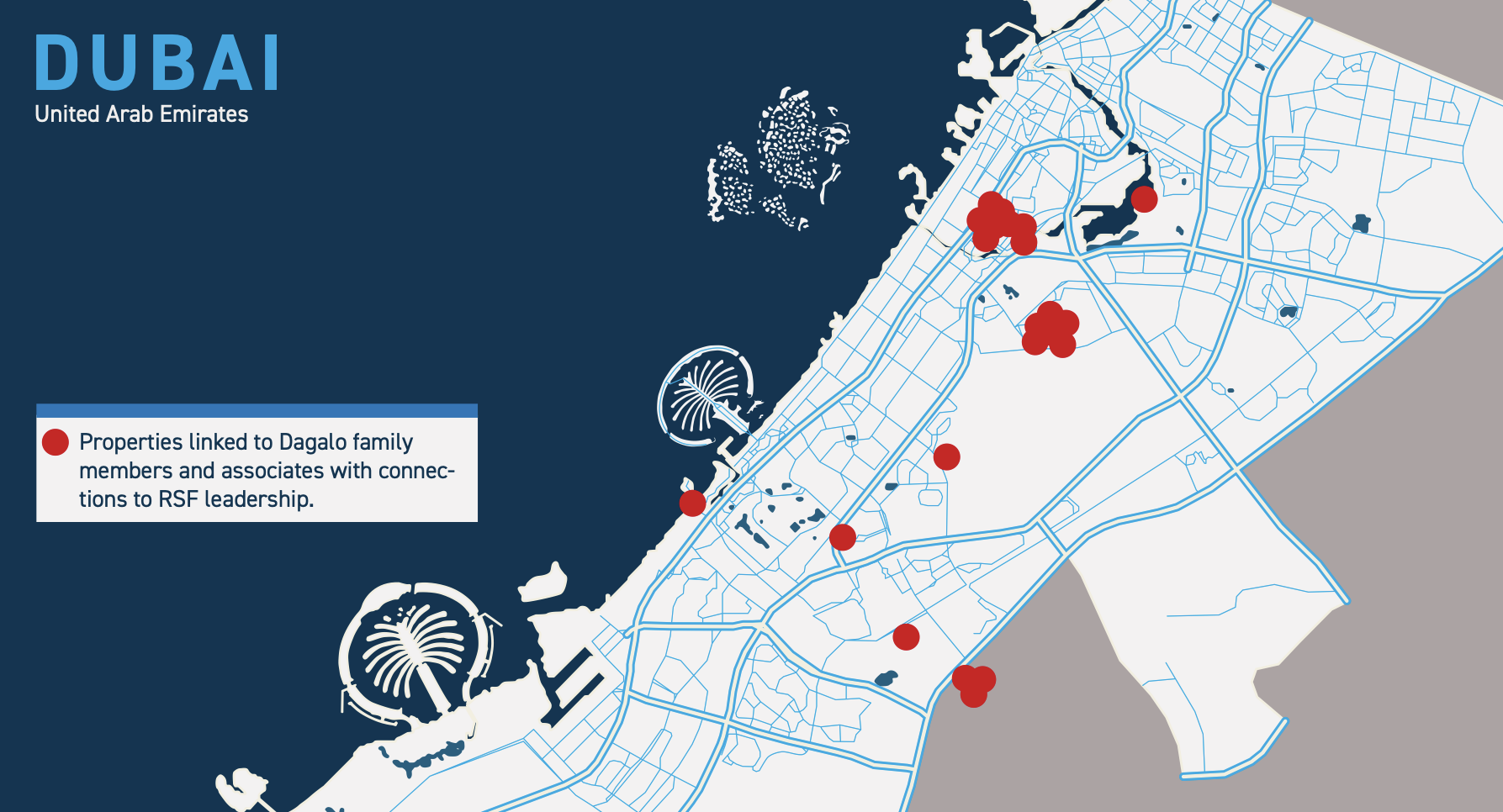
The investigation reveals that the substantial real estate portfolio comprises over 20 properties, many of which are clustered together. Leaked records indicate that these assets provide a safe haven for the RSF’s leadership and their families. The report discusses the potential implications of the United Arab Emirates (UAE) being used not just as a location for financial activities, but also as a place of refuge for those connected to the RSF, which is notorious for its violent actions in Sudan.
Additionally, the investigation points to Prodigious Real Estate Management Supervision Services as a pivotal player in this network. The company reportedly acquired two luxurious six-bedroom villas for just over $5 million, demonstrating a clear connection between the RSF and high-value property transactions. This kind of investment is indicative of how conflict-linked entities can operate seamlessly within the international real estate market.
Familial Ties and Wider Networks
The investigation further uncovers that members of the Dagalo family, who are closely associated with the RSF leadership, have engaged in both renting and purchasing properties within the same exclusive community. This familial network raises concerns about the way connections can facilitate the laundering of illicit wealth. Moreover, the report highlights individuals subject to international sanctions, such as Mustafa Ibrahim Abdel Nabi Mohamed, identified as a financial advisor for the RSF, and Taha Osman Ahmed Elhussein, noted for managing relationships with influential regional actors to bolster the RSF’s military capabilities.
The staggering estimated value of this property portfolio, at around $24 million, does not even account for additional rental holdings, indicating a much larger scale of financial activity linked to the RSF’s leadership. Evidence suggests that this presence within Dubai’s property market exposes significant oversight failures, raising alarms about regulatory deficiencies in monitoring property transactions connected to controversial figures.
Denial and Defense
In response to these serious allegations, the Dagalo family has publicly disputed the claims, asserting that they pertain to private property holdings that lack any legitimate connections to wrongdoing. They emphasized that their assets have been acquired through legitimate business activities over generations. The family’s stance is that any implication of illegal or unethical behavior is not only false but also defamatory, which sets the stage for a potential public relations battle as the investigation unfolds.
As the situation develops, the implications of this investigation spotlight significant issues regarding the global real estate market’s regulation and the responsibilities of financial institutions to identify and prevent transactions involving sanctioned individuals. The findings prompt a deeper examination of how global financial systems can inadvertently support regimes and groups involved in human rights abuses.
Overall, the revelations from The Sentry remind us of the complex interplay between real estate investments and global conflicts, demanding more stringent monitoring and accountability in international business practices to combat the financial ecosystems supporting violence and oppression.