
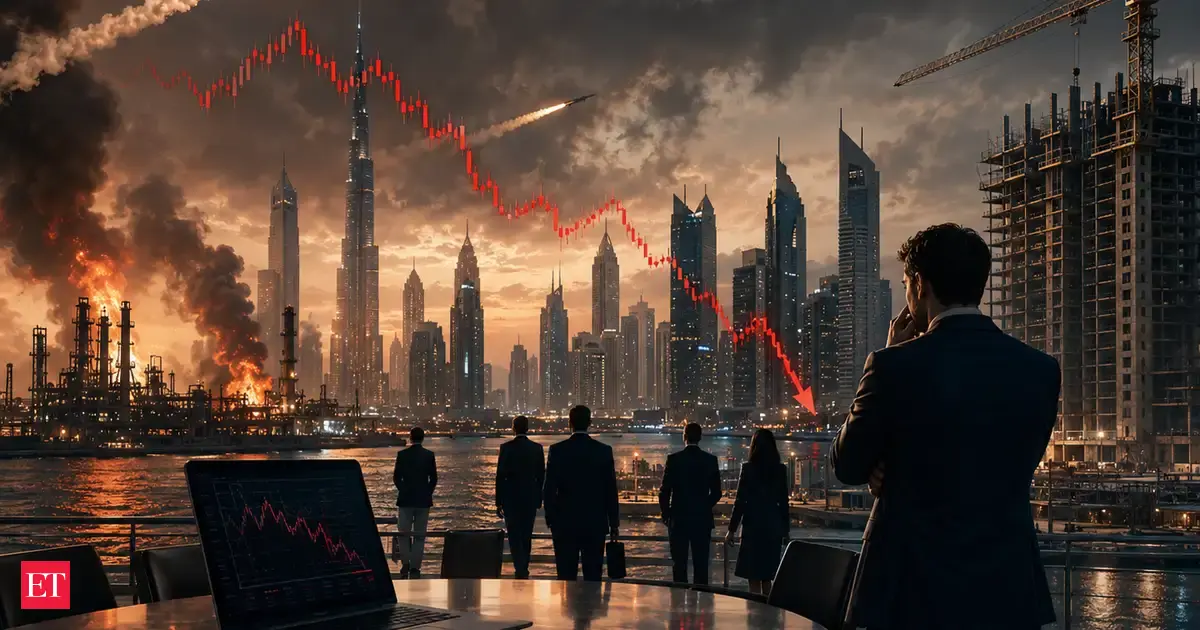
Missiles in Dubai Shake the Gulf’s Multibillion-Dollar Economy
For years, the Gulf region positioned itself as a financial powerhouse, attracting investments and showcasing an unmatched liquidity environment. However, recent geopolitical tensions have drastically altered the landscape, prompting a reassessment of the region’s financial stability and appeal. The economic repercussions of the escalating US-Israel conflict with Iran have not only impacted oil prices but have also shaken the Gulf’s reputation as a safe haven for investors.
Investment Slowdown in the Gulf
Investment banks in the Gulf once relished growth opportunities after the pandemic, but now they face a challenging reality. As the geopolitical situation worsens, deals are stalling, and many investment professionals are grappling with questions about regional stability. The once-thriving IPO landscape has seen a significant downturn, with reports indicating a 14% decrease in investment banking revenues during early 2026. Investors are reframing their strategies, leaving over $106 billion in pending transactions that rely on Gulf commitments and raising concerns about the overall market health.
This change reveals a deeper issue: the Gulf’s economic prosperity has long relied not just on available capital but also on the perception of its safety and reliability. In the wake of global crises—be it economic slowdowns in Europe, Asia’s market instability, or high-interest rates impeding US dealmaking—the Gulf appeared as an oasis. Oil wealth shielded its governments from broader economic volatility, and the region became a magnet for hedge funds, cryptocurrency firms, and family offices navigating tumultuous waters elsewhere.
However, this narrative has begun to unravel. The recent conflicts exposed vulnerabilities within the Gulf’s financial ecosystem, leading to waves of uncertainty.
IPO Delays and Market Stressors
A significant illustration of the regional strain is the postponed IPO plans of Emirates Global Aluminium. Initially poised to be one of the UAE’s hallmark IPOs, recent Iranian military actions have disrupted its production and rattled commodity markets. With aluminum prices hitting new peaks amid concerns about supply chains, the planned listing has been delayed indefinitely. Parallel issues are appearing across various sectors, with other IPOs being quietly shelved as issuers navigate a climate of volatility and demand for more favorable valuations.
Additionally, several banks have activated contingency measures in response to increased regional risks, resulting in tighter lending practices. Amid this backdrop, developers and construction firms that once thrived are now finding themselves grappling with rising costs and uncertainty in project timelines. The construction sector has particularly felt the impact, with substantial delays expected for residential units initially slated for delivery this year due to supply chain disruptions and rising expenses.
Construction Sector Faces Headwinds
Dubai’s renowned property market, once a symbol of the region’s resilience, is also under strain. Major developers are facing heightened financial challenges, leading to a cautious approach from investors. Reports indicate that nearly half of the anticipated 45,000 residential units could be delayed into 2027 or beyond, driven by escalating construction costs, which have surged by nearly 30% as of late. The reliance on imported materials has exacerbated this issue, further squeezing profit margins for developers.
Heavyweight projects are also feeling the pressure, as evidenced by Wynn Resorts delaying its ambitious $5 billion integrated resort set to introduce the first legal casino in the UAE. Rising geopolitical tensions have made financial stakeholders reevaluate their commitment in the region, leading to heightened scrutiny on costs and timelines.
Impact on Financing and Future Outlook
As developers struggle to secure financing backed by escrow accounts, banks are tightening their lending standards. This cautious approach is extending beyond the real estate sector, affecting private capital markets as well. Reports suggest that fresh lending from major UAE banks has plummeted by up to 90% in response to the ongoing war and its implications. There is a clear indication that investor sentiment has shifted dramatically, with many taking a wait-and-see approach.
Despite these challenges, the Gulf’s financial story is not entirely bleak. The region still possesses substantial wealth within its sovereign funds, totaling roughly $5 trillion. While investors are now requiring a risk premium that they previously overlooked, the Gulf remains resilient. Governments continue to pursue international acquisitions, effectively using their financial cushion to navigate these turbulent times. The ongoing commitment from global firms to establish bases in the UAE is a testament to the underlying confidence that, although tested, the Gulf’s financial landscape still holds potential for recovery and growth.