
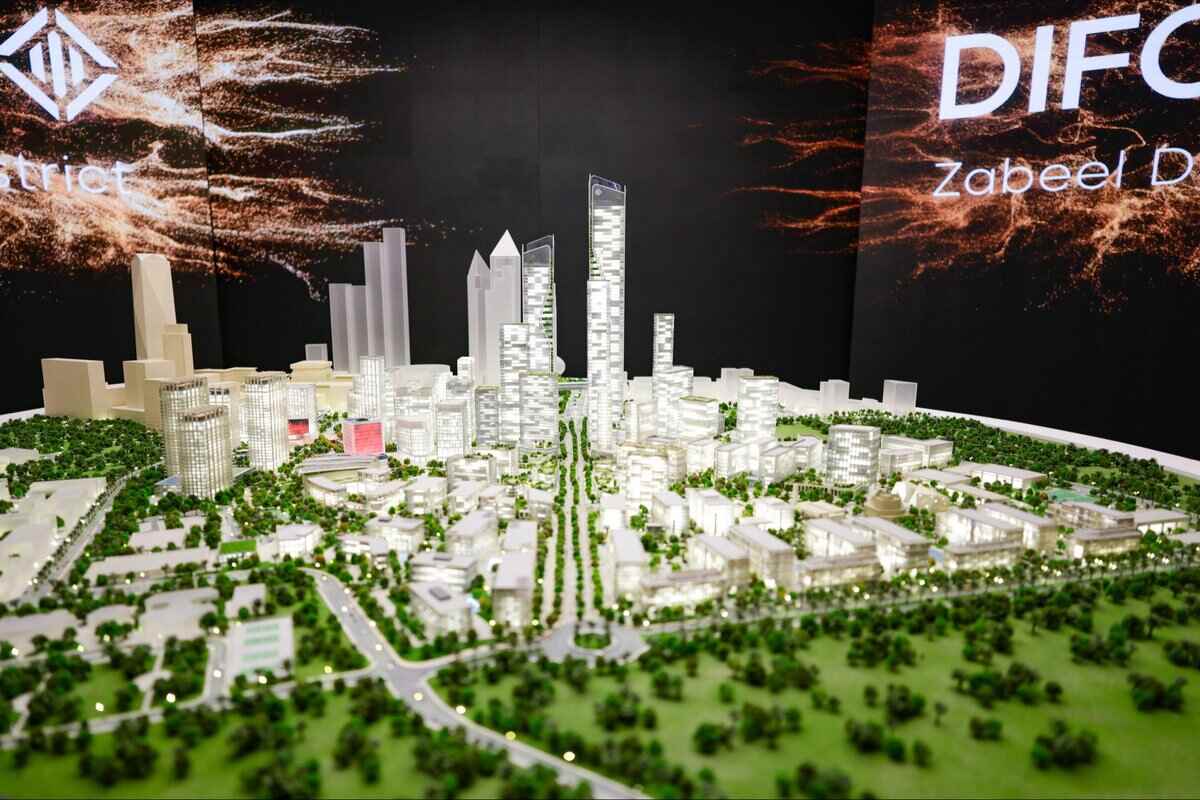
Implications of Dubai’s AED100 Billion Expansion for the Real Estate Sector
Following the recent announcement of a transformative AED100 billion expansion at the Dubai International Financial Centre (DIFC), insights from Property Monitor, a subsidiary of Dubizzle Group, shed light on its potential impact on Dubai’s real estate sector. Spearheaded by His Highness Sheikh Mohammed bin Rashid Al Maktoum, Vice President and Prime Minister of the UAE and Ruler of Dubai, this project promises significant growth.
Overview of the DIFC Zabeel District Expansion
The DIFC Zabeel District is set to be a monumental development, adding around 17.7 million square feet of gross floor area. This expansion will elevate the DIFC to one of the world’s largest demand-oriented financial center expansions. The rollout is structured in six phases, with initial public access anticipated by 2030 and full completion projected for 2040.
Zhann Jochinke, Chief Operating Officer at Property Monitor, highlighted the importance of this initiative, stating, “This expansion not only serves the needs of the DIFC but marks a significant chapter for Dubai’s real estate landscape.” With current occupancy rates near full capacity and strong demand reflected through increasing rents, the need for this expansion appears pressing.
Enhancing Capacity and Infrastructure
The DIFC Zabeel District is poised to nearly double the capacity of the financial center, accommodating over 42,000 companies and employing more than 125,000 professionals. The development plan encompasses a blend of commercial, residential, educational, and cultural elements. A standout feature is a 1 million square foot innovation hub focused on artificial intelligence and other future technologies, alongside an expanded DIFC Academy catering to up to 50,000 students annually.
Jochinke pointed out that Dubai’s commercial real estate market, particularly Class A office spaces, has shown resilience and exceptional performance, contrasting with global markets still recovering from the pandemic’s effects. “While many international markets are still stabilizing, Dubai continues to witness strong demand for high-quality office spaces, driven by robust business growth and supportive governmental policies,” he noted.
Phased Development Strategy
The careful, phases rollout strategy is a fundamental aspect of the expansion, aligning with insights from Property Monitor regarding market dynamics in both commercial and residential sectors. Jochinke remarked, “The development strategy is indeed demand-led and timed to match real corporate growth.” It is anticipated that new office spaces will be pre-leased prior to their completion, bolstering the fundamentals of tenancy and preserving rental and capital value.
For the residential component, this phased approach, with the first elements expected by 2030, indicates a strategic focus on controlled absorption, considering the already solid occupancy figures in premium DIFC residential properties.
Investment Opportunities and Market Implications
From an investment perspective, the expansion paves the way for fresh opportunities for both institutional and private investors. Jochinke emphasized the anticipated interest across various investment sectors: “We foresee a division in investor interest between large institutional entities like REITs and individual investors, especially regarding residential properties as they become available.”
The DIFC Zabeel District is more than a simple enlargement; it symbolizes Dubai’s commitment to a strategy of calculated, demand-based real estate advancement. By instituting a phased plan over the next 20 years, the project maintains an equilibrium between supply and market needs while ensuring that infrastructure developments are in sync with expansion efforts. With its world-class facilities spanning commercial, residential, and innovation sectors, this expansion is set to significantly reshape Dubai’s financial and real estate ecosystem for the foreseeable future.