
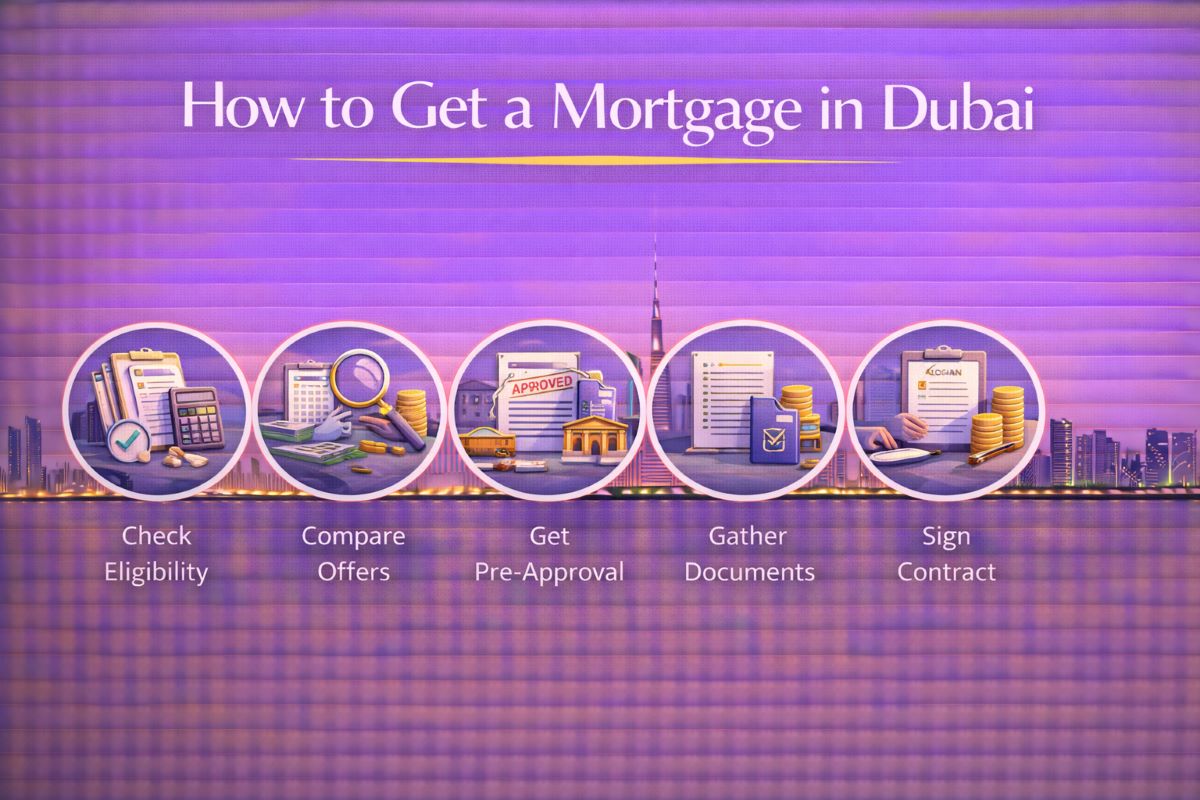
How to Get a Mortgage in Dubai?
Getting a mortgage in Dubai has become a structured and transparent process, making property ownership accessible to both residents and foreign buyers. Whether you are purchasing your first home, investing in rental property, or expanding an existing portfolio, understanding how mortgage financing works in Dubai is essential for making confident financial decisions.
This guide explains how to get a mortgage in Dubai step by step, covering eligibility, requirements, costs, and strategic considerations. It is written to match real search intent: practical, detailed, and focused on helping buyers choose the right financing structure for their goals.
Understanding how a mortgage in Dubai works
A mortgage in Dubai is a bank-backed loan used to finance the purchase of a property, where the property itself serves as collateral. Buyers repay the loan through monthly installments over an agreed period, typically up to several decades depending on age and eligibility.
Dubai’s mortgage market is regulated, which means banks follow clear lending rules regarding affordability, loan-to-value ratios, and documentation. Buyers can choose between conventional mortgages and Islamic home finance options, both widely available in the market.
Mortgages in Dubai are commonly used for:
- residential property purchases
- buy-to-let investment properties
- long-term relocation planning
- portfolio leverage strategies
Understanding the structure early helps buyers align financing with long-term objectives.
Types of mortgages available in Dubai
Dubai offers several mortgage options to suit different buyer profiles. Conventional mortgages operate on interest-based lending, while Islamic mortgages follow Sharia-compliant structures without traditional interest.
Buyers can also choose between fixed-rate and variable-rate mortgages. Fixed rates provide payment stability, while variable rates may offer lower initial costs but fluctuate over time.
Common mortgage types include:
- fixed-rate home loans
- variable-rate property financing
- Islamic home finance solutions
- investor and buy-to-let mortgages
Selecting the right type depends on risk tolerance, income stability, and long-term planning.
Who can apply for a mortgage in Dubai
Both UAE residents and non-residents can apply for a mortgage in Dubai, although eligibility criteria differ. Residents generally benefit from higher financing limits and more flexible terms, while non-residents face stricter requirements.
Salaried employees, business owners, and self-employed professionals are all eligible, provided they meet income and documentation standards. Banks assess applicants based on stability, affordability, and creditworthiness.
Mortgage eligibility is influenced by:
- residency status
- income level and consistency
- employment history
- age at loan maturity
Understanding eligibility early prevents delays later in the process.
Mortgage eligibility criteria explained
Banks in Dubai conduct a thorough affordability assessment before approving a mortgage. This includes reviewing monthly income, existing financial commitments, and overall debt exposure.
Credit history plays a key role, particularly for residents with local banking records. Non-residents may be assessed based on international credit profiles and banking relationships.
Eligibility typically depends on:
- debt-to-income ratio
- net monthly income
- length of employment or business operation
- overall financial stability
A realistic assessment helps buyers avoid overcommitting financially.
Mortgage requirements for UAE residents
Residents applying for a mortgage in Dubai must provide proof of income, employment details, and banking history. Salary transfer to the lending bank may improve terms, although non-transfer options also exist.
Banks evaluate the employer’s profile and sector stability, especially for newer residents. Existing liabilities such as personal loans or credit cards can impact approval amounts.
Preparation of complete documentation speeds up the approval process and improves negotiation leverage.
Mortgage requirements for non-residents
Non-resident mortgages in Dubai are available but come with higher down payment requirements and stricter conditions. Banks typically finance a lower percentage of the property value for overseas buyers.
Income verification is required from the applicant’s home country, often supported by bank statements and tax documentation. Currency considerations may also affect approval and repayment planning.
Non-resident buyers should expect a more detailed review process and longer timelines.
Down payment rules for mortgages in Dubai
Down payment requirements depend on residency status and property value. Buyers must contribute a portion of the purchase price upfront, which cannot be financed by the mortgage.
Higher-value properties and second-home purchases usually require larger down payments. Buyers should also plan for additional costs beyond the deposit.
Down payment planning should include:
- minimum equity contribution
- transaction and registration fees
- emergency cash reserves
Strong upfront planning prevents cash-flow pressure after purchase.
Loan-to-value ratios and borrowing limits
Loan-to-value ratios determine how much a bank is willing to lend relative to the property’s value. These limits are regulated and vary based on buyer profile and property type.
Lower LTV means higher upfront cash but lower monthly payments and risk exposure. Higher LTV increases leverage but raises repayment obligations.
Understanding LTV helps buyers structure balanced financing.
Interest rates and mortgage costs in Dubai
Mortgage interest rates in Dubai are influenced by market conditions, bank margins, and loan structure. Fixed-rate mortgages offer predictability, while variable rates may change over time.
Beyond interest, buyers must consider total borrowing cost rather than focusing solely on advertised rates.
True mortgage cost includes:
- interest over the loan term
- bank arrangement fees
- valuation charges
- insurance premiums
Evaluating total cost ensures informed decision-making.
Additional costs when getting a mortgage in Dubai
Mortgages involve several one-time and ongoing costs. These are often overlooked by first-time buyers but can significantly affect affordability.
Common additional expenses include:
- bank processing fees
- property valuation fees
- registration and administrative costs
- life and property insurance
Factoring in all costs provides a realistic view of ownership expenses.
Mortgage approval process in Dubai
The mortgage process typically starts with pre-approval, followed by property selection, valuation, and final bank approval. Each step involves documentation review and risk assessment.
Timelines vary depending on buyer profile and property type. Prepared buyers experience smoother and faster approvals.
Understanding the process helps align financing with purchase deadlines.
Why mortgage pre-approval matters in Dubai
Mortgage pre-approval confirms how much a buyer can borrow before property selection. This improves budgeting accuracy and negotiation power.
Pre-approval also reduces transaction risk, especially in competitive markets where sellers prefer financially ready buyers.
It is one of the most important steps when buying property with financing.
Mortgages for off-plan properties in Dubai
Financing off-plan properties is more limited, as not all banks lend on under-construction projects. Approval depends on the developer’s profile and project status.
Disbursements are usually linked to construction milestones. Buyers should plan cash flow carefully when combining off-plan purchases with mortgages.
Off-plan mortgages suit buyers with longer timelines and flexible financial planning.
Mortgages for ready properties in Dubai
Ready properties are easier to finance, as banks can assess completed units directly. Approval rates are higher, and disbursement is faster.
These mortgages are ideal for buyers seeking immediate occupancy or rental income.
Ready-property financing offers clarity and lower uncertainty.
Mortgage tenure and repayment planning
Mortgage tenures in Dubai can extend up to several decades, subject to age limits. Longer tenures reduce monthly payments but increase total interest paid.
Buyers should balance affordability with long-term cost efficiency.
Repayment planning is essential for sustainable ownership.
Early repayment and refinancing options
Borrowers can settle mortgages early, refinance, or switch banks, although fees may apply. Refinancing can improve cash flow if market conditions change.
Planning exit and refinancing options early adds flexibility.
Common mistakes to avoid when applying for a mortgage
Many buyers overestimate affordability or underestimate total costs. Others choose unsuitable interest structures or skip pre-approval.
Avoiding these mistakes protects financial stability and investment performance.
Mortgage vs cash purchase in Dubai
Cash purchases offer simplicity and negotiation leverage, while mortgages preserve liquidity and enable leverage.
The right choice depends on strategy, not preference.
Who should consider getting a mortgage in Dubai
Mortgages are suitable for:
- first-time buyers
- long-term residents
- income-focused investors
- portfolio builders
Used correctly, mortgages are powerful financial tools.
Summary
Getting a mortgage in Dubai is a structured and accessible process for both residents and non-residents. Success depends on preparation, understanding eligibility, choosing the right mortgage type, and aligning financing with long-term goals. When planned carefully, a Dubai mortgage can unlock property ownership, investment growth, and financial flexibility in one of the world’s most dynamic real estate markets.