
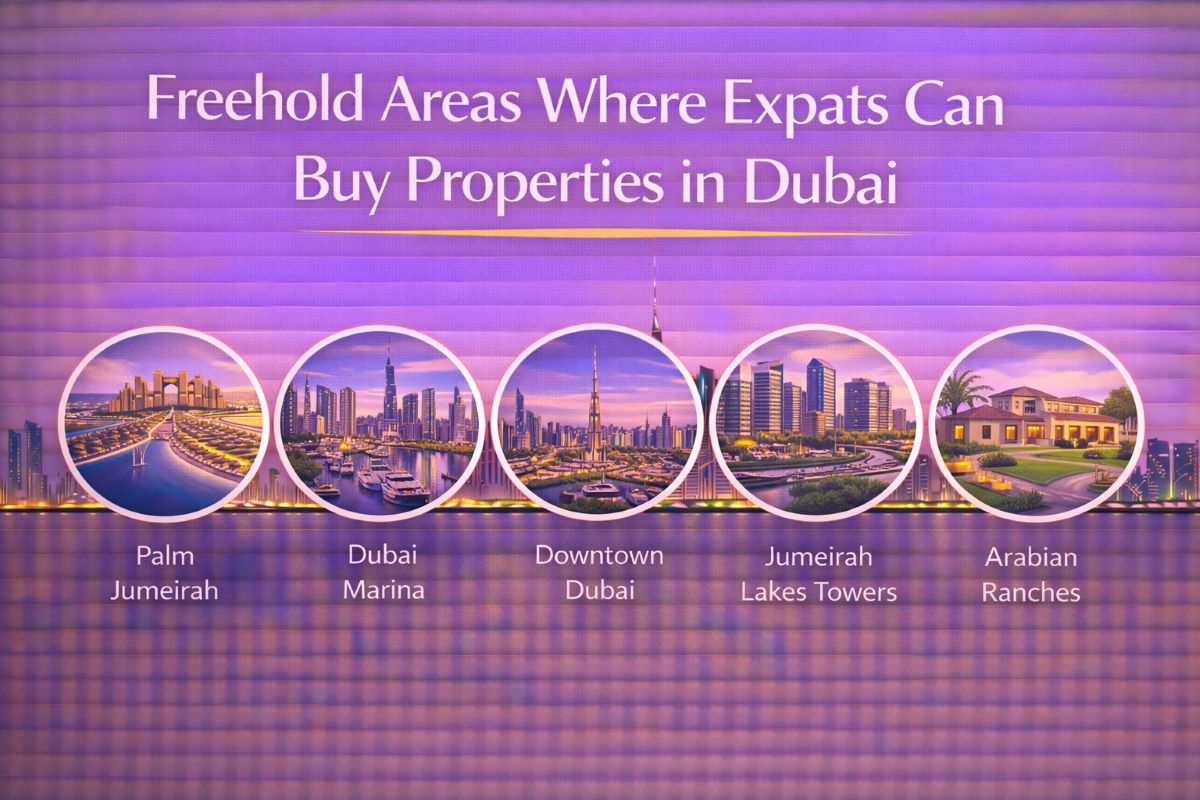
Freehold Areas Where Expats Can Buy Properties in Dubai
Dubai is one of the few global cities that allows expatriates to own real estate with full ownership rights in designated zones. These freehold areas where expats can buy properties in Dubai have transformed the city into a long-term base for foreign investors, professionals, and families. Freehold ownership offers security, flexibility, and the ability to plan for the future without restrictions tied to nationality.
This in-depth guide explains what freehold ownership means, why it matters to expats, and which types of freehold areas best suit different goals. Whether the objective is investment, relocation, or portfolio building, understanding Dubai’s freehold landscape is essential for making confident decisions.
What freehold property ownership means for expats in Dubai
Freehold ownership in Dubai means that an expat owns the property outright, with full legal rights similar to ownership in many Western countries. This includes the right to sell, lease, mortgage, or pass the property on to heirs without limitation. For foreign buyers, freehold status is the strongest form of property ownership available.
Unlike leasehold arrangements, which grant usage rights for a limited period, freehold ownership provides long-term asset security. This is particularly important for expats who want stability, wealth preservation, or long-term residency planning.
For many international buyers, freehold property ownership transforms Dubai from a temporary destination into a place for permanent lifestyle and investment planning.
Legal framework for expats buying freehold properties in Dubai
Dubai’s real estate regulations clearly define where expats can buy freehold property. The government has designated specific areas where foreign ownership is permitted, creating transparency and legal certainty.
Expats can purchase freehold properties as residents or non-residents, and ownership can be registered in an individual’s name or through a company structure. The title deed issued upon completion confirms full legal ownership.
This structured legal framework has played a major role in building global confidence in Dubai’s property market and attracting long-term foreign capital.
Why expats choose freehold areas to buy property in Dubai
Expats choose freehold areas because they offer autonomy and long-term security. Unlike employer-linked residency or short-term leases, freehold ownership gives buyers control over their assets and living arrangements.
Freehold areas also allow expats to:
- build property portfolios
- generate rental income
- qualify for long-term residency options
- integrate into established communities
For investors, freehold ownership ensures full resale flexibility and global marketability of the asset.
Categories of freehold areas in Dubai
Freehold areas in Dubai are not limited to one type of community. They span luxury districts, mid-market neighborhoods, family-oriented suburbs, and investment-focused zones.
Some freehold areas are known for prestige and exclusivity, while others are designed for affordability and rental efficiency. This diversity allows expats to match ownership with budget, lifestyle, and strategy.
Understanding these categories helps buyers narrow down the most suitable locations.
Prime freehold areas where expats can buy properties
Prime freehold areas are globally recognized districts with strong brand value, high liquidity, and long-term demand. These areas typically feature luxury apartments, penthouses, and high-end villas.
They attract expats seeking prestige, central locations, and lifestyle amenities. Prime freehold areas are also popular with international investors due to strong resale demand and tenant quality.
While entry prices are higher, these locations often offer stability and long-term value preservation.
Freehold waterfront areas popular with expats
Waterfront freehold areas are among the most desirable places for expats to buy property in Dubai. Beachfront and marina-facing communities offer lifestyle appeal, scenic views, and limited supply.
These areas attract both end-users and investors, particularly for short-term and executive rentals. Waterfront freehold ownership combines personal enjoyment with strong market demand.
Limited availability makes waterfront properties resilient across market cycles.
Family-friendly freehold areas for expats in Dubai
Many expats relocate with families, making family-oriented freehold areas highly attractive. These communities focus on space, safety, and everyday convenience rather than high-density urban living.
Such areas typically feature:
- villas and townhouses
- schools and healthcare nearby
- parks and recreational facilities
- quieter, residential environments
For long-term living, family-focused freehold areas provide stability and quality of life.
Affordable freehold areas where expats can buy property
Not all freehold areas in Dubai are luxury-focused. Affordable freehold communities allow expats to enter the property market with lower capital while still benefiting from full ownership rights.
These areas are popular among professionals and first-time buyers. From an investment perspective, they often offer strong rental yields due to high tenant demand and accessible pricing.
Affordable freehold ownership is often the first step for expats building long-term property portfolios.
Freehold areas popular with property investors
Investor-focused freehold areas are characterized by high rental demand, strong occupancy rates, and liquidity. Apartments dominate these areas, making them ideal for buy-to-let strategies.
Such areas appeal to expats who:
- invest remotely
- focus on income generation
- prioritize resale flexibility
Investor-driven freehold zones tend to perform consistently due to broad tenant demand.
Emerging freehold areas with future growth potential
Emerging freehold areas are newer master-planned developments where expats can buy property early in the growth cycle. These zones often benefit from upcoming infrastructure, retail expansion, and transport connectivity.
While they may involve longer time horizons, emerging freehold areas can offer capital appreciation opportunities when selected carefully.
Strategic buyers balance risk and reward by combining emerging areas with established freehold zones.
Freehold areas offering villas and townhouses for expats
Expats seeking more space often focus on freehold areas offering villas and townhouses. These communities cater to families and long-term residents rather than short-term tenants.
Villa-focused freehold areas typically provide:
- private outdoor space
- gated security
- lower density living
- strong end-user demand
They suit buyers prioritizing lifestyle and long-term ownership.
Freehold apartment areas for expats and foreign buyers
Apartment-focused freehold areas are ideal for non-resident expats and investors. These locations offer high liquidity, professional management, and strong rental appeal.
Studio and one-bedroom units dominate these zones, making them accessible and easy to manage.
For many expats, apartments in freehold areas represent the most practical ownership option.
Off-plan freehold areas for expat buyers
Off-plan freehold projects allow expats to buy properties before completion with flexible payment plans. This approach can reduce upfront capital requirements and support capital growth strategies.
However, off-plan freehold purchases require careful developer selection and realistic timelines.
Ready freehold areas for immediate ownership
Ready freehold areas offer completed properties that can be occupied or rented immediately. These areas are popular with expats relocating to Dubai or investors seeking instant income.
The ability to inspect the property and community reduces uncertainty and supports informed decision-making.
Freehold areas and residency considerations for expats
Freehold property ownership can support long-term residency planning. While residency should not be the sole reason to buy property, it adds strategic value for expats planning extended stays.
Property ownership also simplifies banking, relocation, and family planning.
Factors to consider when choosing freehold areas in Dubai
Choosing the right freehold area requires analysis beyond price. Buyers should evaluate:
- budget and financing options
- location and connectivity
- rental demand and yield
- service charges
- long-term growth potential
Careful selection improves both lifestyle satisfaction and financial performance.
Common misconceptions about freehold areas in Dubai
A common myth is that all areas in Dubai are freehold. In reality, only designated zones allow foreign ownership.
Another misconception is that freehold automatically guarantees high returns. Like any market, performance depends on location, timing, and strategy.
Summary
Freehold areas where expats can buy properties in Dubai are a cornerstone of the city’s appeal to foreign investors and residents. They offer full ownership rights, legal security, and access to a wide range of lifestyles and investment strategies. From luxury waterfront districts to affordable family communities, Dubai’s freehold zones allow expats to build long-term value with confidence when choices are aligned with clear goals.
- Where to Find Luxurious Properties for Sale in Dubai
- How to Buy a Property in Dubai? A Step by Step Guide