
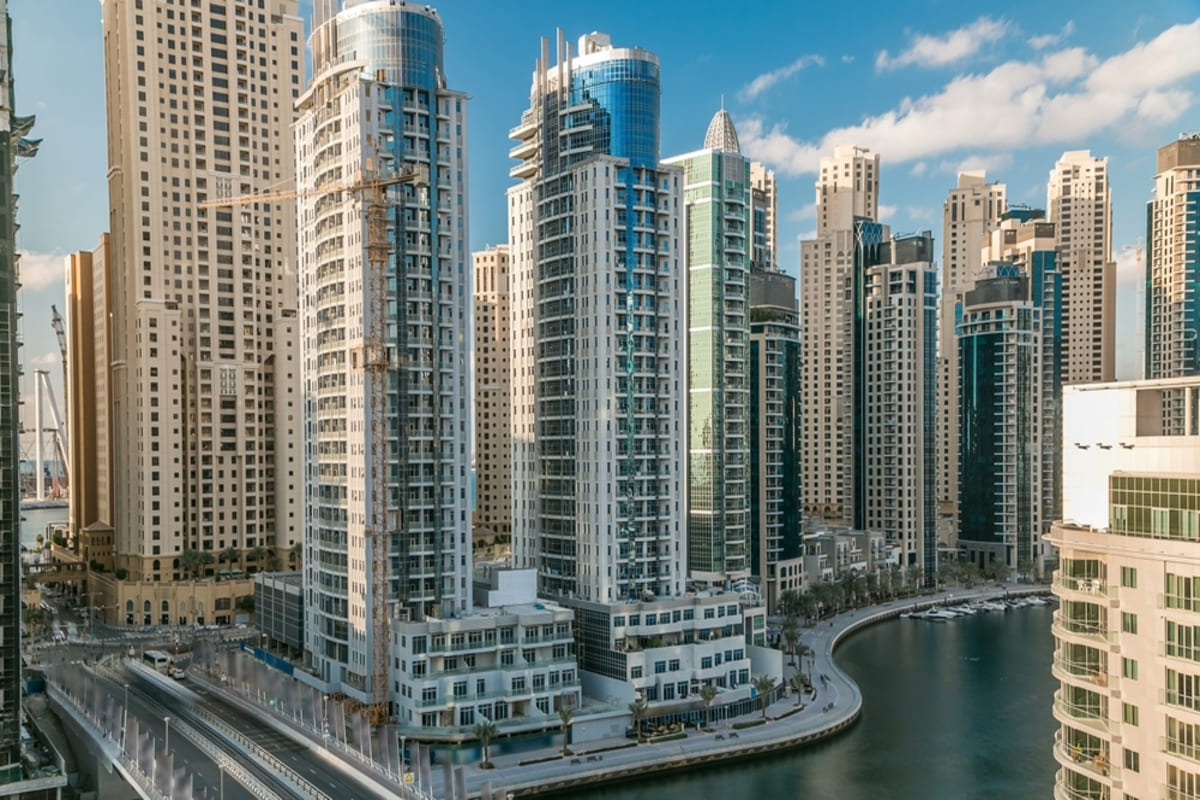
Dubai’s real estate sector reaches $29.4 billion in Q2 2026 transactions driven by ongoing demand.
Dubai’s real estate market continues to exhibit remarkable growth, showcasing significant investor confidence fueled by robust residential and commercial demand. The emirate’s real estate landscape is not just thriving; it is evolving as a key driver of the economy.
The Strong Performance of Dubai’s Real Estate Sector
In the second quarter of 2026, Dubai’s real estate transactions reached an impressive AED108.11 billion (approximately $29.4 billion). This figure represents the combined value of both residential and commercial properties, illustrating the market’s robust momentum. According to Springfield Properties’ latest report, this impressive performance can be attributed to progressive government initiatives, sustained investor confidence, and continuous economic growth within the emirate.
Residential property sales dominated the figures, accounting for AED83.88 billion across 34,719 transactions. Commercial real estate also demonstrated strength, tallying AED24.24 billion with 2,836 transactions. These numbers reflect a sustained demand for both sectors, highlighting a healthy balance in the market.
The residential segment saw significant activity in off-plan properties, generating AED59.17 billion from 26,440 transactions during this quarter. Notably, despite the vigorous transaction volume, property prices have remained stable, with the average sales price landing at AED1,841 per square foot. This stability is indicative of a resilient market that is adapting to demand without experiencing drastic price fluctuations.
Quality Over Quantity
As highlighted by Farooq Syed, CEO of Springfield Properties, the current real estate dynamics in Dubai are increasingly characterized by the quality of demand rather than sheer volume. Buyers are showing a preference for long-term investments that align with their lifestyle choices, community environment, and confidence in Dubai’s future. This refined focus on quality is reshaping the market landscape.
Government initiatives to promote homeownership, such as the Dubai Land Department’s First-Time Home Buyer Programme and updates to the residency framework, are also contributing to market resilience. The introduction of the Flexi Rent initiative has further enhanced access to the housing market, making it more appealing for both locals and international investors. These measures underscore Dubai’s commitment to facilitating broader participation in the real estate sector.
Shifting Buyer Preferences Toward Integrated Communities
The preference among buyers is gravitating towards communities that offer comprehensive amenities—such as infrastructure, green spaces, schools, and retail outlets. The emphasis on community quality and long-term value is increasingly influencing property purchasing decisions. Successful real estate markets are those that can adapt and evolve while ensuring stability, and Dubai exemplifies this with its progressive regulations and advanced infrastructure.
As outlined in the report, these community-focused trends are pivotal in solidifying Dubai’s status as one of the most competitive and resilient real estate markets globally. The emirate’s continued growth is supported by various structural drivers, including rising population numbers, economic diversification, and ongoing infrastructure investment.
The confluence of these factors positions Dubai as a prime destination for property investment, business ventures, and long-term residency. The ongoing demand from both domestic and international buyers ensures that the emirate’s real estate market will play a significant role in its broader economic development strategy, reinforcing Dubai’s reputation as a thriving economic hub.