
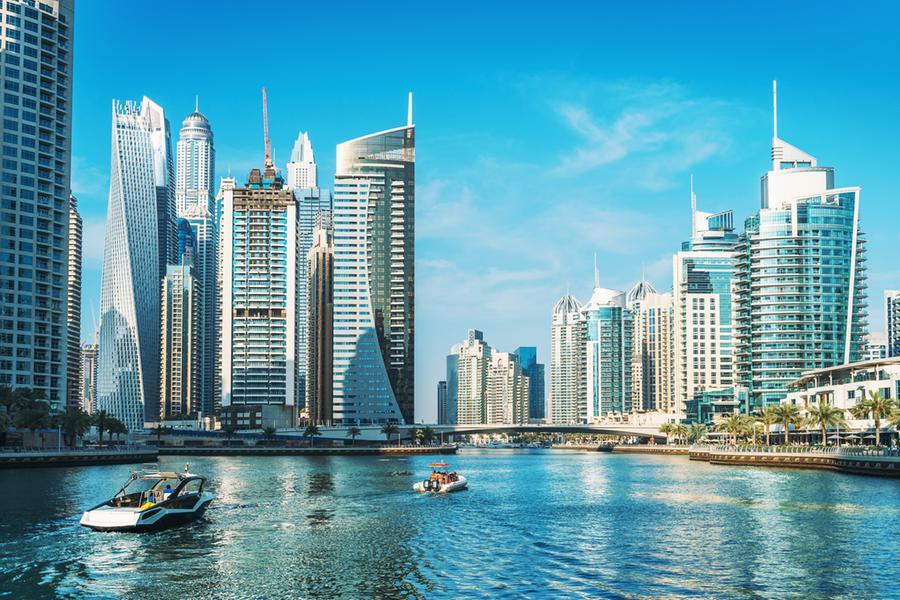
Dubai’s Real Estate Market Hit Lowest Point in March, Then Experienced a Strong Resurgence in Demand
As negotiations between the US and Iran approach a potential permanent ceasefire, two key sectors are closely monitoring developments: global markets and Dubai’s real estate market. A successful deal may result in lower oil prices and renewed investment momentum in equities, while a restored sense of confidence could invigorate Dubai’s property transactions.
Investors Remain Committed to Dubai
Despite the rising geopolitical tensions, Dubai’s property market has shown resilience. In the first quarter of the year, foreign investment in real estate grew by nearly 26% compared to the previous year, with the number of foreign transactions increasing by 11% to reach 48,445. This influx came from a diverse range of buyers, including new participants from Western Europe, showcasing that investor confidence, though cautious, has not waned entirely. The data indicates that investment capital did not leave Dubai; instead, it temporarily paused during the regional conflict.
Institutional Confidence in UAE’s Market
Blackstone, one of the world’s largest asset management firms, recently made headlines by allocating $250 million to a UAE payment platform, marking its first investment in the region since tensions escalated. This commitment underscores the strong institutional confidence in the UAE’s market fundamentals. Investment at this scale is driven by structural confidence in the UAE’s robust regulatory framework, significant sovereign wealth resources, and a well-established financial infrastructure—factors that assure long-term viability and attractiveness for investors.
Shifts in Real Estate Negotiations
The ongoing geopolitical climate has shifted the balance of power in Dubai’s property negotiations, transitioning from a seller’s market to more buyer-friendly terms. Previously, the market heavily favored sellers from 2023 to 2025, but now developers are making concessions such as fee waivers and reduced upfront payments. In the prime and ultra-luxury segments, selective discounts have emerged as developers prioritize sales velocity over profit margins. For buyers with cash on hand, current conditions offer a unique negotiating advantage, especially compared to the previous high-demand era.
Signs of a Stabilizing Recovery
In March, the ValuStrat Price Index noted its first monthly decline since 2020, decreasing by 5.9%. However, this drop only reversed gains made over the prior six months, returning values to levels seen in September 2025, rather than indicating a prolonged downturn. Positive annual growth of 8.9% remains intact. The following month saw a notable rebound in market activity, with viewing appointments rising by 198% and completed transactions increasing by 98%. Furthermore, mortgage applications surged, indicating renewed buyer interest; the first eight days of April saw more applications than the entirety of March, reflecting robust market dynamics.
In conclusion, as the US-Iran ceasefire discussions unfold, Dubai’s real estate sector demonstrates its resilience and potential for recovery. Investors’ unwavering confidence, shifts in negotiation power, and encouraging market indicators suggest that Dubai’s property landscape may be on the brink of a more stable and favorable period ahead.