
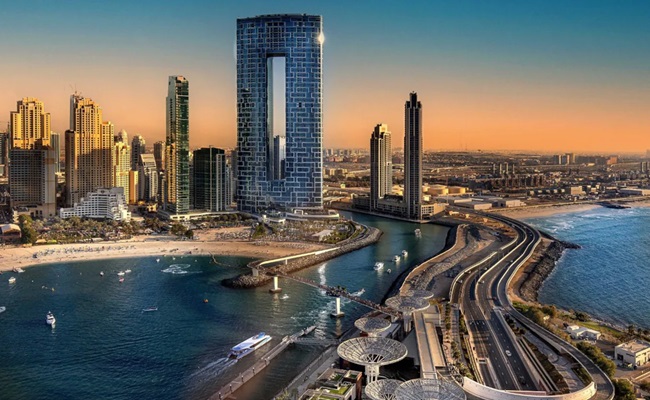
Dubai’s property market expected to experience a downturn due to the Israel-Iran conflict.
Dubai’s real estate market is facing heightened uncertainty amidst escalating tensions in the Middle East. Recent geopolitical developments, especially the conflict involving the U.S., Israel, and Iran, have cast a shadow on the city’s previously booming property sector. Experts and brokers are indicating that the favorable conditions boosting real estate sales could shift significantly in the coming weeks.
Impact of Regional Conflicts on Property Sales
Brokers within Dubai’s property market have expressed concerns about the ongoing missile strikes aimed at U.S. bases across the Gulf Cooperation Council (GCC) nations. The prevailing perception that Dubai serves as a secure haven for wealth during turbulent times may be jeopardized. This trend had attracted investors from various regions, including Russia, Ukraine, Pakistan, and Afghanistan, who sought stability in previous conflicts. It is likely that potential buyers will adopt a more cautious stance, waiting for clearer indicators about whether the current situation will escalate into a prolonged conflict.
While many industry insiders predict a slowdown in transaction volumes, they remain optimistic that significant price declines are unlikely in the short term. Dubai recorded remarkable sales figures in 2025, totaling approximately $187 billion across over 215,000 transactions, primarily driven by luxury properties and a surge in interest from Indian and foreign investors. However, the recent turmoil may alter this upward trajectory.
Geopolitical Developments and Real Estate Security
Footage circulating on social media has illustrated the gravity of the situation, showcasing Iranian missiles and drones targeting military installations, some of which were intercepted by local defensive measures. Reports indicate that a structure within the Palm Jumeirah development was struck, leading to injuries and even a fatality. Furthermore, precautionary evacuations, such as the one involving the iconic Burj Khalifa, have raised alarms about security in the city.
Key developments include the Islamic Revolutionary Guard Corps (IRGC) announcing its intent to escalate attacks against U.S. and Israeli military targets in retaliation for recent strikes that resulted in the death of Supreme Leader Ayatollah Ali Khamenei. This context could further influence investor sentiment and consumer confidence in Dubai’s luxury real estate market.
Succession Issues and Political Uncertainty in Iran
The situation in Iran introduces additional layers of complexity. As questions surrounding the future leadership of Iran arise following Ayatollah Khamenei’s death, speculation about potential successors is intensifying. Reports suggest that his second son, Mojtaba Khamenei, may be emerging as a leading candidate for succession, which could have ramifications for regional stability.
Investors are keenly observing how these geopolitical dynamics will unfold in the coming weeks. Stability in leadership may influence the extent of military actions against U.S. interests in the region, subsequently impacting foreign investment strategies and market confidence in Dubai.
In conclusion, while Dubai’s real estate market has demonstrated resilience and growth in recent years, the ongoing geopolitical tensions present new challenges. As potential investors navigate this shifting landscape, a prudent and cautious approach may prevail until clearer signs of the conflict’s trajectory emerge. The future of Dubai’s property market hangs in a delicate balance, influenced by both local conditions and international developments.