
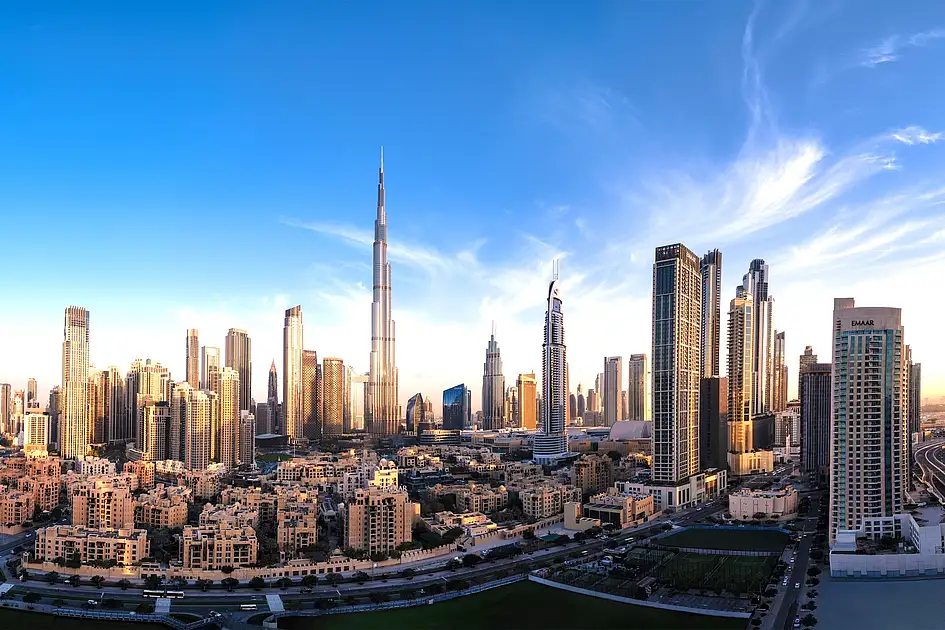
Dubai Real Estate Flourishes Amid Regional Challenges: Essential Insights for Investors
Dubai’s real estate market is showcasing remarkable strength despite geopolitical turmoil in the region, solidifying its position as a prime destination for international investors. With increasing interest from global capital, Dubai is becoming a preferred choice over traditional safe-haven cities like London and Singapore.
Market Resilience Amid Challenges
According to recent analysis from Betterhomes, investor interest in Dubai remains strong, buoyed by enduring demand and regional dynamics. Even as conflicts in the Middle East lead to apprehensions among some investors, the underlying fundamentals supporting Dubai’s real estate sector remain sound. Factors such as robust infrastructure investments, favorable regulations, and positive long-term growth potential contribute to this sustained confidence.
Betterhomes’ market insights reveal a notable increase in inquiries. Between March and April, sales inquiries surged by 11 percent, while tenant requests jumped by 40 percent. April also marked the first rise in property transactions since the onset of regional conflicts, with month-on-month sales increasing by nearly 2 percent. A noteworthy trend is that off-plan properties represented 76 percent of all real estate transactions, indicating strong confidence in Dubai’s future development trajectory.
Strong Economic Fundamentals
The broader real estate landscape in Dubai continues to thrive. Data from the Dubai Land Department cites total real estate transactions reaching Dh252 billion in Q1 2026, reflecting a 31 percent year-on-year growth. This included 57,744 total transactions, emphasizing the market’s robust activity. In April alone, there were nearly 14,000 property sales worth Dh48 billion, showcasing a vibrant market.
Louis Harding, CEO of Betterhomes, emphasizes that Dubai consistently exhibits qualities that attract investors during uncertain times. He notes the clear liquidity, regulatory stability, and strong long-term economic indicators as characteristics that buyers seek. Harding states, “This is a disciplined pause, not a retreat,” suggesting that market resilience is more pronounced than might be expected during periods of distress.
The UAE’s solid economic standing is an essential pillar for investor confidence. In May, Fitch Ratings reaffirmed the UAE’s AA- sovereign rating, citing low government debt and substantial external assets. Concurrently, S&P Global and Moody’s also maintained their stable outlook ratings, reinforcing the perception that the UAE can withstand external shocks, even amid heightened geopolitical tensions.
Competitive Investment Landscape
In contrast to other major global real estate hubs, Dubai maintains lower transaction costs and more straightforward regulations. Markets like London have seen a rise in transaction costs and tightening regulations, while Singapore hosts one of the world’s most expensive property markets for foreign buyers, imposing significant taxes. Analysts point out that Dubai’s lack of annual property taxes, investor-focused residency programs, and favorable business conditions give it a marked competitive edge.
Recent government initiatives to enhance market accessibility also support investor interest. The UAE’s decision to eliminate the previous Dh750,000 minimum property value for investor visas expands access for a broader international audience. Furthermore, major infrastructure projects, like the upcoming $9 billion Gold Line Metro project, are expected to enhance urban connectivity and thereby bolster property values.
Future Outlook
Dubai’s ability to navigate past crises, including the recent global pandemic and periods of geopolitical instability, strengthens its reputation as a reliable investment locale. The emirate attracts a wealth of global investors seeking geographic diversification and lifestyle benefits, thanks to its political stability and robust economic framework.
Market reports indicate a continued strong preference for off-plan developments, which signals confidence in long-term growth rather than speculative short-term investments. According to Harding, investor conversations have shifted toward strategies for future phases, rather than concerns about exiting the market.
As uncertainty looms in the region, current indicators suggest that the demand for properties in Dubai remains steady. Institutional confidence is robust, and property owners are resistant to leaving the market. For global investors looking for capital preservation and potential appreciation, Dubai continues to emerge as an attractive option, further solidifying its appeal as an international investment hub.