
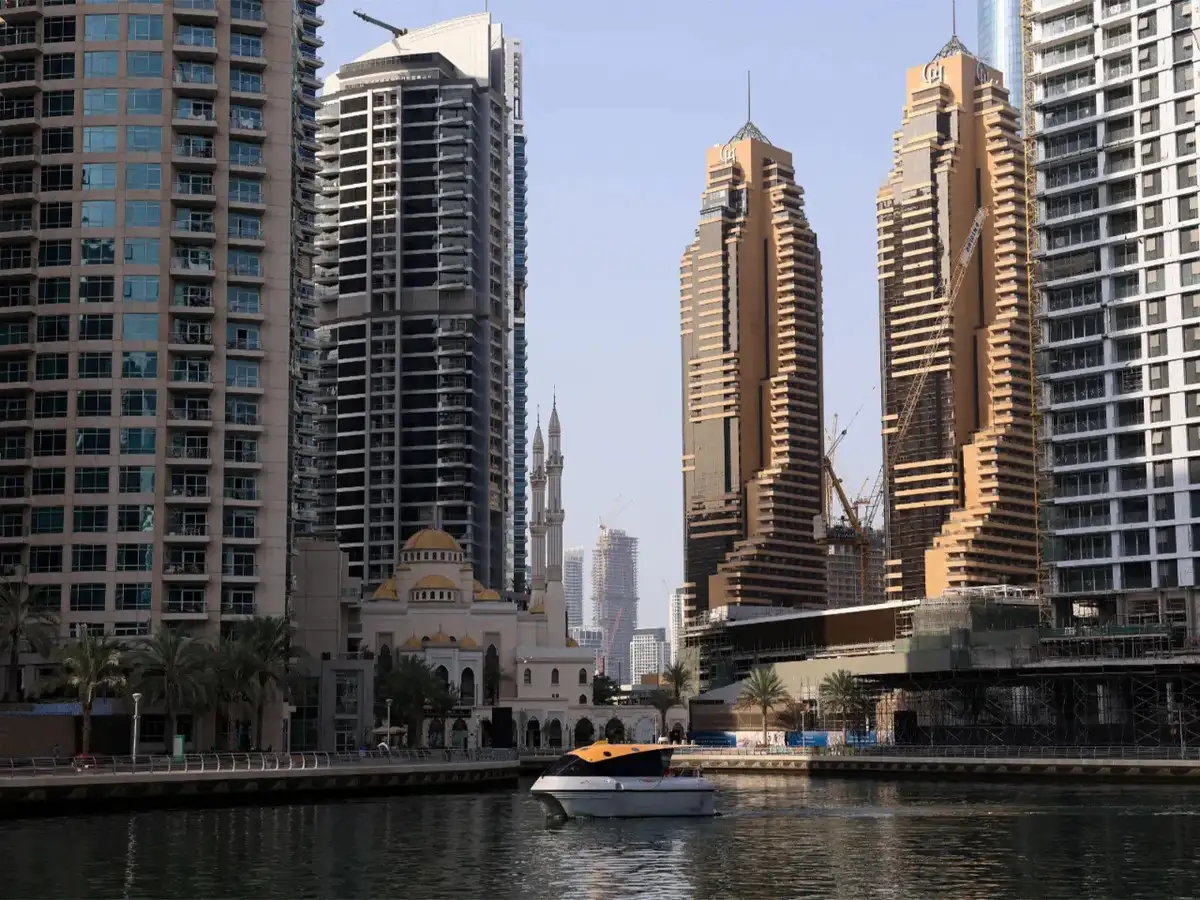
A fresh era emerges on the Dubai skyline.
Dubai’s property market is currently facing challenges influenced by geopolitical tensions, particularly stemming from the ongoing conflict in Iran. Brokers report a significant 40% decline in entry-level activity over the past year, reflecting a broader slowdown in the market. The time it takes to sell off-plan properties has notably increased, and many deals are dragging on longer than usual.
Market Dynamics and Price Adjustments
Negotiations for prices have become more common, with discounts of 10% to 15% seen frequently in the off-plan segment, especially within the AED 1 million to AED 2.5 million price range. This price band, once characterized by swift transactions, is now experiencing some of the most significant discounts. The secondary market is also not immune, as buyers push for greater concessions ahead of finalizing purchases. Furthermore, brokers suggest that the impressive registration figures from March may have been skewed, influenced by a backlog of deals from earlier months, which masks the current underlying weakness in demand. Reports indicate that actual sales in March could have plummeted by as much as 50%.
Despite these challenges, experts like Shivendra Singh, CEO of Nestrov Consulting, emphasize that transaction volumes are not in free fall. Rather, the market is stabilizing, albeit at a slower rate than the previous year. The expectation is that post-Ramadan, there might be a rebound in sales activity if geopolitical conditions remain stable.
Investment Strategies and Buyer Sentiments
The ongoing geopolitical situation has prompted selective investments, with prominent developers like DAMAC, Danube, and Binghatti resorting to innovative payment plans and buyer incentives to attract clients. The Iran-Israel conflict has influenced buyer behavior, creating a cautious atmosphere, although panic selling has not yet been observed. However, brokers caution that a significant correction could occur in the forthcoming months, especially in the off-plan market, if uncertainty persists.
Aditya Earnest John, a Dubai real estate expert, predicts a corrective phase lasting between six and nine months. In the secondary market, properties nearing handover could see price reductions of 15% to 18%. Conversely, the primary market may experience a more controlled adjustment of about 9% to 12%, aided by developers’ flexible pricing strategies and enhanced payment structures.
Shifts in Payment Models
To maintain absorption rates amidst softening buyer sentiment, developers are adjusting payment models rather than pursuing straightforward price cuts. Major firms like DAMAC have restructured their payment plans, moving from a traditional 70/30 ratio to a more balanced 50/50 approach, while also offering incentives such as covering Dubai Land Department fees and including vehicles with higher-value purchases. Binghatti has made similar changes, offering substantial cash discounts for buyers.
Some developers even shifted payment responsibilities to post-handover periods, providing buyers with substantial flexibility. This dynamic shift highlights that, while the market faces turbulence, established players like Danube Properties continue to launch new projects, reflecting their long-term confidence in the market.
Buyer Profiles and Market Outlook
Current trends show a notable shift among nationalities investing in property. Strong interest from Indian buyers is notable, particularly those who previously hesitated but now see the market correction as an opportunity. Meanwhile, interest from European and Russian buyers appears to be waning slightly, although overall international demand remains diverse.
The consensus among market specialists suggests a cautious resilience in Dubai’s real estate sector. The city’s history of navigating challenges, from global financial crises to pandemics, underlines its robust appeal. Although the immediate outlook leans towards consolidation rather than expansion, the long-term trajectory will largely depend on how geopolitical factors influence buyer sentiment moving forward.