
Trump’s Iran Conflict Hits Close to Home for Dubai Residents
This regional conflict has deeply affected the residents of the United Arab Emirates (UAE), turning what was once a distant concern into an immediate reality. With Iranian strikes targeting civilian areas, the impact of the ongoing war has resonated within the community, highlighting the delicate balance of safety and danger in the Gulf region.
Iran’s Aggression and its Ramifications
The situation escalated dramatically as Iran began launching missiles and drones at Israel, U.S. military sites, and key cities like Dubai and Riyadh. Just 48 hours into the conflict, the aftermath was evident. Overwhelmed by a barrage of attacks, Dubai’s residents witnessed intercepted drones plummeting into their neighborhoods, leading to panic and disbelief. Buildings were damaged, and areas once perceived as safe experienced unprecedented danger, prompting a collective concern among residents.
Eyewitness accounts describe startling scenes; one British citizen recorded the aftermath of a drone strike that shattered his living room window, capturing the fear and confusion in a distressing moment. “It stinks of oil in here,” he noted, illustrating how suddenly the threats manifested in their everyday lives. Despite the UAE’s defense capabilities, which have resulted in hundreds of intercepted projectiles, several high-profile locations—including airports in both Dubai and Abu Dhabi—have been struck, causing casualties and injuries among the civilian population.
Responses to the Crisis
The UAE government has advised residents to shelter in place as a precautionary measure, but given the escalating intensity of attacks, many individuals are choosing to take matters into their own hands. Families are desperate to find safety, evidenced by one group consisting of a mother, grandmother, and baby, who fled a hotel that came under fire. They recounted barricading themselves in a lower level of the hotel with makeshift sleeping arrangements as they deliberated their next steps.
“I feel relieved that we are here,” one family member expressed after finding refuge across the border in Oman. Sanctions that previously isolated Oman appear to have offered a sense of security, but that illusion shattered when drones targeting the port of Duqm demonstrated that the conflict’s reach is far broader than anyone anticipated.
Infrastructure Damage and Growing Uncertainty
Key infrastructure throughout the UAE has suffered significant damage. An explosion at Zayed Port in Abu Dhabi marked a turning point, echoing other attacks that have afflicted logistics hubs like Dubai’s Jebel Ali port. Residents, understandably anxious, now find themselves contending with not just the fear of immediate violence, but also the long-term implications of economic instability.
As plumes of smoke ascend over the UAE’s skyline and the sounds of emergency sirens punctuate daily life, a sense of dread permeates the air. Many expatriates, like Kanika Royer, who has resided in Dubai for two years, feel their sense of stability slipping away. “I never expected this to happen in Dubai,” she lamented. Meanwhile, tourists such as Dara Adebayo express urgency to leave, having witnessed missiles during a boat outing, underscoring the immediate threat that looms over vacation destinations.
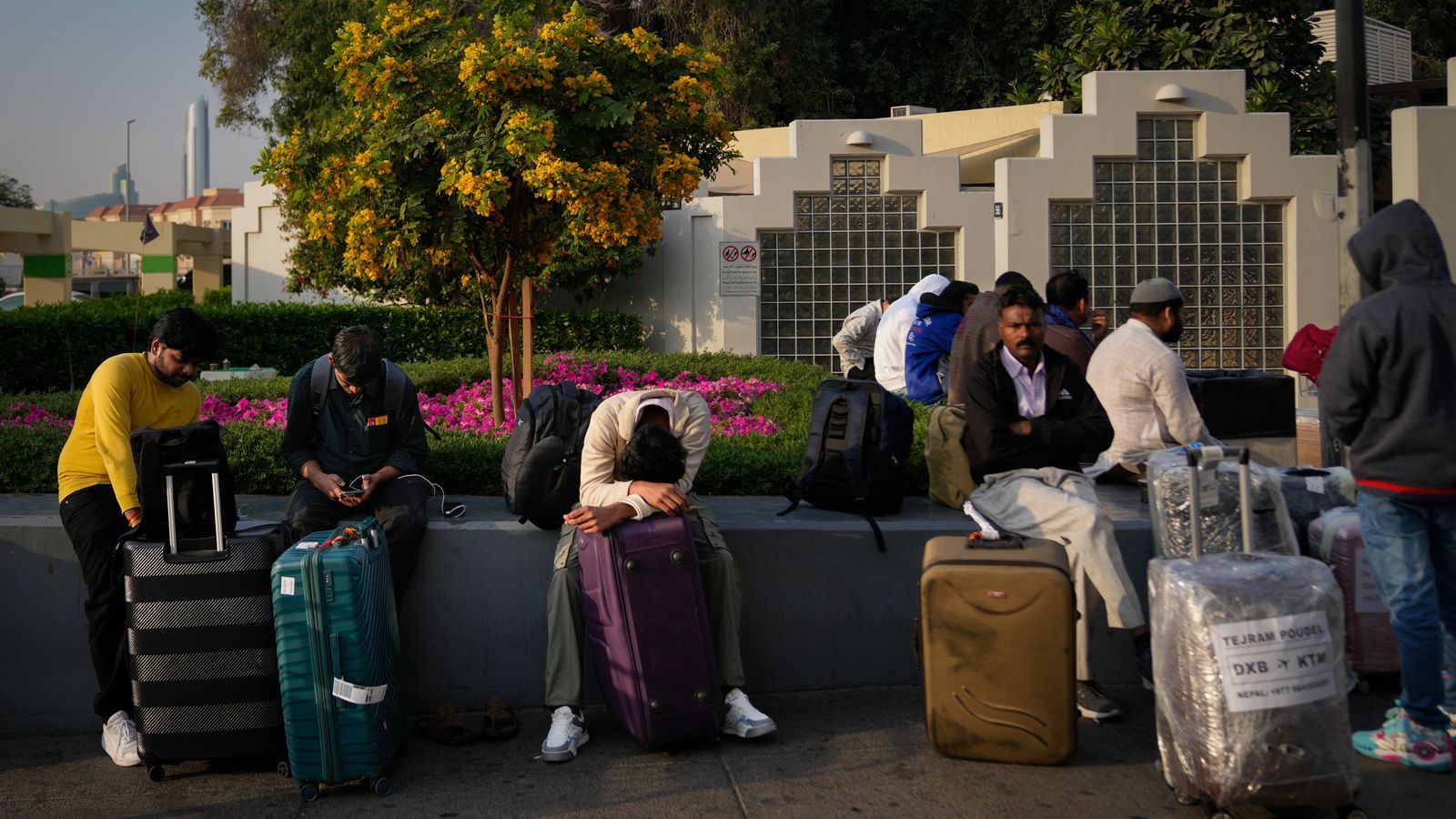
Flight operations have come to a standstill, further complicating the situation as both residents and visitors grapple with uncertainty over when, or if, normalcy will return. There’s an apprehension that what seems like a temporary crisis may evolve into a new reality for this region, where the specter of conflict has become a local concern in ways few would have anticipated.