
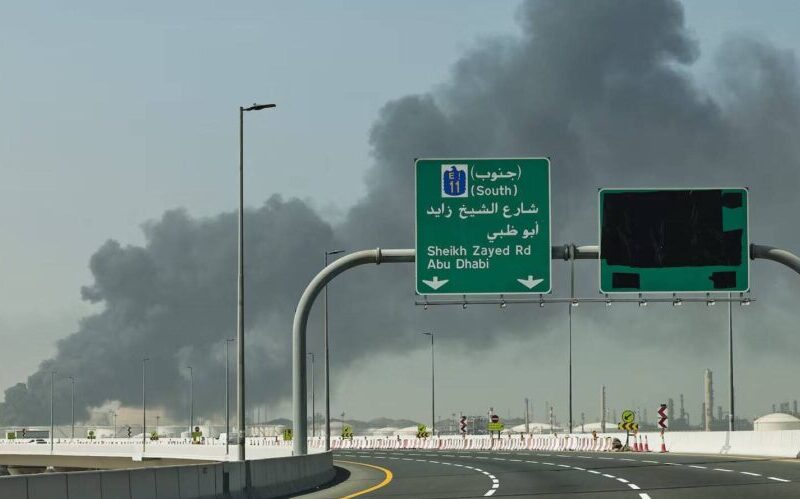
Everyday Life in the UAE During US-Israel War on Iran
The Current Situation in the UAE Amid Regional Tensions
As geopolitical tensions escalate in the Middle East, particularly between the US, Israel, and Iran, residents of the UAE are navigating a landscape marked by uncertainty yet maintaining a sense of normalcy. The following account illustrates how everyday life continues amidst the backdrop of conflict and apprehension.
Life Under Threat: A Resident’s Perspective
The day began like any other for Aleena Poly, a long-time resident of Abu Dhabi. Having spent 25 years in the UAE, she was visiting a friend in Sharjah with plans to explore the Dubai area later that day. However, the atmosphere shifted dramatically around noon when loud explosions, resulting from air defense systems intercepting threats, reverberated through the region. Poly shared her immediate reaction: a wave of worry washed over her as she thought of her family back home. Yet, a calm assurance quickly followed, bolstered by her faith in the UAE’s robust safety measures.
On February 28, as the tension between Iran and the forces of the US and Israel mounted, the UAE Ministry of Defense reported that Iran had retaliated with a significant drone attack, which resulted in casualties and injuries. Despite this unsettling revelation, residents like Poly report a stark contrast between the reality they experience and the perception portrayed by outsiders. “Friends and family have been calling in to check up on me, but we’re really okay and carrying on as usual,” she remarked, highlighting a resilient attitude among locals. Alerts about interceptions are sometimes met with follow-up messages indicating that the situation is under control, underscoring the UAE’s commitment to public safety.
Trust and Resilience in the Face of Uncertainty
For many in the UAE, the conflict has manifested primarily through screens in their homes. The loud noises serve as reminders of the volatility in the region, yet the fear dissipates when community members witness the swift response from their government. Safa Shams, a graphic designer living in Dubai, expressed her initial anxiety upon hearing the alerts and explosions but also reflected on the strong sense of security rooted in her experiences of living in the UAE. Her faith in the country’s ability to maintain order, particularly in crises like the COVID-19 pandemic, has fostered a psychological resilience.
The UAE’s advanced air defense systems have played a crucial role in minimizing damage and bolstering public confidence. With agencies like the National Emergency Crisis and Disaster Management Authority actively reassuring residents, there is a pronounced sense of stability. Daily life continues, with most businesses operating normally and schools and universities adapting with online classes as a precautionary measure.
Economic Implications of Ongoing Conflict
While life appears to carry on, economic concerns are surfacing as the conflict stretches on. A significant spike in oil prices—up 30% within a week—has started to ripple through the economy. With the Strait of Hormuz, an essential passage for global oil transport, experiencing reduced traffic, traders are beginning to reassess supply chains and pricing structures. Residents have noted rapid increases in grocery prices, leading to growing unrest about the rising cost of living.
The UAE government is actively monitoring these supply chains and has undertaken numerous inspections to ensure price stability. Recently, officials indicated their readiness to intervene if necessary, reflecting a proactive approach to safeguarding the public’s economic well-being.
In this climate of uncertainty, many residents continue to express a level of calm. As Aleena Poly aptly noted, “We still go to work, meet friends, and carry on,” illustrating a community dedicated to maintaining its daily rhythms while being acutely aware of the potential for rapid change in their environment. The challenge now lies in whether this equilibrium can endure amidst escalating tensions in the region.