
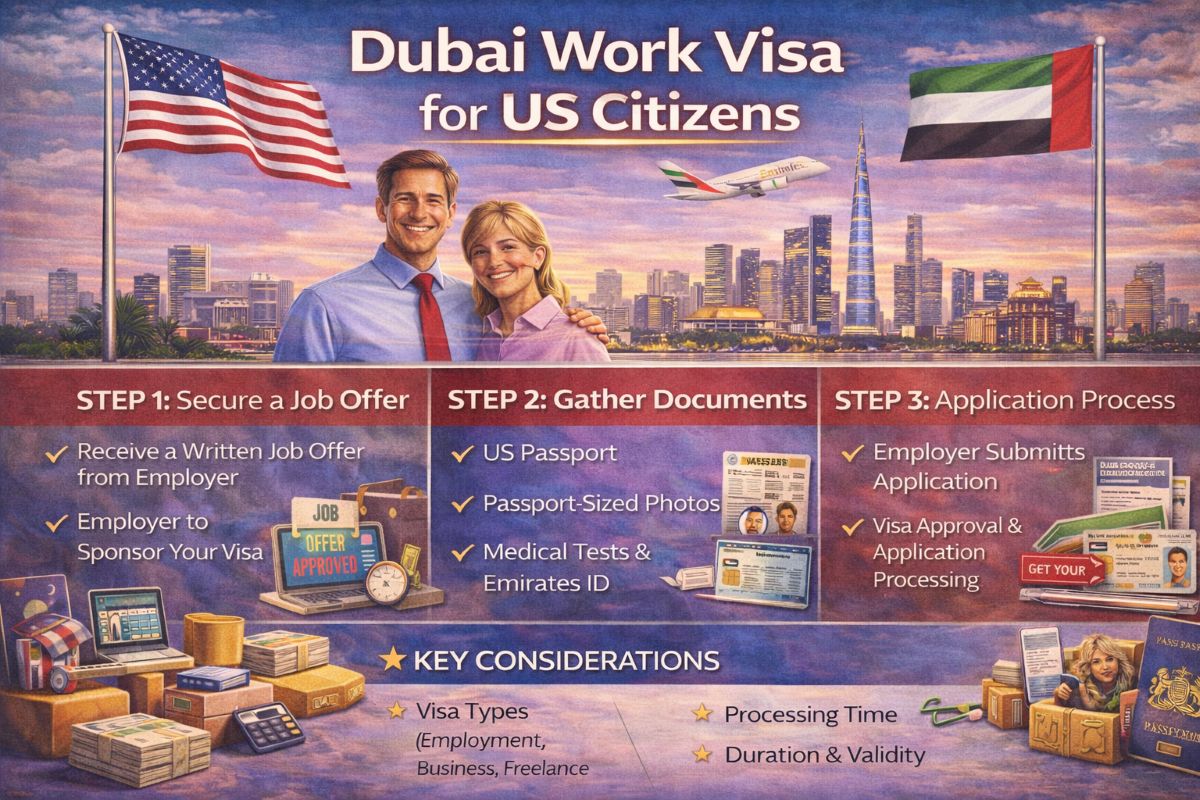
Dubai Work Visa for US Citizens
For many Americans, the interest in working abroad begins quietly. A job offer appears. A recruiter reaches out. Or the idea forms that career growth might be easier in a system built for international professionals. A Dubai work visa for US citizens is often the first concrete question that follows. Not because Dubai feels distant or exotic, but because it feels structured. This guide walks through the reality of the Dubai work visa in a calm and practical way, the same way we would talk it through together before any decisions are made.
Understanding what a Dubai work visa means for US citizens
A Dubai work visa for US citizens is more than permission to earn an income. It is the legal foundation for living in the country. Without it, employment is not allowed, and daily life remains limited. The work visa links three elements into one system. Employment authorization, residency status, and personal identification.
For Americans, this structure can feel strict at first. In reality, it creates clarity. Once the work visa is issued, everything else becomes accessible. Housing contracts, local banking, healthcare, utilities, and even basic services depend on this status. The system is centralized, which removes uncertainty once you are inside it.
It helps to think of the Dubai work visa not as a document, but as an access key. It opens doors that remain closed on visitor status. That distinction alone explains why the visa process matters so much and why cutting corners almost always leads to problems later.
Who can apply for a Dubai work visa as a US citizen
The starting point for a Dubai work visa is always a job offer. US citizens cannot self apply for a standard work visa. Sponsorship by a UAE based employer is required. This employer becomes responsible for initiating the visa process and guiding it through approval stages.
Industries that regularly sponsor Americans include finance, technology, consulting, aviation, healthcare, engineering, education, and senior management. What matters most is not nationality, but skill alignment. Dubai hires internationally by design, and US professional experience is often valued.
Degree requirements exist for many roles, especially regulated professions. In other cases, experience can compensate. Each application is assessed individually. Understanding this avoids frustration and sets realistic expectations before any paperwork begins.
Types of Dubai work visas relevant for US citizens
Most Americans enter Dubai on a standard employment visa sponsored by a mainland company. This is the most common route and applies to full time roles across most sectors. It ties residency directly to the employer.
Another option is a free zone employment visa. These are issued by companies registered in free zones and are common in technology, media, consulting, and international services. The work environment is similar, but administrative handling differs slightly.
Short term or project based permits exist, but they are limited. These do not support long term residence and are not suitable for relocation. For US citizens planning to live and work in Dubai, standard employment visas remain the primary and most stable option.
Step by step Dubai work visa process for US citizens
The Dubai work visa process follows a predictable sequence. First comes the signed job offer and employment contract. This allows the employer to apply for an entry permit or adjust status if the applicant is already in the country.
The next steps include a medical fitness test and biometric registration. These are mandatory and straightforward. Once cleared, residency is issued and the Emirates ID process begins. This ID becomes essential for daily life.
Timelines vary, but the process is usually completed within weeks when documents are prepared correctly. Delays most often come from missing paperwork or misunderstandings about requirements. Patience and preparation are rewarded in this system.
Documents required for a Dubai work visa for Americans
Documentation requirements are clear but non negotiable. A valid passport with sufficient validity is essential. Passport photos are required. Educational certificates may be requested depending on the role.
Some professions require degree attestation or professional licensing. Others rely more on experience and employer approval. The employer provides company documents and handles submissions to authorities.
Common mistakes include assuming US documents need no preparation or underestimating verification timelines. Preparing documents early reduces stress and keeps the process moving smoothly.
Can US citizens work in Dubai without a degree
This is a common question. The answer depends on the role. Certain professions legally require a degree. Others do not. Sales, operations, technical roles, and some management positions may accept experience in place of formal education.
Employer discretion plays a major role. If a company can justify the hire and meet regulatory standards, exceptions may be possible. This is not guaranteed, but it is not rare either.
Americans without degrees should approach the Dubai job market with clarity. Strong resumes, references, and a clear professional story matter more than titles. When value is clear, pathways often open.
Validity and renewal of a Dubai work visa
A Dubai work visa is typically issued for a fixed period, often one or two years. Renewal is possible as long as employment continues. The employer usually manages renewals, but the employee remains responsible for compliance.
If employment ends, the visa does not remain valid indefinitely. Grace periods apply, allowing time to transition or exit. Planning ahead during job changes is essential to avoid legal issues.
This structure encourages stability. It also reinforces the importance of understanding contracts and notice periods before signing.
Salary, benefits, and employment conditions for Americans
Compensation in Dubai is structured differently than in the US. Base salary is often accompanied by allowances. Housing support, transportation, health insurance, and sometimes education benefits form part of the package.
Employment conditions include defined working hours, paid leave, public holidays, and end of service benefits. These elements are governed by labor regulations and the employment contract.
Americans should evaluate offers holistically. Net income, cost of living, and lifestyle value matter more than headline salary figures. When viewed this way, many find Dubai compensation competitive and predictable.
Cost of a Dubai work visa for US citizens
In most cases, the employer covers the cost of the Dubai work visa. This includes application fees, medical tests, and residency processing. Employees should confirm this in writing before accepting an offer.
Hidden costs are rare but can appear if documentation requires additional verification. Knowing who pays for what prevents misunderstandings.
Transparency at this stage builds trust and sets the tone for the employment relationship.
Changing jobs on a Dubai work visa
Changing employers is possible but must follow legal procedure. Notice periods must be respected. New sponsorship must be approved before work begins with a new company.
Working without authorization creates serious risks. This includes fines and potential bans. Americans should never assume informal arrangements are acceptable.
Career mobility exists in Dubai, but it rewards those who plan transitions carefully and respect the framework.
Life after receiving a Dubai work visa
Once the Dubai work visa is issued, daily life opens up quickly. Bank accounts can be opened. Housing contracts become accessible. Healthcare coverage activates.
This transition often feels like a release. Practical barriers fall away. Routine becomes easier. Planning becomes long term rather than provisional.
For many US citizens, this is the moment Dubai begins to feel stable rather than temporary.
Common mistakes US citizens make with Dubai work visas
Starting work before visa approval
Relying on verbal promises instead of contracts
Underestimating document preparation
Confusing visitor entry with work authorization
Avoiding these mistakes comes down to patience and asking the right questions early.
Who a Dubai work visa works best for
A Dubai work visa suits Americans who value structure, predictability, and international exposure. It works well for professionals ready to operate within a clear system.
Those expecting informal flexibility or rapid improvisation may struggle. Dubai rewards consistency and planning.
Alignment matters more than ambition.
Summary
A Dubai work visa for US citizens is not complicated, but it is structured. Employer sponsorship, proper documentation, and realistic expectations form the foundation. For Americans who approach the process thoughtfully, the result is often professional clarity, stable residency, and a calmer relationship with work and daily life.