
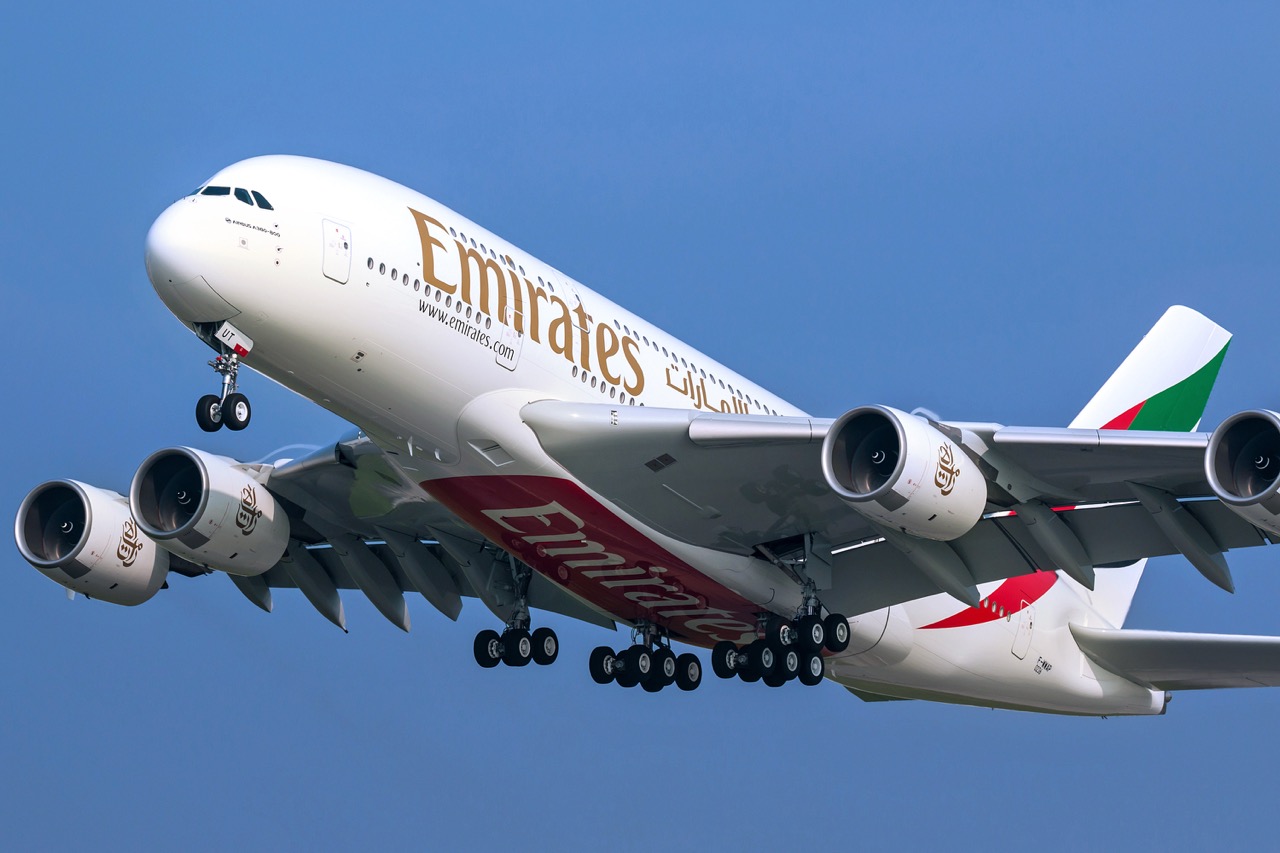
Emirates introduces premium economy on busy Airbus A380s.
Emirates is set to enhance its Airbus A380 passenger experience by converting its high-density aircraft from a two-class to a three-class configuration. This change will introduce a premium economy cabin, aligning with the growing demand for a mid-range travel option that balances comfort and affordability.
Transforming the A380 Experience
The Dubai-based airline will begin retrofitting its first upgraded aircraft, which is scheduled to enter service on April 14, 2026. Currently, Emirates operates its two-class A380s with a Business and Economy configuration. The newly retrofitted model will include 76 Business Class seats, 56 Premium Economy seats, and 437 Economy Class seats, resulting in a total of 569 seats. This modification aims to enhance the appeal to long-haul leisure travelers while maintaining the A380’s reputation as a high-capacity aircraft.
In particular, the new layout will first operate on the Dubai–Amman route before transitioning to Dubai–Prague in June. Emirates aims to complete the retrofit of all 15 of its two-class A380s to the updated configuration by November 2026.
Premium Economy: A Step Up from Economy
Emirates’ premium economy class offers a more comfortable alternative to standard Economy seats, designed to meet the luxurious expectations associated with the airline’s brand. The premium economy section will feature Recaro PL3530 seats that are 19.5 inches wide, arranged in a 2-4-2 format with a pitch of 40 inches. Each seat will provide amenities such as adjustable headrests, calf and footrests, and a retractable table. Passengers will also have access to a personal 13.3-inch HD touch screen for entertainment, alongside USB and universal power outlets.
In contrast, the existing Economy Class seats are narrower at 17.9 inches, situated in a 3-4-3 layout with a pitch of 32 inches. This configuration results in slightly less recline and fewer personal amenities. Premium economy passengers will benefit from exclusive menu options served on branded china and will have access to a wider selection of beverages, including sparkling wines, making the flying experience significantly more enjoyable.
Understanding Emirates’ Fleet Diversity
Emirates operates various configurations of its A380 aircraft to cater to different passenger needs and market demands. The airline’s four-class retrofit A380 includes First Class, Business Class, and Economy, featuring both premium economy and standard economy layouts, allowing for a total of around 484 to 487 seats. Historically, the high-density two-class A380s had a greater capacity with standard economy but lacked premium options.
With the new three-class retrofit, Emirates is redefining its approach to aircraft utilization—not by packing in more seats, but rather by enhancing the travel experience across segments. This shift towards a premium economy cabin reflects a larger trend in the airline industry towards more nuanced cabin classifications, responding to consumers’ desire for a balance of luxury and affordability.
Strategic Shift Towards Premium Offerings
The recent changes signify Emirates’ strategic shift toward focusing on revenue optimization through premium offerings. Following a slow initial adoption of premium economy compared to rival airlines, Emirates has rolled out this cabin class to meet the evolving expectations of long-haul travelers, who increasingly seek more comfort without breaking the bank. The airline aims to have its premium economy product available on 99 routes by the end of 2026, highlighting a rapid embrace of this cabin category across its fleet.
Emirates is not just updating its A380 aircraft; it is also accelerating the rollout of premium economy seating on its Boeing 777 and A350 fleets. By adopting a three-class configuration, Emirates is maximizing the yield per passenger and ensuring that all travelers—whether they choose economy or premium options—leave with a consistent and satisfying experience. This transformative approach strengthens the airline’s position in a competitive market, enabling it to cater effectively to the increasingly sophisticated preferences of global travelers.