
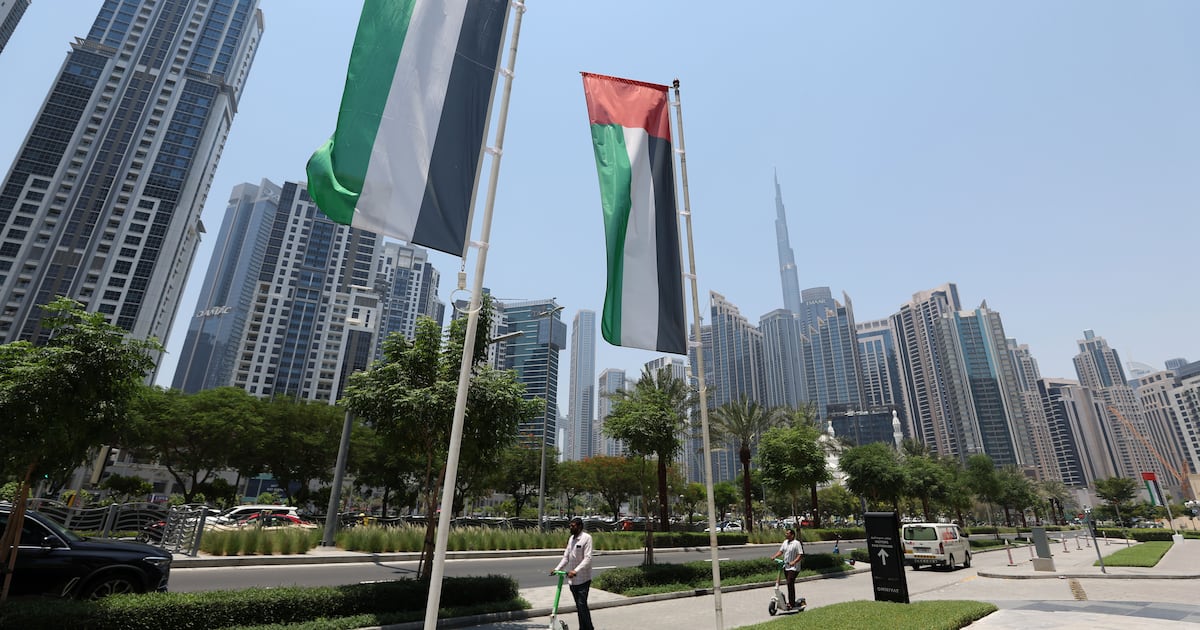
Dubai’s Q1 GDP Grows to Dh232bn, Boosted by Non-Oil Sectors
Dubai’s economy continues to thrive, showcasing its resilience and adaptability amidst changing global dynamics. In the first quarter of 2026, the emirate reported a gross domestic product (GDP) of Dh232 billion, equivalent to $63.2 billion. This robust economic performance is a testament to Dubai’s ongoing efforts towards diversification and development, setting an inspiring example for other regions aiming for sustainable growth.
Strong Year-on-Year Growth
In the three-month period concluding in March, Dubai’s GDP experienced a year-on-year increase of 2.4%. This growth signals a steady recovery and advancement in various sectors, as highlighted by the Government of Dubai Media Office. The statistics reflect a balanced economic approach that fosters resilience and sustainability, underpinning Dubai’s reputation as a global business hub.
Sector Contributions to GDP
The wholesale and retail sector emerged as the leading contributor to Dubai’s economy, accounting for approximately 22% of the total GDP with a value nearing Dh51 billion. This sector demonstrated an annual growth rate of 2.6%, underscoring its critical role in driving economic success. The financial and insurance sector also experienced significant development, growing by 6.5% to reach Dh32.4 billion, representing 14% of overall GDP.
Real estate activities, too, played a crucial role, recording a growth rate of 3.1% and generating Dh26 billion, which constitutes over 11% of the emirate’s GDP. The ongoing expansion of these key industries illustrates Dubai’s commitment to building a diversified economy that can thrive independently of oil revenues.
Emerging Growth Areas
Interestingly, the health and social work sectors saw the highest growth rate, soaring by 17.5% to reach a value of Dh3.6 billion. This remarkable increase reflects a growing demand for healthcare services and underscores the importance of health and wellness in an evolving economy. Other noteworthy sectors included electricity, gas, and water, along with construction, which collectively contributed a growth rate of 8.4%, totaling Dh4.3 billion.
Additional sectors, such as information and communications, also showed positive momentum, climbing by 2.7% to Dh12.1 billion, while administrative and support services encountered a growth rate of 3.6%, reaching Dh10.5 billion. These trends signify a diversified landscape that continues to adapt to both domestic and international demands.
Future Prospects and Strategic Vision
Helal Almarri, the director general of the Dubai Department of Economy and Tourism, articulated the emirate’s sustained growth narrative as being underpinned by insightful leadership and strategic planning. He emphasized that the current economic performance is not merely coincidental; rather, it is the outcome of structured policies and an economy designed to perform despite external fluctuations.
This outlook highlights Dubai’s commitment to long-term objectives and strategic initiatives aimed at cementing its position as a leading global economic powerhouse. As the region continues to innovate and diversify, the foundation for future prosperity is being laid, ensuring that Dubai remains at the forefront of economic advancement.
In conclusion, Dubai’s economy is on a positive trajectory, showcasing resilience through strategic diversification and sectoral growth. As the emirate continues to navigate the complexities of the global marketplace, its focus on sustainability and innovation will likely yield lasting benefits, making it a model for other economies around the globe.