
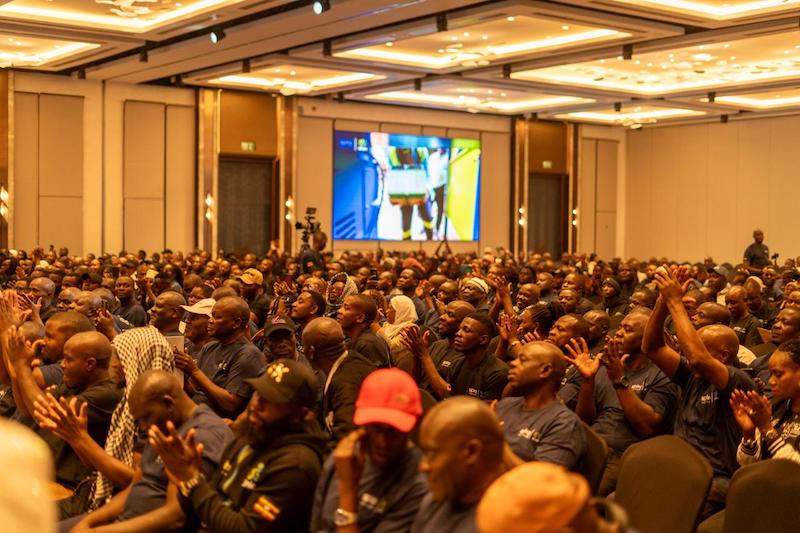
Dubai retreat marks transformation for Uganda’s boda boda industry.
For years, Uganda’s boda-boda sector has thrived informally, operating without much regulation and largely outside long-term financial frameworks. Despite this, it has become essential for urban transportation. However, recent developments indicate a significant transformation within this sector, paving the way for a new era in mobility.
The Rise of Electric Boda-Bodas
A recent event in Dubai, hosted by Spiro, a member of the Equitane group, celebrated the inaugural anniversary of the United Boda-Boda Riders Cooperative Union. This gathering attracted over 1,000 stakeholders, including industry leaders, innovators, and boda-boda riders, showcasing a shift from mere survival to professionalism within the boda-boda industry. With over two million Ugandans relying on this sector for their livelihoods, it stands as one of the largest informal employers in the country.
As fuel prices rise and climate challenges mount, the necessity for sustainable transportation options becomes increasingly urgent. The introduction of electric mobility is gaining traction as a viable economic solution. In just the past year, approximately 16,000 electric motorcycles have been deployed across Uganda, signaling a decisive move towards sustainable transportation.
Building an Ecosystem for Success
To facilitate this transition, more than 300 battery swap stations and over 1,000 service centers have been established, enabling riders to operate efficiently without the hindrance of battery charging challenges. Gagan Gupta, chairman of Spiro, emphasized that this shift toward electric mobility is not solely environmental but also economically beneficial. He noted that battery swap operations have yielded $2.3 million in revenue, indicating that electric boda-bodas are both operationally viable and commercially sustainable. Gupta remarked, “Our partnership with the Union reflects a strong dedication to creating solutions that merge environmental responsibility with economic inclusion in Uganda.”
Furthermore, Gupta highlighted Uganda’s strategic role in Africa’s broader electric vehicle (EV) transition. He stated that adopting electric mobility presents dual benefits: it reduces emissions and improves income in commercially intensive transport sectors. Kaushik Burman, CEO of Spiro, echoed this sentiment, underlining that the adoption of electric boda-bodas signifies not just a technological evolution but a social transformation. He described the electric boda-boda as a vehicle for dignity and stability in a sector often plagued with uncertainties.
The Role of the United Boda-Boda Riders Cooperative Union
At the heart of this transformative journey is the United Boda-Boda Riders Cooperative Union. Established only a year ago, the Union provides critical support, enabling aggregation, financing, and rider security. Through its innovative Rider Union App, the platform promotes transparency and safety while rewarding productivity. Riders can earn a 7% commission and access safety gear incentives upon meeting specified ride targets.
Moreover, the Union is enhancing financial mobility by offering access to motorcycle financing, phone loans, and land loans through a partnership with Housing Finance Bank. For many riders, these services mark their first encounter with structured financial products. As per Fred Ssenoga, the managing director of the Union, this growth illustrates a significant shift in perspective about economic participation. He commented, “What started as an initiative to professionalize boda bodas has evolved into a movement redefining what economic participation looks like for ordinary Ugandans.”
As the event concluded, Spiro announced intentions to deploy over 70,000 electric motorcycles in Uganda, a plan that promises to significantly change the economics of urban transport, fuel consumption, and emissions levels. The future of Uganda’s boda-boda sector is not just electric; it’s a beacon of hope for modernization and inclusion.