
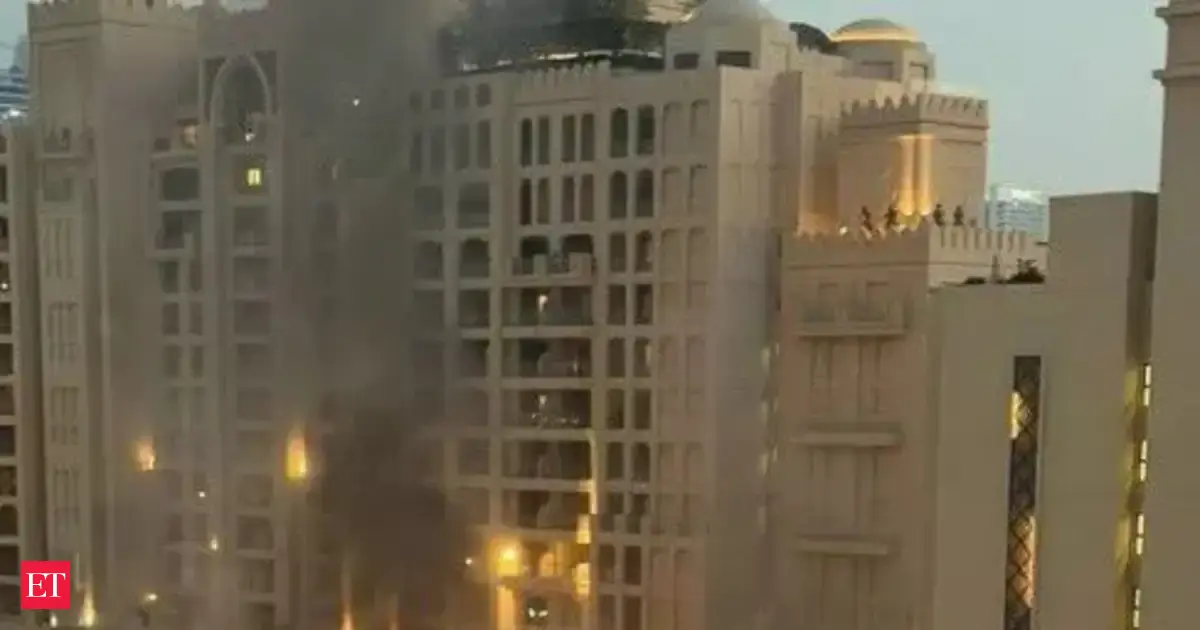
Dubai Hotel Blaze: Viral Reports of Iranian Attack on Fairmont
On February 28, a series of explosions were reported across Dubai, triggering widespread speculation of a potential Iranian assault on the Fairmont The Palm hotel located on Palm Jumeirah. As videos emerged showing smoke and flames near the hotel, residents and social media users began to circulate claims that suggested a direct hit or missile debris caused the incident. However, UAE authorities have not provided any official confirmation regarding missile strikes or structural damage at the hotel.
What Occurred in Dubai?
The explosions that rattled Dubai coincided with military actions initiated by the United States targeting Iran. Eyewitness accounts and viral videos captured smoke billowing near Fairmont The Palm, drawing immediate attention and concern. While some speculated that an Iranian missile might have impacted the hotel, it remains unclear if that was the case. There is a possibility that debris from a missile intercepted by the UAE defense forces caused the reported fires. As of now, neither the hotel management nor UAE officials have confirmed any missile strikes or damage to the property.
In the wake of these developments, the U.S. and Israel initiated military operations against Iranian assets, further complicating an already tense geopolitical environment. The situation has prompted various governments to issue advisories for their citizens to vacate Iran, Israel, and adjacent regions. As time elapsed, the urgency for action escalated, heightening fears among travelers returning to these areas.
Middle East Airspace Restrictions
In light of the escalating tensions, the UAE’s General Civil Aviation Authority announced the closure of its airspace as a precautionary measure aimed at ensuring the safety of flights and national security. This move was not isolated to the UAE; airspace closures extended to Iran, Iraq, Israel, Kuwait, Qatar, and Bahrain. According to data from Flightradar24, several airlines opted to reroute flights away from Iranian and Iraqi airspace, resulting in significant disruptions.
Major hubs like Dubai and Abu Dhabi halted all flight operations on February 28. Moreover, airlines worldwide began reconsidering their flight paths, with U.S. and European carriers opting to avoid regions impacted by these military strikes. The immediate result was widespread flight cancellations and suspensions as airlines scrambled to adapt to the unstable situation.
Impact on Airlines and Travelers
The situation exacerbated the travel chaos, leading Emirates and other airlines to ground multiple flights from Dubai. Customers were advised to stay updated on flight changes. Qatar Airways, Flydubai, and Gulf Air also announced service adjustments and cancellations. Major airlines, including Lufthansa and Virgin Atlantic, suspended all flights to and from Dubai, which severely impacted travel plans for thousands of passengers.
In these uncertain times, airlines are offering flexible booking options and refunds amid the turmoil. However, travelers should brace for potential delays, longer flight durations, and unexpected fuel stops due to rerouted paths around affected airspaces. It’s advisable for anyone traveling through Dubai or other nearby locations to verify travel updates with their airlines before departure.
Safety Considerations for Travelers
The speculation surrounding an Iranian attack and the subsequent airport disruptions have raised safety concerns for travelers. While the UAE has taken steps to secure its airspace, passengers are encouraged to remain vigilant and informed. Checking for real-time updates can be crucial for those transiting through Dubai or planning trips to the region.
Official statements have yet to confirm any direct impact to the Fairmont The Palm hotel. Thus, travelers need to approach the situation with caution and remain aware of potential changes to travel itineraries. Those considering travel to affected areas should monitor news developments closely and be prepared for ongoing shifts in the security landscape.