
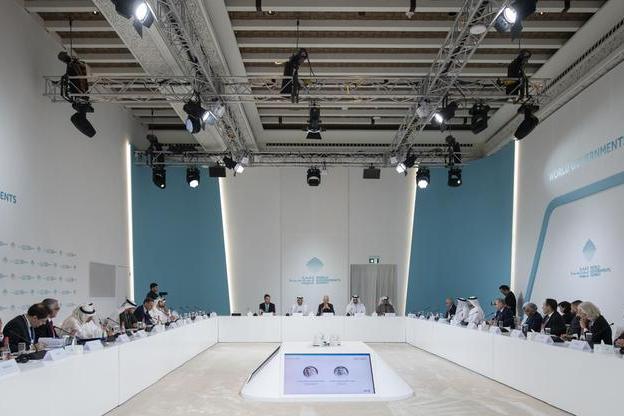
Dubai Chambers convenes ICC to explore new multilateral trade strategies.
In partnership with the World Governments Summit (WGS) 2026, Dubai Chambers and the International Chamber of Commerce (ICC) organized a roundtable aimed at revitalizing the multilateral trading system, transforming the global trade environment, and identifying emerging trends that can enhance international trade flows.
Bridging Connections in Global Trade
The roundtable attracted 32 high-ranking officials and business leaders from the Middle East, focusing on the ICC’s introduction of innovative tools, services, and programs designed to bolster cross-border trade. The discussions aimed to generate actionable policy suggestions for governments, aimed at improving trade flow across national borders.
In particular, participants examined how to forge a more open and inclusive global trading environment. They discussed strategies for enhancing market access for businesses and expediting efforts to digitize trade processes. A significant point of discussion was the necessity to enhance corporate adherence to regulatory frameworks, ensuring smoother trade transactions.
Expert Insights on Multilateral Collaboration
Dr. Thani bin Ahmed Al Zeyoudi, the UAE Minister of Foreign Trade, emphasized the importance of public-private partnerships in strengthening the multilateral trading system. “Strengthening the multilateral trading system requires constructive collaboration between public and private sectors,” he remarked during his opening address. He stressed that leveraging digital innovations and systematically dismantling trade barriers would pave the way for more inclusive and efficient global trade, which in turn can spur sustainable economic growth.
Mohammad Ali Rashed Lootah, President and CEO of Dubai Chambers, further elaborated on this notion during his keynote speech. He pointed out that enhancing economic relationships with countries worldwide and nurturing international trade partnerships are vital components in realizing the Dubai Economic Agenda (D33).
Strategic Goals for Economic Expansion
Lootah outlined ambitious targets under the D33 agenda, which include doubling the value of Dubai’s foreign trade to AED25.6 trillion by 2033. The plan also aims to integrate 400 additional cities into Dubai’s foreign trade network and establish economic corridors linking Dubai with regions such as Africa, Latin America, and Southeast Asia. These corridors are strategically designed to foster connections and unlock potential in high-growth sectors like logistics, banking, and capital markets.
He reiterated that international collaboration serves as a vital instrument for supporting growth while enhancing the national economy’s competitiveness. This approach creates an environment that is conducive to the expansion of both global and regional businesses, facilitating entry into new markets.
Dubai’s Growing Role in Global Commerce
Lootah also highlighted that current global trade data underscores Dubai’s commitment to an open foreign trade strategy. Between 2018 and 2024, the value of Dubai’s exports and re-exports surged by more than 88%, illustrating the city’s capacity to adapt and thrive amid global changes.
John W.H. Denton AO, Secretary General of the ICC, noted that the MENA region is positioned at a pivotal juncture in global trade and investment. He emphasized the region’s unique opportunity to help shape future trade dynamics, stating that its growing involvement in global commerce, digital infrastructure, and logistics could serve as a fertile testing ground for initiatives that are aligned with World Trade Organization (WTO) reforms.
This year’s WGS gathered more than 60 heads of state and government officials, over 500 ministers, and representatives from more than 150 governments, alongside more than 80 international organizations and global institutions. Total attendance exceeded 6,250 participants, underscoring the importance and influence of the discussions held during the summit.