
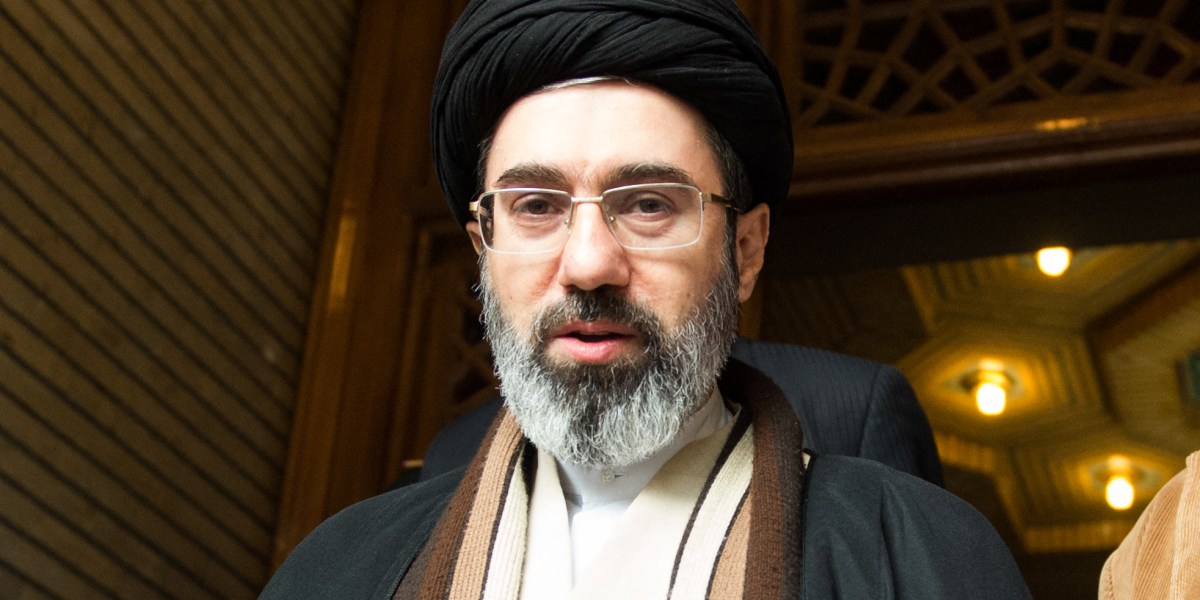
Iran’s New Supreme Leader: A Real Estate Tycoon with Properties in London, Dubai, and Europe
Mojtaba Khamenei has recently been appointed as Iran’s new supreme leader, marking a significant moment in the nation’s political landscape. Interestingly, he shares a commonality with former President Donald Trump: both have cultivated extensive real estate portfolios across the globe.
Hereditary Succession and Political Context
Mojtaba Khamenei, the son of the late Ayatollah Ali Khamenei, who died in an airstrike at the onset of the war, represents the first hereditary succession in the Islamic Republic’s leadership. His rise to power is closely associated with Iran’s Islamic Revolutionary Guard Corps. His promotion is viewed as a signal that hard-liners are firmly in control, with little interest in pursuing negotiations to conclude the ongoing conflict.
Historically, before the outbreak of hostilities, Khamenei maintained a low profile while quietly building his global assets. A Bloomberg investigation revealed that Khamenei has skillfully avoided registering his investments under his own name, amassing more than $138 million in wealth. His portfolio includes significant financial holdings in Swiss bank accounts, high-end properties in some of London’s most affluent neighborhoods, and even a villa located in Dubai’s luxurious counterpart to Beverly Hills.
Khamenei’s International Real Estate Holdings
Among these acquisitions, Khamenei possesses a house in London’s exclusive “Billionaires’ Row.” Despite inquiries sent through Iran’s foreign ministry and embassies, Khamenei did not respond to Bloomberg’s request for comment. An intermediary associated with Khamenei’s business dealings claimed there were no personal or financial connections to him. Fortune magazine also faced challenges in contacting the Iranian foreign ministry due to the country’s extensive internet restrictions, while the United Nations representative for Iran did not respond promptly.
In contrast, Donald Trump’s financial empire is valued at approximately $7.3 billion according to Forbes. Trump’s real estate holdings comprise golf clubs and resort properties valued at $1.3 billion. His investments also include office buildings, hotels, and residential complexes, collectively worth $1.2 billion. Furthermore, his liquid and crypto assets were estimated at around $2.4 billion last year. However, his financial standing has been affected by recent market fluctuations spurred by his policies regarding Iran.
Economic Control and Power Dynamics
While Khamenei’s overseas holdings are modest compared to Trump’s vast wealth, his ascension to supreme leader places him in a critical position to influence Iran’s economy. Khamenei oversees the Execution of Imam Khomeini’s Order, a state-owned group that manages a multitude of assets and businesses from various sectors, valued in the billions. Additionally, he controls the Islamic Revolutionary Guard Corps (IRGC), which originally served as a paramilitary organization but has evolved into a powerful business entity.
The IRGC has diversified its interests into major industries such as oil, transportation, and banking, forming a business ecosystem that also includes telecommunications, agriculture, and real estate. Through various affiliates, the IRGC conducts numerous business operations. This includes the Khatam al-Anbiya engineering firm, known for constructing infrastructure like refineries and railways, as well as managing Tehran’s international airport.
Moreover, the IRGC runs a network of “foundations” that act as semi-private monopolies. Initially established to promote religious and revolutionary aims, these foundations have transformed over time into significant economic players. According to the Clingendael think tank, what started as initiatives for social justice has evolved into corporate conglomerates that are central to the power dynamics of the Iranian regime and largely insulated from oversight. This shift underscores how the intertwining of wealth accumulation and political power has become a crucial factor in the Iranian state’s governance.