
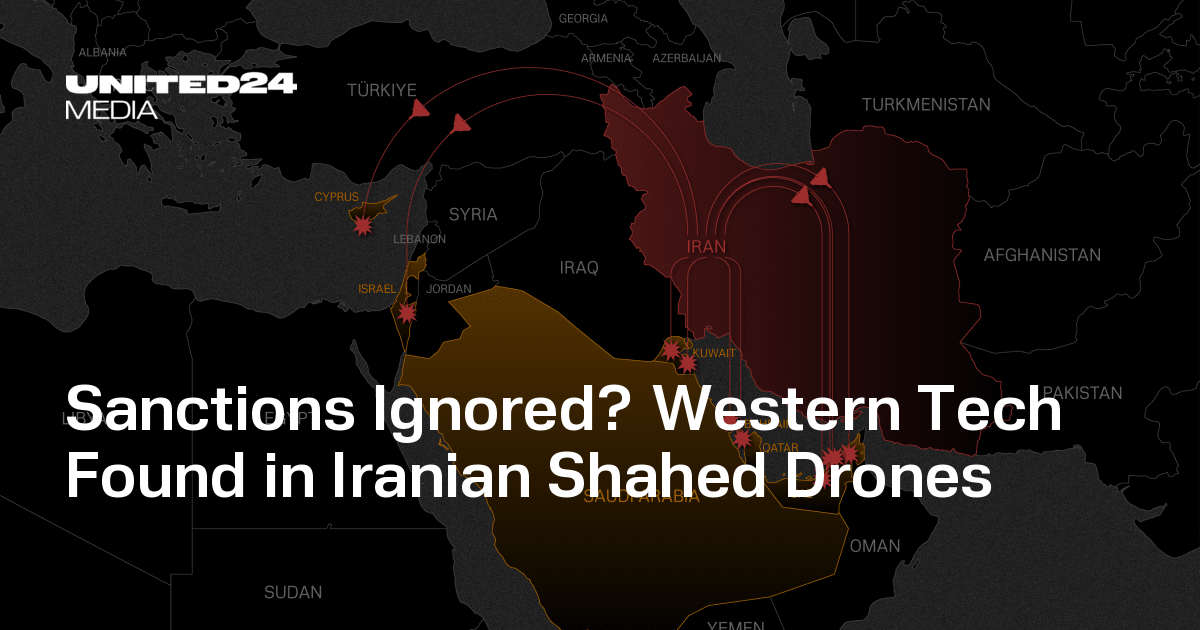
Western Parts Enabled Iranian Shahed Drones to Reach Cyprus and Dubai
The evolving landscape of drone warfare has revealed significant vulnerabilities in global supply chains, particularly concerning Iranian and Russian Shahed drones. While military efforts to intercept these drones can prove effective, a more strategic approach involves disrupting the supply chains that facilitate their production. Understanding how these components make their way into enemy hands is crucial for mitigating future threats.
Supply Chain Dependence on Western Components
Iran and Russia’s ability to manufacture Shahed drones at an industrial scale—reportedly up to tens of thousands per month—relies heavily on a network of Western components. Despite extensive sanctions, these countries have adapted by routing crucial parts through intermediary nations. Notably, countries such as the United Arab Emirates serve as critical hubs in this logistics chain. This demonstrates that sanctions alone cannot halt production without comprehensive control over the supply chain.
The implications of this dependency are significant. Drones like the Shahed-136 are designed not for advanced military technology but for mass production at lower costs. The simplicity of their design does little to disguise their advanced capabilities, which are bolstered by foreign electronic components. Reports indicate that both Iranian and Russian variants employ a variety of Western-made parts—including microcontrollers and satellite navigation systems—essential for their operational effectiveness.
The Mechanism of Component Acquisition
The journey of these components often involves several stages, making it difficult to trace their ultimate military application. Initially, items like microchips are produced legally in the United States, Europe, or Asia. They are marketed as civilian or dual-use electronic products and then sold through various international distributors. This diversion of goods appears completely legitimate on paper and allows intermediaries to operate with minimal scrutiny.
After being purchased by shell companies located in intermediary nations—which can include states in the South Caucasus or Central Asia—the components are then re-exported to Iran or Russia. At this point, they are typically routed to assembly facilities where they contribute to drone production. This multi-layered approach complicates efforts to impose effective sanctions or export controls on the materials used for military applications.
Strategies for Enhancing Deterrents
While Ukraine has made notable advancements in intercepting Shahed drones successfully, interception alone is a temporary solution that fails to address the root of the problem. As long as these supply chains remain unregulated, both the quantity and geographical scope of drone strikes will only intensify. The true challenge lies in enhancing the ability of democratic nations to fortify export control measures and target gray market routes that facilitate the flow of key components.
Effective deterrence must also include more stringent monitoring of commercial transactions that ostensibly appear harmless yet support military production. The fact that many of these components do not fall under strict military classification is a significant loophole that needs to be addressed.
In conclusion, tackling the threat posed by Iranian and Russian Shahed drones is about more than fortifying air defenses. A comprehensive strategy that aims to dismantle supply chains through reinforced sanctions and regulatory frameworks is essential for ensuring long-term international security. Addressing the systemic issues surrounding these supply routes will ultimately be decisive in limiting the production and operational capabilities of drones that pose risks to civilian and military infrastructure alike.