
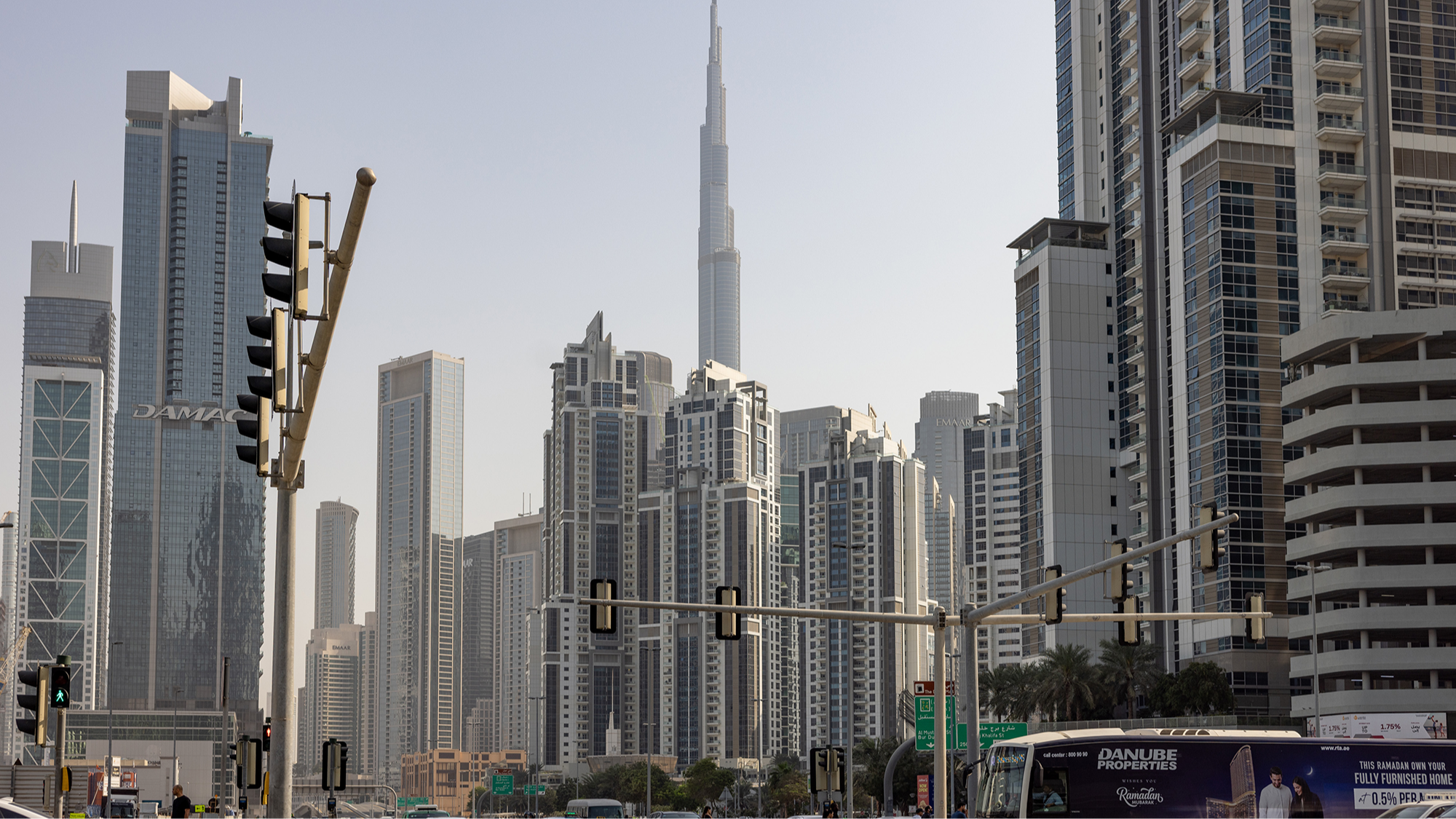
Dubai’s financial stronghold at risk from Iran tensions
The ongoing conflict between the United States and Iran is placing considerable strain on the United Arab Emirates (UAE), which has long been recognized as a leading financial hub in the Middle East. As hostile actions escalate, particularly directed at Dubai, the economic stability and political positioning of this vital regional player are being rigorously tested.
Rising Tensions and Their Impact on Dubai
The UAE, particularly its vibrant cities of Dubai and Abu Dhabi, has emerged as a financial powerhouse over the past few decades. However, recent events have seen Iran launching drones and missiles at critical infrastructure, including the bustling Dubai International Airport and iconic luxury hotels. This aggressive response from Iran has resulted in casualties and injuries among foreign nationals, igniting fears about the long-term repercussions for one of the region’s most significant economies. While an immediate mass departure of expatriates has not transpired, the anticipation of a prolonged conflict is casting a shadow over the financial sector.
Dubai’s financial prominence is evident, standing 11th on the Global Financial Centres Index rankings for 2025, ahead of cities like Frankfurt and Tokyo. The emirate’s appeal has been buoyed by modern infrastructure and a low-tax regime, making it a preferred choice for financial institutions. However, the heightened geopolitical risks are becoming increasingly difficult to dismiss, raising concerns about the emirate’s once-stable environment.
Resilience Amid Uncertainty
Despite the grim atmosphere, insiders within Dubai’s financial community remain cautiously optimistic. One finance professional noted the city has successfully weathered numerous crises since the global financial downturn in 2009 and has managed to emerge stronger each time. Lessons learned from past challenges, including the COVID-19 pandemic, have reportedly enhanced Dubai’s crisis management strategies and fortified its supply chains. This resilience suggests that experienced professionals may view the current turmoil as merely a fleeting setback rather than a reason to abandon the emirate’s many attractive living conditions.
Still, Jason Tuvey from Capital Economics remarks that while the ongoing risks cannot be ignored, Dubai’s strategic importance in global finance will continue to attract businesses and finance professionals. The emirate’s economy is predominantly trade and service-based, with these sectors accounting for more than 60% of its GDP. Should the conflict persist, the most profound economic effects are likely to hit tourism and real estate sectors, rather than the financial services arena, which may remain relatively insulated.
Emerging Competitors in the Financial Landscape
The current predicament facing Dubai also presents opportunities for rival financial centers in the region. Historically, financial hubs have shifted due to the pressures of war and instability, as noted by Kristin Diwan, a senior resident scholar at the Arab Gulf States Institute. Countries like Saudi Arabia have ambitions to strengthen their positions as financial centers, propelled by initiatives like the Vision 2030 project. This plan aims to draw multinational firms to Riyadh, offering incentives such as significant government contracts exclusively to local headquarters. Major banking institutions, including Goldman Sachs and Citigroup, have already established operations in Riyadh, which currently occupies a lower rank in the GFCI at position 67.
Nevertheless, the Iran conflict has cast a wide net of disruption across the Gulf Cooperation Council (GCC) states, impacting Saudi Arabia and others. Despite being the foremost target, the UAE is not alone in facing adversities, as various other regional centers have also experienced attacks, diminishing their edges over Dubai. Given that no alternative markets fully evade the risks posed by the conflict, Dubai’s financial status may, for now, remain relatively intact amidst the surrounding turmoil.